
A kitchen still has work after one person comes home
Does eating dinner outside remove all the evening's food work at home? Ingredients from an earlier purchase remain in the refrigerator, and a cup used that morning can be waiting in the sink. Taking out waste and retrieving the washing are separate from where dinner was eaten. Explaining Korea's smaller households through a studio's floor area or a photograph of a solitary meal leaves the running of that home outside the frame. Which tasks disappear as the headcount falls, which remain, and who can take on those that remain?
Consider an adult child leaving the parents' home to live separately. The original kitchen remains, and another place for keeping and eating food is needed. The population has not changed, but one more domestic arrangement needs managing. The new home may be smaller or larger. A smaller household means fewer people living together; the building or rooms have not necessarily shrunk alongside them.
The spring onions and washing in this article are illustrative situations, not interviews with named residents. They follow tasks performed with different household sizes. The household statistics and Seoul's hospital-accompaniment programme, by contrast, come from actual public information. The aim is to start with a number and continue to what one person has to do after coming home.
Almost the same population, more separately managed homes
The register-based census for November 1, 2025 reported year-on-year population growth of 0.02% and household growth of 1.1%. One-person households formed 36.6% of general households, one- and two-person households together 66.1%, and average household size was 2.16. These observations were published in July 2026. The official release and officially republished results provide the figures. Even a nearly stationary population can contain more units independently managing cooking, washing and costs. The difference does not reveal who separated from another household or why.
A household shares daily living, including meals and sleeping, and differs from a resident-registration unit. The KOSIS definitions make the domestic boundary more important than a relationship label. Relatives can live in different homes, while unrelated people can share domestic life. A separate registered address, living alone and changing family relationships may overlap, but they are not one event.
Imagine a village with forty one-person households and sixty four-person households. One-person households form 40% of its hundred households, yet their residents are forty out of 280 people, about 14.3%. Reading the actual 36.6% household figure as the same population share living alone would miss this change of denominator. Nor does 2.16 describe the members of an actual home. It averages homes with one resident and those with several. Designing only for that average can lose the storage or circulation space a particular household needs.
Taking a bunch of spring onions into another meal
In a shared home, a bunch of spring onions may go into soups and stir-fries and be used in one or two meals. When one person buys the same bunch, today's portion and later portions have to be decided first. Opening the package and preparing the onions is followed by putting aside the quantity needed now and finding a container for the rest. Cooking everything creates leftover food; cooking only part creates leftover ingredients. Reducing a recipe does not finish the decision.
Dividing what remains also produces a chopping board and containers to wash and dry. Each container needs refrigerator space. At another meal, the resident must remember what remains and connect it to whatever else will be bought. Buying ready-made dinner after a late shift does not make the earlier ingredients disappear. Less cooking time does not automatically remove the work of deciding when to use them.
What people with compatible mealtimes might finish together becomes purchasing, preparing, dividing, storing and cooking again in a home for one. This is not a mandatory routine for every single resident. Eating elsewhere and making food at home distribute the work differently. The example shows how a changed headcount can change the cycle in which ingredients are used, as well as the quantity of a meal.
A single-meal product lets a manufacturer and retailer perform some preparation, cooking and portioning beforehand. The buyer instead handles packaging, transport and the price. A day of meals in a convenience store follows an actual setting for those choices. Home cooking and purchased food need not be ranked as degrees of diligence. Parts of the same meal have moved to different people and places.

Laundry also follows a machine's timetable
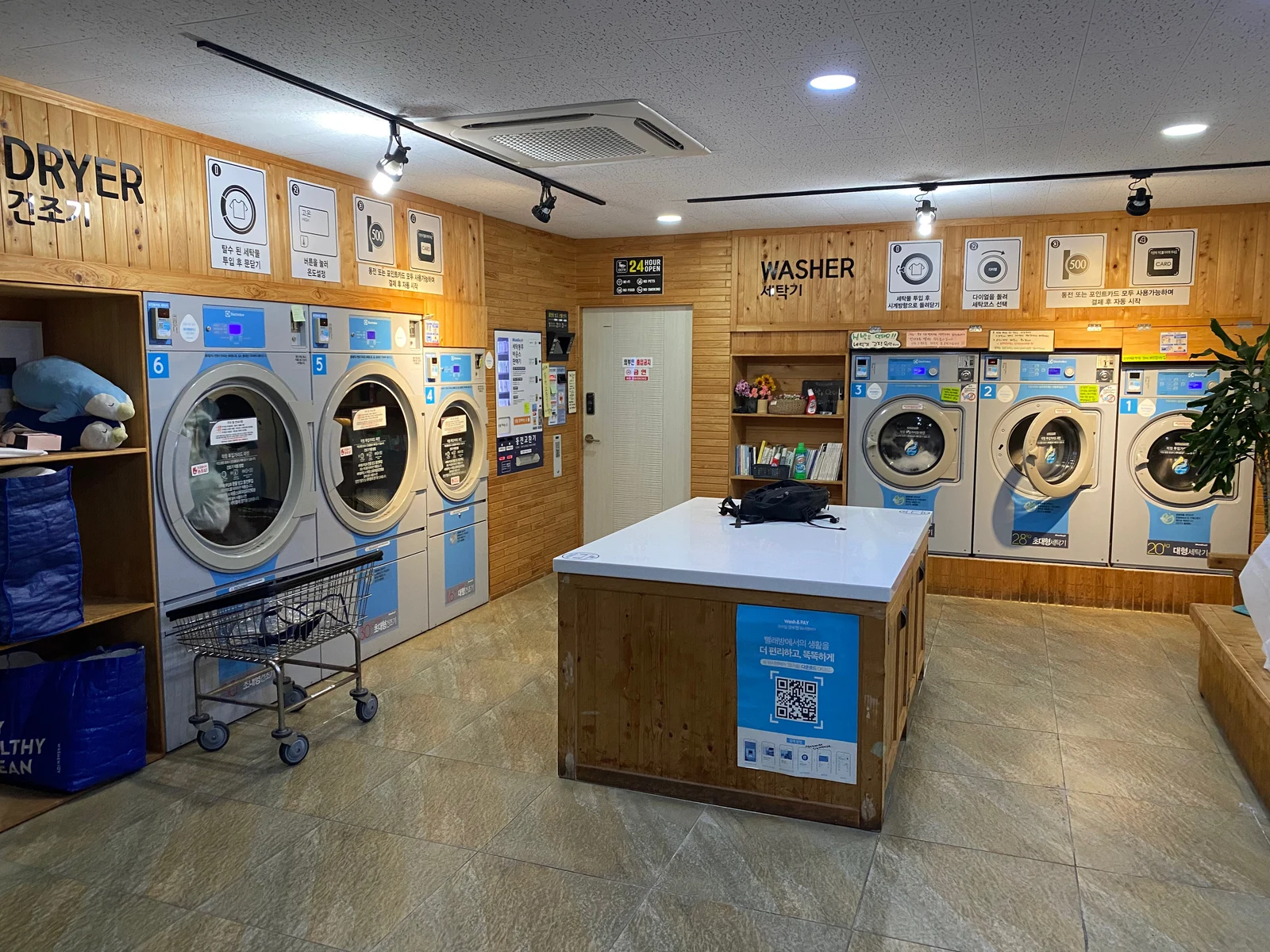
A washing machine used by one resident does not become a quarter of its purchase price when it was previously used by four. Once a load runs, it still has to be removed, dried and put away. Fewer residents may mean less washing, but preparing the machine and dealing with the finished load remain. That is why a washing machine and drying space deserve attention before simply comparing the home's area.
When laundry and dinner meet in one person's evening, the resident has to arrange their sequence. The machine can run during cooking, but there is not necessarily someone else to empty it. Repeated late shifts may lead to delaying washing or taking meals elsewhere. Asking family or using outside provision offers other routes, yet residents do not all have the same time and money.
Living with one other person does not automatically divide the work in half. If one's departure and the other's return occur at different hours, they may not eat together. Different days off can also change the opportunities to split cleaning. Sharing space and sharing tasks are different processes. The household count gives a headcount, not the amount or arrangement of time available during the day.
Costs and functions that do not shrink with the household
A lamp, refrigerator and basic residential space are needed by one person too. Fixed cost here means an expense that does not fall proportionally with the number of users, not an identical amount charged to every household. Rent, heating, insulation and the composition of building charges affect the actual burden. The one-person-household category includes both owner-occupiers and residents paying rent each month.
Making a home smaller may reduce one cost without reducing every task performed inside. Removing a dining table and eating at a work desk leaves the desk to be cleared again. Combining work and sleep in a room can mean moving objects when its purpose changes between day and night. These are examples of overlapping functions, not measurements of a particular dwelling.
A student prioritizing access to classes, someone working at home and a person who finds stairs difficult do not necessarily want the same room simply because each lives alone. Two-person households can include spouses, a parent and adult child, or other shared arrangements. Treating a studio as the answer for all smaller households overlooks work separation, visitor accommodation and routes suited to the resident's mobility. The headcount may have fallen; whether every necessary function has shrunk requires another question.
Finding local help or remaining in a familiar home
Someone moving to another area for study or work has to establish everyday routes as well as a home. Where to buy ingredients, which medical facility to use and whom to contact if something becomes difficult are part of settling in. Someone remaining alone in a longstanding home may know the neighbours but lack accessible medical or transport provision. The same one-person category can include connections that need building and familiar routes that are hard to use.
An area's percentage alone cannot show those differences. A small area with a high share can contain fewer actual one-person households than a large city's lower share. Age, income, dwelling type and the locations of transport and services need to be considered alongside it. How places in Korea are defined examines which territory enters such comparisons.
Living alone and isolation are not the same state. A separate home can have family and friends close by and in frequent contact. A shared home may still lack help on a particular day. The practical question goes beyond how many people are behind the door: is there someone to contact, and can that person actually come then? A household category cannot answer on the resident's behalf.

The work remaining after reaching a hospital
Seoul's Health Accompaniment, or hospital-accompaniment programme, shows outside support through actual procedures. Its 2026 description includes assistance with registration, the consultation visit, payment and pharmacy use. Reaching the entrance is not the end of the day's work. The person registers, moves to the consultation room, settles costs afterwards and obtains the medicines required. Apart from the medical treatment, these movements and processes can need another person. The city's programme description identifies its scope.
Although located within one-person-household policy information, the programme is not restricted to people living alone. It includes actual Seoul residents who have difficulty using a hospital, including those in larger households. A co-resident may be unavailable at the appointment time. Equally, not everyone living alone needs the service. Household size and the ability to find accompaniment on a particular day are separate conditions.
This support starts at the home's entrance, rather than inside. The resident must be able to use public transport or get into a wheelchair independently. Hospital accompaniment should therefore not be expanded into a description of provision replacing all care at home. Someone needing help to move from inside the home to the entrance still needs support for that stage. A connection works when the tasks it covers are known and the remaining tasks without a helper are identified.
Care extending beyond the door
Shopping and washing may usually be manageable alone, but illness preventing a resident from going outside changes the same tasks. Food can exist in the home without anyone able to prepare it. A washing machine can be present while removing and organizing the load still requires a hand. In a two-person home where one provides all the other's care, the caregiver's work and time change alongside those of the person receiving help.
Some homes ask relatives living elsewhere; others reach neighbours, paid services or public provision. Each route has a time when someone can come, tasks they can cover, costs and conditions. Not every route is available to every person. As with the entrance boundary in hospital accompaniment, describing practical help means knowing where it begins and how far it extends.
This is why furniture arrangement alone does not explain a good smaller-household home. Necessary work needs room, and tasks that become hard to perform alone need connections to particular people outside. Closing the door for privacy and reaching out for help are not mutually exclusive conditions.
A home that sustains a day, rather than minimizes its area
Using a purchase over several meals, retrieving laundry after dinner and navigating hospital procedures with another person make smaller-household life concrete. A falling headcount is not simply less eating and less space. It changes which jobs can be finished together, when they need doing again and who can share them.
Households count domestic arrangements; dwellings count spaces. The smaller-household share and the apartment share of housing stock can be considered together, but they are not the same number. Neither tall exterior walls nor a photograph of a solitary person explains all the work inside. After reading the figures, ask how the resident continues an ordinary day.
I think a good home for a smaller household is closer to one reducing what a person must carry alone than one competing for minimum area. It needs places to divide ingredients and dry washing, arrangements for rest and work, and a usable route to help when required. For the freedom of one person to last, the domestic life supporting that freedom must be sustainable too.

A good home for a smaller household should reduce the work one person must shoulder, rather than merely win a competition for minimum area.
Sources & scope
2025 population and housing census: register-based results ↗2026-07-282025 population and housing census: official republication ↗2026-07-28Population of Korea: indicator definitions ↗Hospital accompaniment in Seoul ↗2026-01-11Modules independently explains the verified sources. The lead image is AI-generated for illustration; it is not a documentary photograph of an actual place, event or product.
Updates & corrections
Dates record changes to this document, separately from the reference dates of its sources.
- Content update
Rewrote the article with fuller production, history, examples and source explanations.
- Document connections
Organised representative-document links, search descriptions, paragraph links and revision history. No factual correction.
- First published
Initial creation of the Korean and English document.