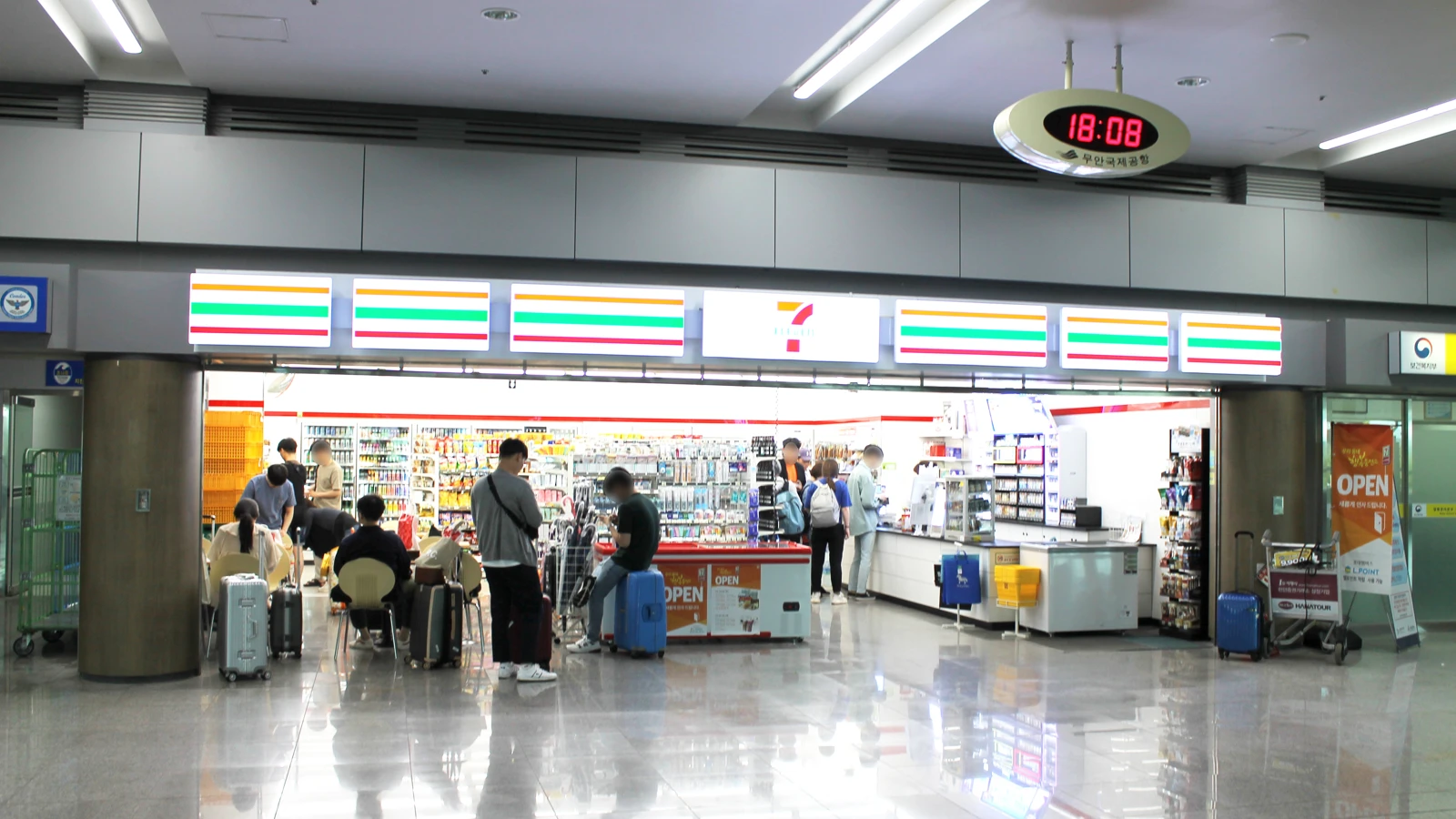
The goods arrive before the first customer
Follow a convenience store from its morning delivery to an evening meal and a parcel left behind. The customers and employee below form an imagined working day, rather than an account of a visit to one particular branch. The activities connect to real food production, distribution and parcel services. Tracking the objects makes the small room much easier to understand than listing everything available inside it.
A customer reaches for a chilled drink, but someone has already brought the goods in. The employee compares the delivery with the expected products and quantities. Opening a carton begins several tasks: identifying the contents, checking the number and moving them to the right storage. Chilled food and ambient products do not all go to the same shelf.
Suppose the order contains ten triangular gimbap. Ten of the wrong filling and eight of the right one present different problems. Even a correct delivery needs arranging: new stock placed in front can hide older items while their remaining time runs down. The shelf has an order as well as an appearance. The customer's single purchase is the result of those earlier movements.
Was that lunch box cooked in this shop?
BGF's chronology records a lunch-box factory in 2001, and BGF Foods describes manufacturing lunch boxes, rice balls, gimbap and sandwiches. Meals can arrive as prepared products rather than being made in a kitchen behind the till. The microwave handles a final stage for the customer.
Imagine choosing rice and side dishes in a divided container. A sauce that crosses the partition changes the neighboring food. A high stack can obstruct the lid; an arrangement that slides during carrying changes what happens on opening. Designing a meal includes closing, moving and reopening it, not only choosing its ingredients.
The customer reads the instructions for that particular product. Some products are heated; others are eaten without that step, and packaging arrangements differ. Selecting one complete portion replaces the purchase and preparation of several ingredients. The earlier cooking comes with the product. Quantity and composition are less adjustable, but much of the work is already finished.
What the small numbers on gimbap do
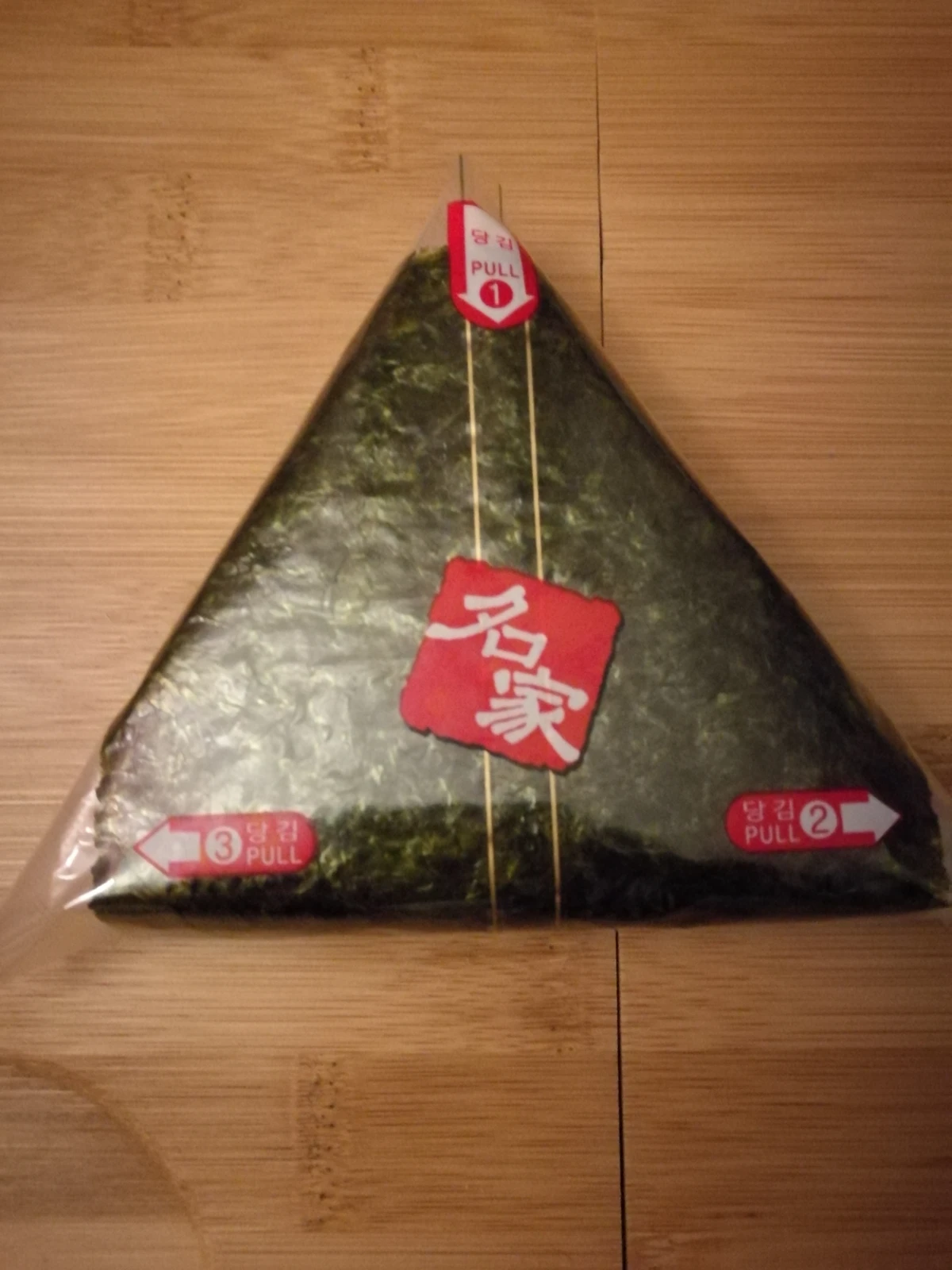
Another customer chooses a triangular gimbap while the lunch heats. Here, opening completes part of the food's structure. The photographed wrapper has numbered pulling instructions. Rice, seaweed and the film between them play different roles, despite appearing to form one object.
A wrapper separating rice and seaweed explains why eating can begin with several movements. Opening the strip and withdrawing the side films lets the seaweed come around the rice. Tearing everything at once and pulling in the indicated directions can leave different shapes in the hand. These numbers are a small assembly guide.
A sandwich asks different questions. If its filling slides to one side, the first bite and last bite contain different things. A visible cross-section must also remain manageable when lifted. Lunch-box compartments, gimbap film and sandwich layers are devices for selling food as a portable unit. The customer completes its last handling rather than starting a meal from scratch.
Two identical boxes carry different times
After lunch, several apparently identical meals remain. Their names and prices match; their printed dates may not. For staff, total quantity is only part of the inventory. Each physical product has time left to sell.
BGF records the introduction of TIME-PLU in 2007, blocking expired prepared food at checkout. Reading a barcode can therefore involve a time condition as well as a price. The system does not rearrange the shelf. Someone still removes dated stock and makes space for the next delivery.
Suppose eight of ten meals sold. The remaining two might represent excess ordering, or the decision to leave late customers a choice. Selling all ten can also leave someone facing an empty space. What remains and when the last item disappeared are different clues. Tomorrow's order grows out of both, not simply a count of today's sales.
A book obtains a shipping label
In the afternoon, imagine a customer bringing a boxed book for a friend. Packing was finished at home. The store connects the physical box to information identifying its recipient. GS Postbox domestic-parcel equipment includes a scale and routes for members and nonmembers.
The scale weighs the completed package, not only the book. Padding and tape travel too. The sender enters the recipient's details or retrieves a reservation already prepared. An incomplete address may resemble the correct one on the screen but lead the object somewhere else. Weight describes what travels; an address describes where it should arrive.
Printing gives the box an identifying label. Placing its barcode across a folded corner can make later reading harder; a flat, legible surface is the purpose of ordinary label placement. The customer connects the printed information to the actual package and completes the handover. The destination entered on a small screen is now attached to something leaving the shop.
The deposited box follows another clock
The sender buys a drink and walks out. That purchase travels with the customer; the deposited book travels toward someone else. Two things passing through the same door have separated. A parcel service adds a sending point to an existing shopping route.
The accepted box waits for collection before sorting and onward transport. What interests me is the movement gathered inside one room: refrigerated goods arrive toward the store, purchases leave in customers' hands, and deposited objects enter another network. A single vehicle does not perform all those journeys.
The links are made through small actions: checking entered details, keeping label and object together, and placing the box where accepted parcels belong. The service stays useful when those actions carry an object accurately into its next journey. The tiny shop accommodates a task with more stages than buying a drink.
A packet becomes dinner on the premises
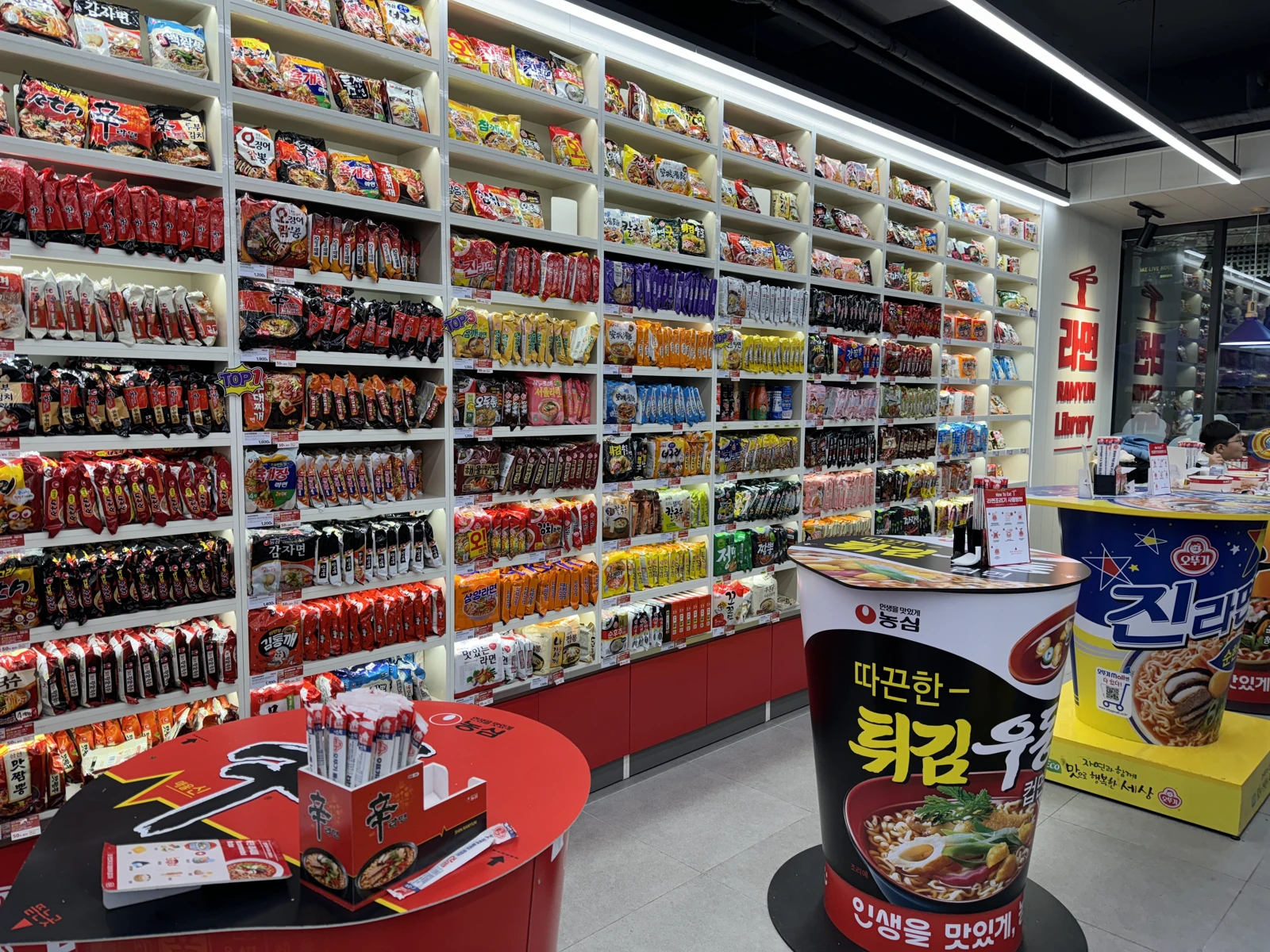
Consider preparing one noodle meal. Choosing a cup brings the eating vessel with it; a packet requires another container. Reading the package’s water quantity and method, then arranging noodles, dried ingredients and seasoning connects the purchase with kitchen equipment. Keeping broth or draining water before mixing also determines the next movement.
Cup-noodle packaging also serves as a vessel; packet noodles require another container. Adding hot water and waiting differs from supplying heat throughout cooking. The equipment handles that intermediate work. The customer's placement of noodles and seasoning joins the machine's heating stage to produce a meal.
Soup noodles, mixed noodles and separate sauce sachets make the choice visible. Reading when a sachet is used connects packaging with preparation. Taking a familiar product away and preparing an unfamiliar one create different lengths of visit. The specialty store provides a place where a packaged product reaches its edible final form.
A choice begun on a phone, a shelf left at night
An April 2026 Culture Ministry feature described brand apps with stock checks and advance ordering. Selection can begin on a small screen before the customer reaches the premises. Collection still requires matching a real product to the order.
Searching for a particular sandwich before setting off differs from arriving and browsing. A nearby branch becomes information for choosing a route. For an unplanned purchase, the shelf remains the starting point. Both paths can end at the same counter, where an employee connects information and object.
At day's end, empty spaces, stock to remove and numbers for tomorrow remain. I find the store's capacity to finish small tasks more revealing than its image as a room that does everything. Final heating, a wrapper's assembly, a book's label and the next order all meet here. The satisfaction of finishing an errand nearby comes from the precise actions that actually finish it.
Read the wider food and distribution system in the Korean convenience-store reference and another rice-and-seaweed structure in gimbap.
At day's end, empty spaces, stock to remove and numbers for tomorrow remain. I find the store's capacity to finish small tasks more revealing than its image as a room that does everything. Final heating, a wrapper's assembly, a book's label and the next order all meet here. The satisfaction of finishing an errand nearby comes from the precise actions that actually finish it.
Sources & scope
BGF business timeline ↗BGF Foods production and distribution ↗GS Postbox domestic-parcel instructions ↗Beyond the Corner Store: How Korea Transformed Convenience Retail ↗2026-047-Eleven Muan International Airport branch, 20 May 2019. Photograph by LERK.
LERK · CC BY-SA 4.0 · Resized and converted to WebP; no croppingUpdates & corrections
Dates record changes to this document, separately from the reference dates of its sources.
- Content update
Rewrote the article with fuller production, history, examples and source explanations.
- First published
Created Korean and English documents from verified sources.