- 1958Chicken Ramen launches in Japan
- 1963Samyang Ramyeon launches in Korea
- 1969Samyang starts exports to Vietnam
- 1986Shin Ramyun launches
- 2005Nongshim opens its LA factory
- 2012Buldak stir-fried noodles launch
- 2017Shin Ramyun reaches all US Walmart stores
- 2025Ramyeon exports reach $1.52bn · provisional
The hard block comes before the meal
Open a packet of Korean ramyeon and dinner initially looks unpromising: a brittle block and little sachets. In boiling water the curls loosen, seasoning dissolves and the smell of the kitchen changes. Pick another packet from the same shelf and its instructions may ask you to drain the water before mixing in sauce. A cup needs hot water poured into its own container. The shelf holds several ways of finishing a meal, rather than a single red soup.
That short finish rests on work done earlier: precooking and drying noodles, installing production equipment in Korea, developing containers and supplying shops overseas. The journey runs from Japanese instant noodles in 1958 to Korea's first packet in 1963, then through decades of products, factories and cooking routines.
In 1958, dried noodles could become food again
Nissin's founder history dates Momofuku Ando's Chicken Ramen to 25 August 1958. The useful idea was to turn cooked noodles into a storable product that softened again in hot water. Someone buying fresh noodles starts with moist dough; an instant-noodle buyer starts after much of the heating and drying has already happened.
Flour and water form a dough, rollers flatten it into a sheet and cutters divide it into strands. Steam cooks the starch before drying. Fried noodles lose moisture in hot oil; non-fried noodles can use hot-air drying. The World Instant Noodles Association explains how pores in fried noodles allow hot water to penetrate when they are prepared. The factory makes something that must both remain dry on the shelf and take up water again at dinner.
Portioning, cooling and packing follow. A few minutes at the stove therefore finish a much longer preparation. The work that made dinner quick was performed before the shopper bought it.
Korea brought in machinery as well as a product
Samyang Ramen launched on 15 September 1963. Samyang's account places it against food shortages and describes founder Chun Joong-yoon obtaining machinery and technology from Japan's Myojo. Producing the new food repeatedly required equipment to handle dough, heating and drying, not simply a name on a bag.
Its familiar curls also originate in production. Samyang's FAQ describes cut strands reaching a receiving conveyor that moves more slowly, causing them to fold into waves. The strands arrive faster than the belt carries them away. Gathering them into manageable portions, heating and drying produces the block eventually lifted from the packet.
The machinery disappears from view at home, but the shape it made opens out in the saucepan. Our ramyeon manufacturing article follows those operations more closely. Later flavours and containers accumulated around this repeatable manufacturing base.
Chapagetti and Shin Ramyun finish differently
Nongshim's chronology records Chapagetti in March 1984 and Shin Ramyun in October 1986. One becomes noodles mixed with black-bean-style seasoning; the other cooks noodles in broth. The difference becomes especially clear in the last movements of preparation.
Soup holds dissolved seasoning and rehydrated flakes around the noodles. Drained noodles concentrate seasoning on the strands. Too much remaining water lets sauce run towards the bottom of the plate; too little can make mixing awkward. Boiling is only part of the task: keeping or discarding water determines the texture on the table.
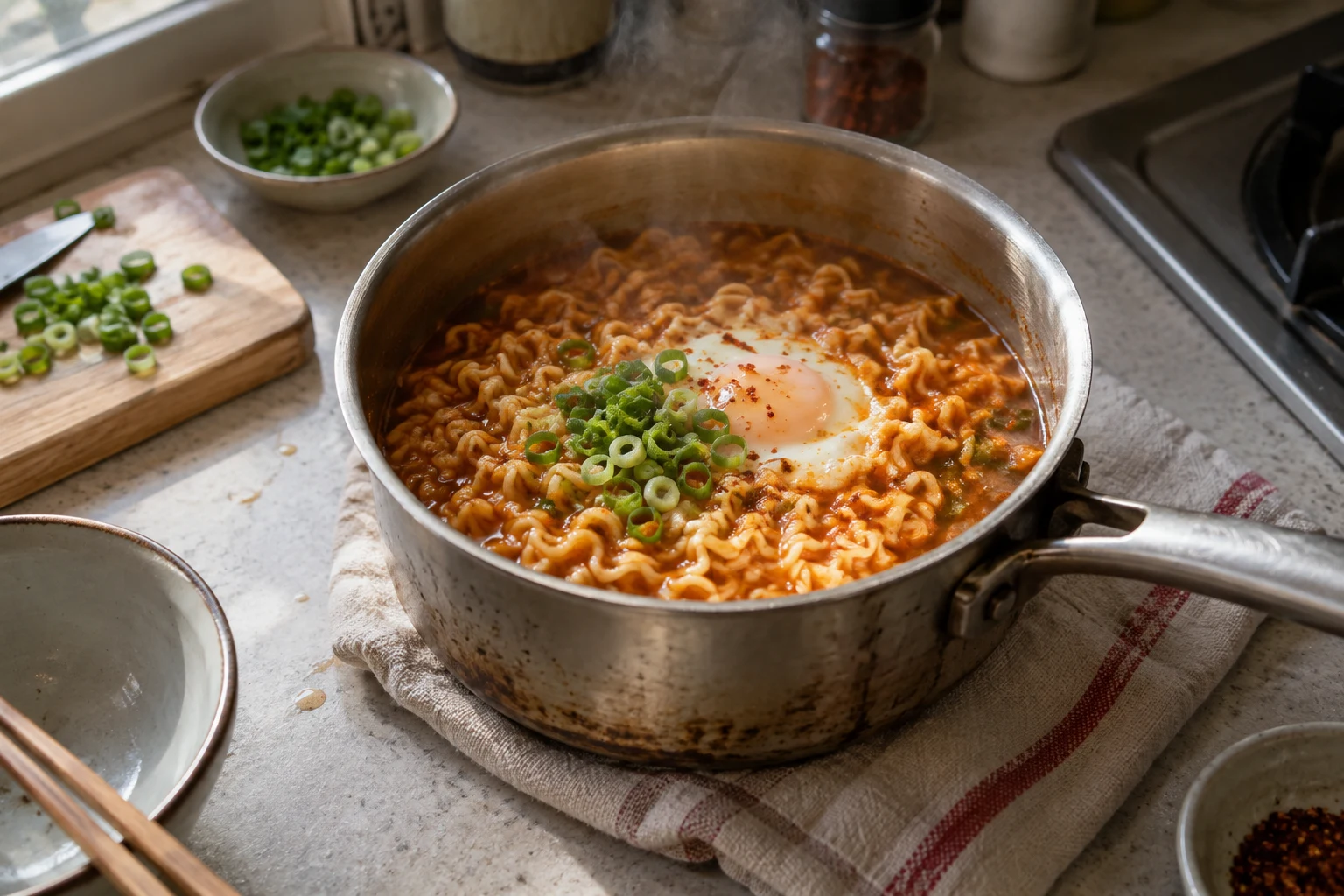
The Korean original Shin Ramyun packet specifies boiling 550mL of water, adding noodles, powder and flakes, then cooking for another four minutes thirty seconds. Other variants and markets can have different instructions. The packet in hand supplies the appropriate baseline; an egg or chopped spring onion then becomes a household addition to that broth.
The cup brought its own eating vessel
Nissin's Cup Noodles launched on 18 September 1971; Samyang's chronology records a cup product in March 1972. The selling container also became the preparation and eating vessel. Instead of keeping a saucepan on the stove and transferring its contents, the eater could carry the final preparation to a place with hot water.
The noodles and dried ingredients wait together. Water reaches the marked line, the lid closes and both absorb moisture. Noodle shape, container dimensions and waiting time have to work together. Choosing a cup changes the eater's actions from watching a pan to filling a vessel and waiting.
Where a Korean convenience store provides suitable hot-water facilities and a place to eat, that preparation can happen before the journey home. A packet and a cup can offer similar tastes for different practical circumstances.
Exports were followed by overseas companies and factories
Samyang's chronology records exports to Vietnam in January 1969, a Brazilian production company operating in July 1972, a US company in July 1980 and an LA factory completed in March 1983. Korean noodles crossed borders long before short videos carried eating reactions around the world.
Nongshim's overseas account describes exports to LA from 1971, a US company established in 1994 and its LA plant beginning operations in 2005. Shipping finished packets from Korea and supplying American shops from an American factory became coexisting routes. A recognizable Korean brand can have a manufacturing geography extending beyond Korea.
Shoppers rarely see the warehouses, transport and production planning behind the shelf. Those activities make it possible to buy another packet after an enjoyable first attempt. A memorable taste invites attention; filling the shop again allows that attention to become another dinner.
Buldak made sauce and an eating reaction prominent
Samyang dates Buldak's launch to April 2012. Its drained, sauced noodles create a different scene from drinking broth: lifting a strand brings the coating straight to the mouth. The action is easy to see on camera.
The brand's 2026 retrospective identifies the online Fire Noodle Challenge as a route of discovery. Viewers can remember noodles and a reaction before learning to read the package. Cooking it themselves then brings draining and sauce mixing from the screen into their own kitchen.
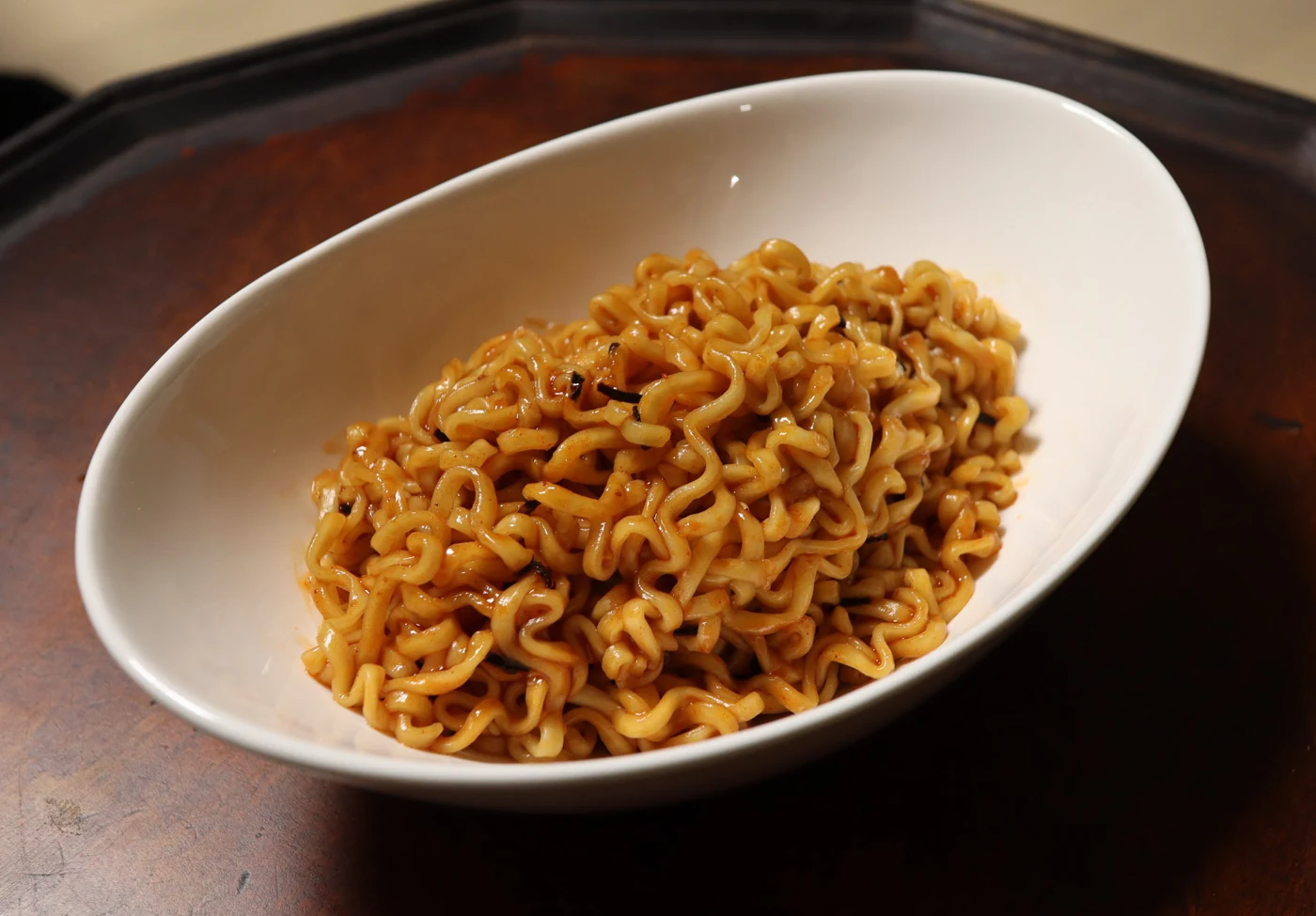
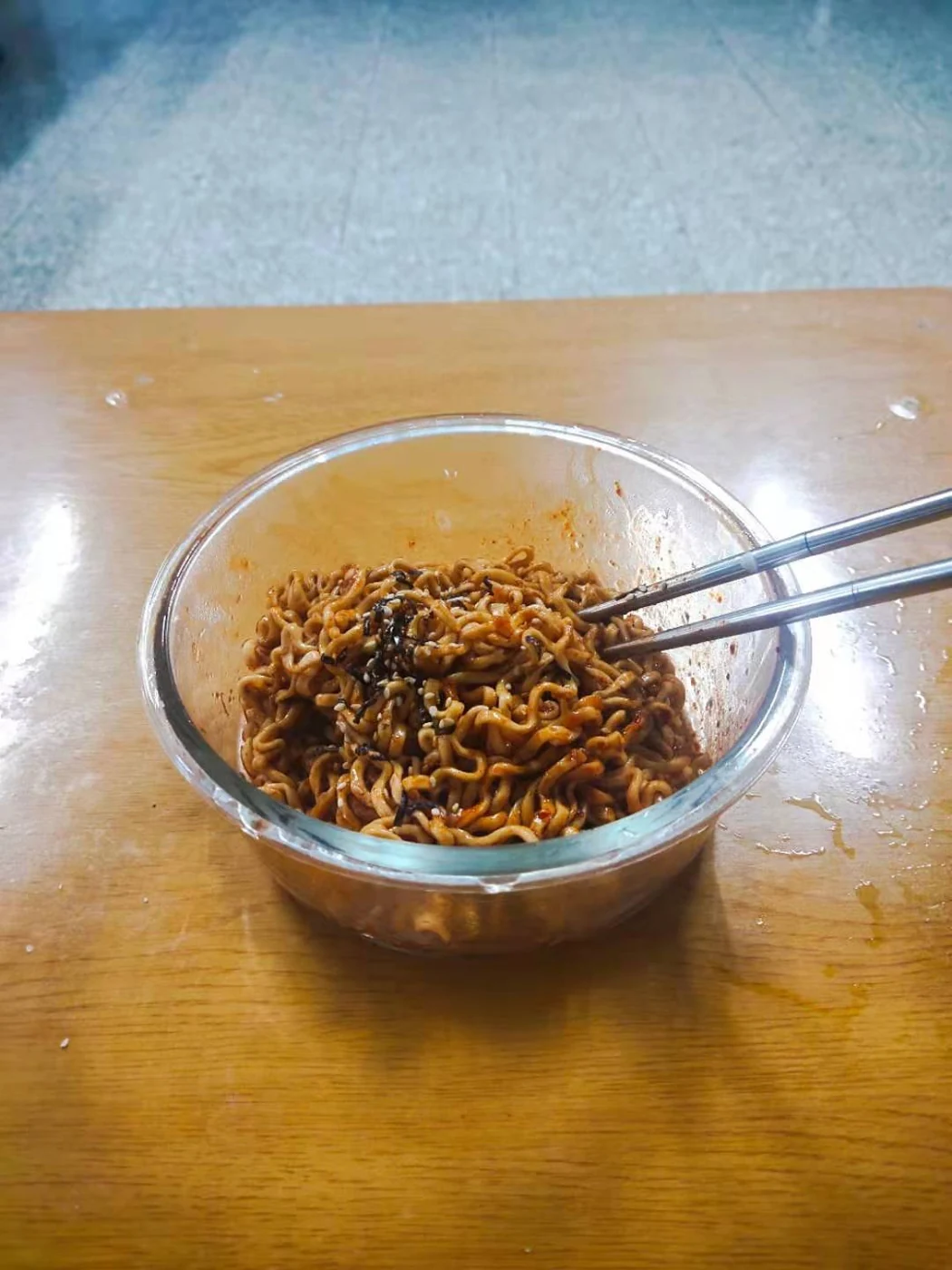
Carbonara versions and separately sold Buldak Sauce broadened the possibilities. Someone can choose a creamier noodle seasoning or add sauce to food already prepared. The name enters different meals through different final actions. The sauced noodles in the photographs show why a bowl of red broth alone no longer represents the category.
What crossed the border in 2025
A Ministry of Agriculture release of 12 January 2026 puts provisional Korean ramyeon exports for January–December 2025 at USD 1,521.4 million, up 21.9 percent. Its ramyeon figures include USD 385.4 million for China and USD 254.7 million for the United States.
These are exports from Korea, not all worldwide sales of Korean brands, including products manufactured overseas. Factory histories and export data illuminate different parts of the shelf's supply. Behind the large figure are repeated small purchases: equipment makes consistent noodles, sachets divide the final cooking tasks and distribution returns products to shops.
A familiar packet joins a different dinner
Place gimbap beside the saucepan and broth meets a rice-based meal. An egg makes soft pieces in the soup. A plate of sauced noodles shared alongside another dish changes the pace and accompaniments. The cook may remember an online scene, but the meal takes shape around the kitchen and people actually present.
The invention, Korean production, broth and sauce products, cups and overseas factories all lead to that ordinary final act. Korean ramyeon's lasting appeal lies partly in letting dried noodles become an accessible dinner in many places. The packet opens similarly; what sits beside it changes. A food that can accommodate those small differences, remain available and be cooked again has travelled further than a spectacular first bite.
Precooked and dried noodles, different final cooking actions, containers and supply routes turned a packet into an accessible dinner in many places.
Sources & scope
Samyang: noodle manufacture and launch questions ↗Nongshim: noodle manufacturing process ↗WINA: rehydration and drying explanations ↗Korean Shin Ramyun packet instructions ↗Nissin: Chicken Ramen and Cup Noodles launch dates ↗Samyang’s first production, cups and overseas facilities ↗Nongshim: Chapagetti and Shin Ramyun chronology ↗Nongshim’s US export, company and factory chronology ↗Buldak discovery online and product forms ↗2026-10-01Korean ministry’s 2025 ramyeon export figures ↗2026-01-12Modules independently explains the verified sources. The lead image is AI-generated for illustration; it is not a documentary photograph of an actual place, event or product.
Updates & corrections
Dates record changes to this document, separately from the reference dates of its sources.
- Content update
Rewrote the article with fuller production, history, examples and source explanations.
- Document connections
Organised representative-document links, search descriptions, paragraph links and revision history. No factual correction.
- First published
Initial creation of the Korean and English document.