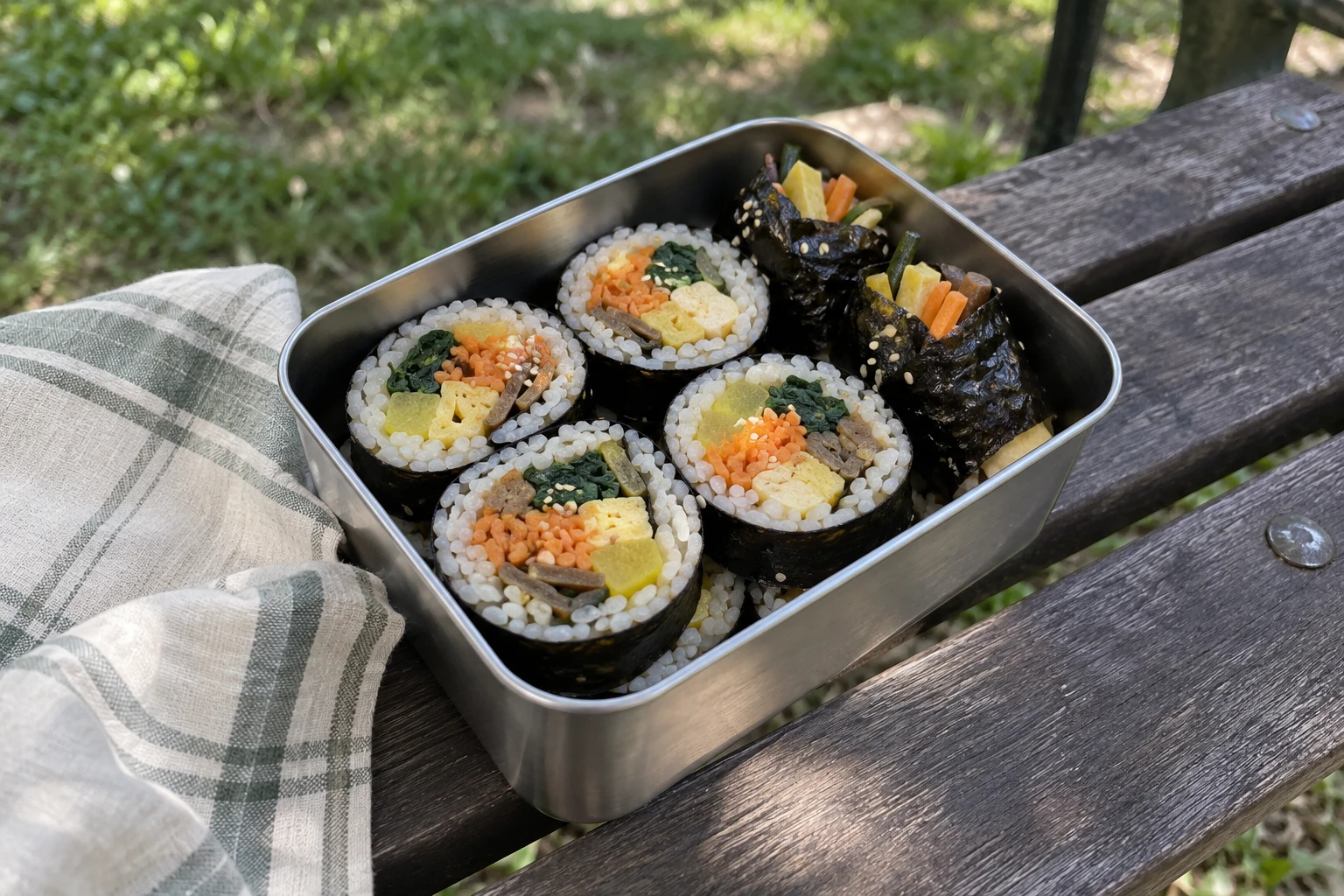
Ordering one roll brings several preparations together
Open a gimbap packet and cut pieces line up inside. Egg, pickled radish, carrot and green leaves divide the small cross-section. Picking up one piece needs no separate bowls for rice and accompaniments. The seaweed holds them together; rice fills spaces around the long ingredients. Eating is quick, but each component arrived through its own preparation.
The roll also sets an ordering unit. A shop cuts one long object, and the diner chooses among its pieces. Filling can project from the ends while the middle shows an enclosed section. Two people divide the portion by choosing pieces. The same packet can become a quick individual lunch or a plate beside other food.
The roll's changing life connects lunchbox kitchens, shops taking orders and factories moving frozen food. Wrapping continues, while ingredients and the person doing the final work change. Following those places reveals how a compact meal moves its preparation through time.
A 1966 cookbook squeezed liquid from braised fillings
In her Encyclopedia of Korean Culture entry on gimbap, Cha Kyung-hee describes Yoribaekgwa, published in 1966. It advised squeezing liquid from braised dried gourd or shiitake fillings and illustrated assembly in nine photographic stages. Removing liquid was part of preparing the filling, not an action separate from the food. This is the cookbook example as reported by the encyclopedia's author.
Braising cooks an ingredient in seasoned liquid. A serving bowl can hold both; the narrow interior of a roll gives that liquid a different destination. Reducing what remains lets the filling sit beside other ingredients without running out. A small portion in the finished section therefore carries another task after the braising itself.
Dried gourd and shiitake may surprise someone imagining only egg, radish and carrot. Rice and seaweed have continued while the accompaniments inside changed. A new cross-section can result from a different prepared side dish, not simply a new menu name.
The 1976 example seasoned rice and prepared the knife
Cha also discusses Gyejeol gwa Siktak from 1976. Its gim-chobap used sweet-vinegar-seasoned rice, beef and shiitake, egg, spinach, pickled radish and carrot, with a vinegar-moistened knife for clean cutting. Preparation began with rice seasoning and continued into the last movement through the roll.
Seasoning rice before spreading distributes taste through the grains. Fillings arrive from their own cooking. The knife turns a long piece into mouthfuls; adhering rice or displaced filling can affect the next slice as well. The last tool movement preserves work already done. Naming the book and year makes an older meal tangible, rather than leaving it as an unspecified ancestral roll. Present-day ingredient handling continues in making gimbap.
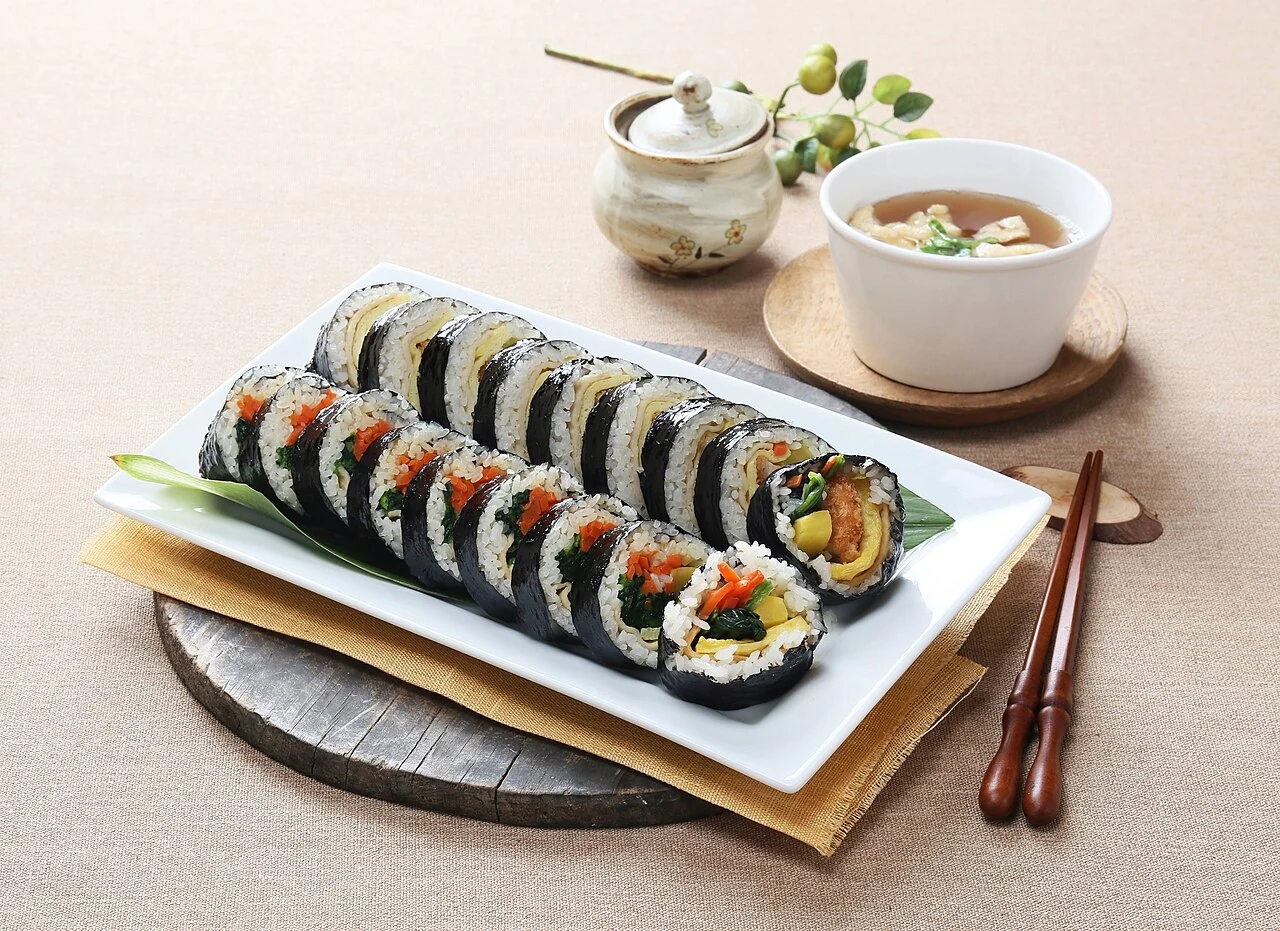
Specialist shops and dedicated ham moved the preparation
Cha's account describes specialist shops and franchises expanding in the 1990s, and a dedicated gimbap ham product from Lotte Ham in 1996. An ingredient could be bought for this use rather than prepared entirely at home.
That product does not fry the egg or wash the vegetables. Separate containers at a shop hold cooked but not yet assembled components. Rice, egg, carrot, radish and meat keep their positions until an order combines them on the sheet. Several preparation tracks then become one sale.
Tuna mixture sits beside other fillings; a thin cheese sheet and a bulky breaded pork filling demand different spaces. A change of menu changes placement as well as flavour. Variety includes how the shop assembles ingredients already prepared for the next customer.
Chungmu gimbap keeps its accompaniments outside
KTO's Chungmu gimbap description presents small plain rice rolls with radish kimchi and seasoned squid alongside. Chungmu is the former name of Tongyeong. A hand moves between rice and accompaniments rather than selecting identical filled sections.
Radish crunch and squid's chew remain outside the wrapper. They can follow the rice or accompany it in a mouthful. The diner chooses the combination repeatedly, while an internally filled roll fixes much of it at cutting. This is a real serving arrangement in which the whole meal occupies the plate, not the interior of every roll.
A lunchbox can likewise add fruit or a separate side; warm soup calls for a spoon beside the slices. Portability comes from carrying rice and some accompaniments readily. The wrapper's production follows in gim from sea to snack.
Ordering screens and buckwheat changed another centre
A KTO report written in November 2023 and published in February 2024 described kiosk ingredient choices and buckwheat-noodle rolls, including 136-gil Yukmi. A sliced noodle centre shows strands where rice grains might otherwise lie.
Preparing cooked noodles for a roll involves arranging long strands, rather than spreading grains into a layer. Egg and vegetables occupy space around them. The wrapping form provides room for another material to become a meal.
A selection made on a screen reaches the assembler before the roll closes. Unlike choosing a completed packet, it can affect which prepared components meet. The visible convenience needs separated materials behind the counter. A new ordering action still relies on earlier preparation.
Frozen production adds a factory and a home timetable
ALLGOT's mushroom-and-japchae product listing on buyKOREA describes a 230g frozen roll, a spiral-freezer process at minus 45°C for forty minutes, and three-minute microwave preparation. These are that manufacturer's product-specific settings. The roll passes through a freezing operation and later a consumer's heating.
Fresh assembly puts ordering and eating close together. The frozen route inserts storage and transport between production and retail. The consumer no longer spreads rice and positions fillings, but undertakes the final heating of prepared food.
A short kitchen action follows earlier manufacturing work. Factory equipment prepares a state that can travel; home equipment returns it to a meal. The portable form survives while the places and tools responsible for it change.
Two customer votes show a particular overseas encounter
Trader Joe's official customer-choice announcements placed kimbap third among overall favourites in 2024 and fourth in 2025. Those were votes among one retailer's customers, not measurements of the entire American table.
The frozen retail encounter changes when the roll must be assembled. Food can pass through a freezer display and be heated in the eater's kitchen rather than being rolled immediately before purchase. Storage and a final domestic action become part of the route into another country's meals.
Trader Joe's votes and ALLGOT's separate manufacturing example document different businesses. Together they make production, storage, retail and heating visible, without requiring them to concern an identical product. Convenience still has work on both sides of the packet.
The meal finishes where the packet opens
A train lunchbox places slices beside other foods. Picking up a piece lifts rice and filling together; choosing an accompaniment changes the next mouthful. At a picnic, the roll can move from its packet to a shared plate. A portable shape allows individual eating and sharing.
Its lasting value lies in gathering several prepared foods into something one hand can take. The hands draining a braise, seasoning rice, arranging shop ingredients or heating a factory-made roll act at different moments. Their work travels beyond the kitchen in the same compact form.
After the final piece, an empty packet remains. The ingredients of a 1960s cookbook differ from today's choices, but seaweed and rice still hold several preparations together. Treating gimbap as a meal recognises that cooking rather than dismissing its convenience. Each small section brings egg, vegetables, rice and wrapper together; the roll's story ends in the eater's final choice.
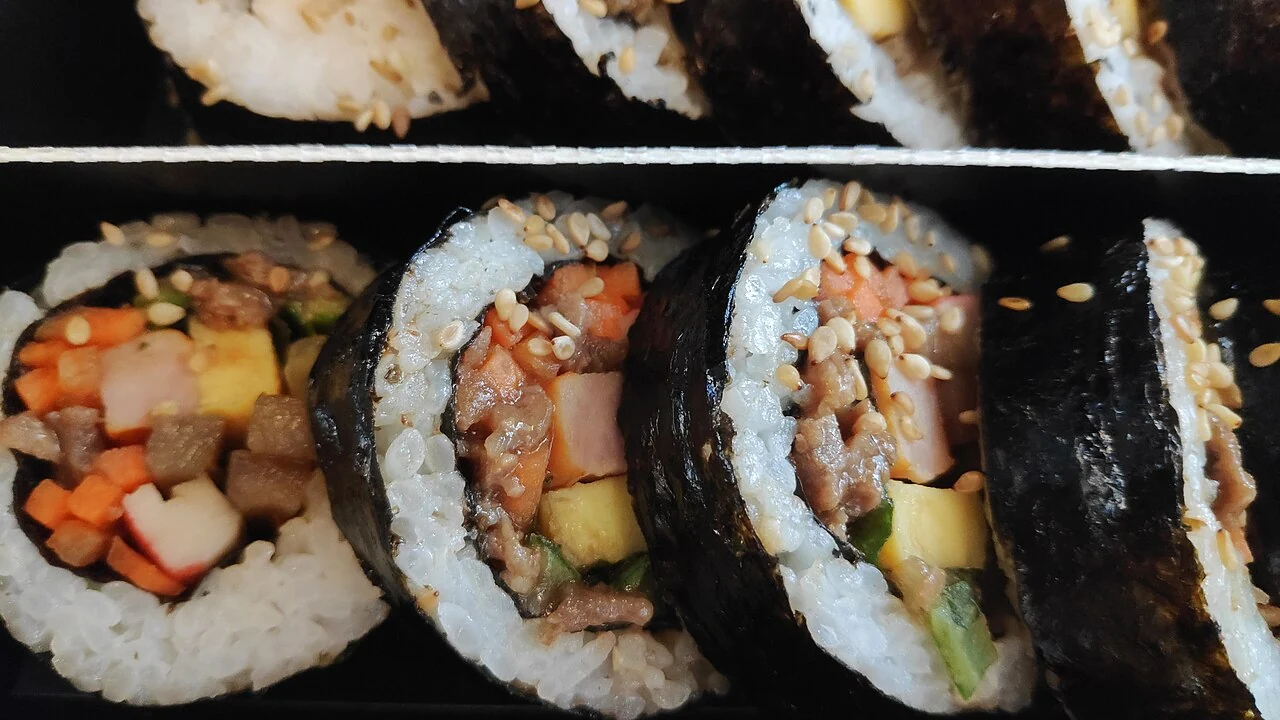
Gimbap brings separately prepared foods together and lets their cooking travel.
Sources & scope
Gimbap: cookbooks and specialist shops ↗2023-09-21Chungmu gimbap serving arrangement ↗2023-10-19Gimbap orders and buckwheat rolls reported in 2023 ↗2024-02-02Trader Joe’s 2024 customer choice ↗Trader Joe’s 2025 customer choice ↗ALLGOT frozen roll and manufacturing settings ↗Modules independently explains the verified sources. The lead image is AI-generated for illustration; it is not a documentary photograph of an actual place, event or product.
Updates & corrections
Dates record changes to this document, separately from the reference dates of its sources.
- Content update
Rewrote the article with fuller production, history, examples and source explanations.
- First published
Created Korean and English documents from verified sources.