A playlist, a book and a packet of noodles
Imagine a phone playing a song, a translated novel in a bag and Korean noodles on a kitchen shelf. All three might carry someone’s interest in Korea, but they ask for different things. A recording starts with a tap; a book asks for sentences to be read; noodles require the packet to be opened and water heated. The pleasure arrives at different moments, made possible by different kinds of work.
Behind a song’s version name are real singers. Inside a translated edition is someone who made sentences in another language. Behind a smooth comic screen are images rearranged and lettering checked. A live show produces its sound again tonight, while a food factory leaves the final preparation to someone’s kitchen. Our K-culture reference connects the wider fields. Here, we move close enough to see the work behind six entrances.
Different voices under one song title
The music connected with the 2025 animated film KPop Demon Hunters includes a TWICE version of “Takedown.” Netflix credits Jeongyeon, Jihyo and Chaeyoung as its singers. The small version label links the film’s fictional world to identifiable recording artists. Someone who first followed a character can then follow a real voice.
Slow down an imaginary listening session. On the first play, the chorus stays with you. On another, you notice the voice beginning a phrase and voices supporting it. Recording generally involves capturing separate performances, selecting usable passages and balancing voices with instruments. A clear voice at the front and layered voices behind it share a finished track without doing identical jobs.
An audio track leaves your attention free to follow sound. A performance video adds who steps forward and how several bodies move together. Changes of voice can become changes of position. Music’s immediate invitation contains material for repeated listening; enjoyment can begin before the listener has mastered the language.
The book keeps travelling after translation
Bora Chung’s Cursed Bunny was translated by Anton Hur. Honford Star published the English edition on 15 July 2021; it was shortlisted for the 2022 International Booker Prize. Naming writer, translator and publisher makes the route visible. The writer’s name alone cannot bring an English book into a reader’s hands.
In a 2022 Booker interview, Hur described the difficulties after translation: finding funding and publishers, and building an English readership. Finished sentences still needed a published book and people who could find it. Contracts, editing, production and introduction connect the manuscript with the shelf.
Consider ordinary editing work. Names need consistency; a change of speaker needs to be clear; deliberate repetition needs to survive. Expanding a short sentence may explain its meaning while changing its speed. Removing every piece of context may leave a character’s response puzzling. Such choices shape how a reader moves through language.
A reader can remain on a sentence, return to an earlier page or resume several days later. Literature offers that slower encounter with a work, rather than a compressed tour of a country. Its characters and discomforts deserve their own time.
A hand reveals the next comic panel
For an invented vertical-comic scene, picture a person stopping outside a door. First comes the closed door, then a hand reaching for its handle. Further down appears a dark room; below that, the tip of somebody’s shoe. The reader does not yet know whose shoe it is. Four panels on paper might reveal it at a glance. A vertical screen makes the reader’s movement part of the disclosure.
Making the scene involves more than one long drawing. The artist can change the space between hand and room, enlarge small lettering and move a speech balloon away from a face. Blank space can delay the next visible image. It is part of the reading rhythm.
WEBTOON documents uploads, desktop/mobile previews, drafts and scheduling. Drawing time and release time become separate stages. A corrected episode may appear next week as an apparently effortless screen.
If the invented episode ends at the shoe, the next needs to decide when to show the face. Endless postponement becomes tiring. Completing an action while leaving a new event open gives a serial its rhythm. Our webtoon story follows that screen and production process further.
Kitchen tools become stage sound
NANTA provides an entrance between food and music. PMC’s detailed history records its Seoul Hoam Art Hall debut in October 1997 and Edinburgh Fringe appearance in August 1999. The show connects samulnori rhythms with a kitchen, turning knives and chopping boards into sounding objects.
Imagine one performer tapping a short pattern and another answering. Their bodies show the timing as well as the sound. A late movement can create a comic interruption; a sudden pause makes room for a face to be noticed. Tools, rhythm and a visible reaction can carry this imagined situation together.
A recording repeats the same sound; tonight’s stage must make it again. Tools need their positions, bodies need coordinated paths, and lighting and sound cues need timing. Sparse dialogue can offer an accessible entrance, supported by a considerable amount of rehearsal and precision.
Factory time meets kitchen time
Samyang Foods explains noodle curls through differing speeds between the cutting process and its receiving conveyor. As strands arrive faster than they move away, they gather into curves. A familiar shape in a packet starts with machinery in motion.
Fried instant noodles have already been steamed and had moisture reduced in oil. They are not simply raw flour dough. At home, hot water loosens the prepared block. The factory has made a form suitable for transport and storage; the kitchen completes it.
Imagine an evening meal: noodles and seasoning come out of the packet, water is prepared according to its instructions, and chopsticks separate softening strands. A soup product and a product requiring draining and sauce mixing end with different movements. Reading the package brings language into the preparation; a pan and a hand controlling the draining bring equipment and skill.
An egg may be added, or nothing at all. The bowl belongs to that meal. Korean food does not finish travelling on a retail shelf: it enters the habits of the kitchen that receives it.
Beauty moves from display to replacement
A cushion compact introduces another form of handling. A puff takes liquid from the contained surface, changing how a product is dispensed and carried compared with pouring from a bottle. The shape helps organize an action.
Repeated use makes less visible details important: the inner cover, puff storage and the replacement’s fit. A replacement needs to match not only the size of its case but also the grooves and the way it locks into place. Picking up a refill with a familiar name and fitting it into the existing object are different actions. The story of a cushion’s replacement structure examines that difference through a concrete example. Interest moves from the first product photograph to the shape of a part that must fit.
Picture packing a compact for a journey. Closure and containment organize transport; opened again, the gripping surface and mirror affect movement. A screen image becomes something closed, packed and opened repeatedly. This is a story about object form and use, rather than a medical claim or a product recommendation.

Different entrances leave different pleasures
The TWICE recording leads from a character to a voice. Cursed Bunny reaches another language through writer, translator and publisher. A comic gives a hand part of its timing; NANTA makes sound anew. Noodles meet water in a kitchen, while a compact’s design remains important when its contents run out.
I find this breadth more rewarding than adding famous names to one line. A music listener need not become a novel reader; someone entering through literature already has a complete encounter without knowing the concerts. Cultural variety allows those routes to remain different.
A label gathers attention. What lasts is the voice heard again, the sentence revisited, the screen moved further and the emptied bowl. Understanding the different work behind them makes the next encounter’s difference welcome. The culture grows richer when those differences receive enough time.
A label gathers attention. What lasts is the voice heard again, the sentence revisited, the screen moved further and the emptied bowl. Understanding the different work behind them makes the next encounter’s difference welcome. The culture grows richer when those differences receive enough time.
Sources & scope
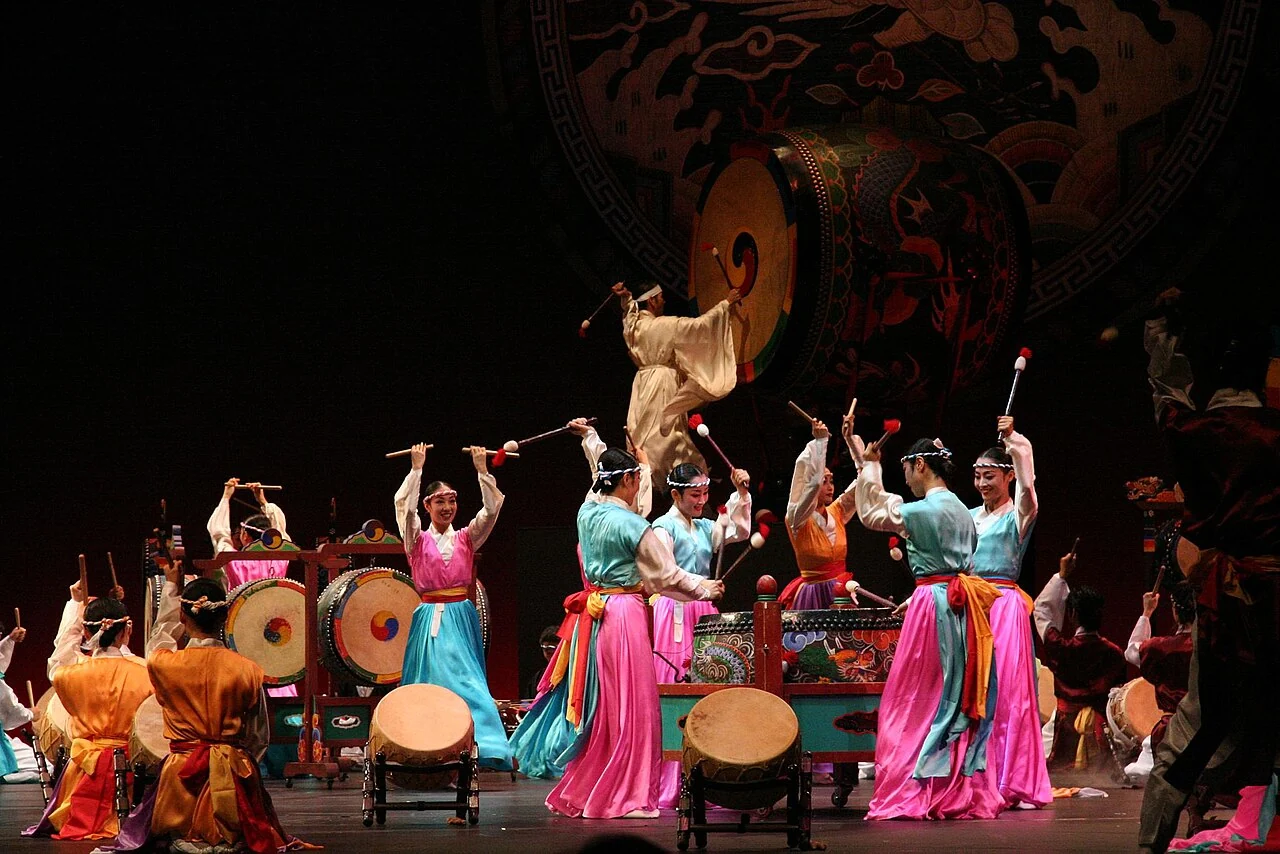
Everything to Know About KPop Demon Hunters: Songs, Awards, Lore, and More ↗2026-03-26Cursed Bunny ↗Discover the shortlist: Anton Hur, My most marketable skillset is translation ↗2022-05-25THE NANTA ↗WEBTOON Creators Resource Handbook ↗FAQ ↗Grand Drum Ensemble, National Dance Company of Korea. Sejong Center, Seoul, 22 August 2006.
Brian Negin (bdnegin) · CC BY-SA 3.0 · Resized and converted to WebP; existing source adjustments retainedUpdates & corrections
Dates record changes to this document, separately from the reference dates of its sources.
- Content update
Rewrote the article with fuller production, history, examples and source explanations.
- Document connections
Organised representative-document links, search descriptions, paragraph links and revision history. No factual correction.
- First published
Initial creation of the Korean and English document.