Several voices inside one animated character
A song leads someone to an animated film; a comic leads another reader to a television adaptation. K-culture is a broad name for cultural work connected with Korea, encountered through music, screens, books and food. What stays in memory, though, is often much smaller: a voice, a pause between comic panels, a sentence that makes the next page irresistible. Following how those details are made reveals more than collecting everything beneath one label.
In the 2025 animated film KPop Demon Hunters, Rumi, Mira and Zoey have separate speaking and singing performers. Arden Cho, May Hong and Ji-young Yoo provide their dialogue; EJAE, Audrey Nuna and Rei Ami provide their singing voices respectively. Three characters bring together six performers. Sony Pictures Animation participated in production, with Maggie Kang and Chris Appelhans directing.
The audience still follows one character across speech and song. Matching volume is only part of the transition. A breath after dialogue, the first sung note and a changing expression have to belong together. The character's brief appearance combines acting, singing, animation and sound work rather than one person's isolated performance.
A song also has a job inside a film
“Golden” began with a seven-page brief. Music supervisor Ian Eisendrath described Rumi's quiet bridge. These compact production details point to different tasks within a song: a chorus that invites repetition and a passage that turns toward an individual's interior life.
A verse can develop particular details; a chorus can hold an idea through recurrence. A bridge can interrupt the established pattern, adding a new tension before the return. More instruments are not the only way to increase emotional force. A quieter passage can make the next full arrangement feel larger. Listening means remembering what came before the sound arriving now.
Consider an invented working example: a character sings confidently before a crowd, then repeats a line softly alone. The picture editor might hold the face or shift attention to a hand and the surrounding room. A change in musical duration changes the time available for lips and bodies to move; a pause needed by the image can also require room in the music. This is a general illustration of animation and musical timing, rather than an account of an unreleased scene from the film.
Heard later as a recording, the song continues without those images. Voice, arrangement and repetition now carry the attention previously shared with a face. For me, that change is part of the appeal: one finished work supports different ways of concentrating, rather than merely advertising another product.
Misaeng travels through panels, actors and translators
Yoon Tae-ho's Misaeng offers a concrete route between media. Japan's Media Arts Festival record lists the Korean television adaptation of 2014 and the Japanese adaptation HOPE of 2016. It also credits Japanese translators Ayako Furukawa and Kim Seung-bok. The creator's name is central, but several other kinds of work bring the story to a new language and screen.
A scrolling comic reveals its images as the reader moves. A stretch of blank space after dialogue can delay the next expression. Television instead gives viewers an edited duration: an actor's silence, a camera angle, the sound remaining in the room. There is no fixed conversion from an empty strip of comic to a number of seconds. The reader's movement becomes a different arrangement of bodies and cuts.
WEBTOON's creator handbook describes checking pictures and lettering on a mobile screen. Imagine an original two-person greeting at a doorway. A rough sketch establishes positions and sightlines; balloons establish who speaks first. Once the lines and colours are finished, a phone preview may reveal that apparently generous lettering is too small. Enlarging a balloon requires finding room without covering the face. This is an independent production example, not a description of a particular Misaeng panel.
Translation adds another constraint. A short address may become longer; an omitted subject may need stating. Dialogue length changes where the eye travels. The webtoon reference follows those practical steps more closely. Translation and television adaptation give readers other encounters with the work while the comic remains a finished medium of its own.
The White Book: two readers comparing sentences
Han Kang's The Vegetarian was published in Korea in 2007; Deborah Smith's English translation shared the 2016 International Booker Prize. Writing, translation, publication and reading each take time. Remembering only an award date hides much of the work preceding it.
Han’s Booker interview describes checking The White Book with Smith sentence by sentence.
A sentence carries more than dictionary equivalents: where it breaks, when it repeats a person already introduced and what it leaves unstated all contribute to reading.
Here is a newly written example, unrelated to the novel: a Korean sentence can say “closed the door and waited” without identifying the subject within that sentence. If the preceding passage introduced one person, a reader can follow them. English often needs an explicit subject. If two people appeared just before, the choice becomes more consequential. Adding a subject is not automatically excessive explanation; omitting it is not automatically subtlety. The surrounding passage determines what is clear and what remains open.
Paragraph space matters too. Two short sentences placed together invite one movement of the eye; a gap can make a reader linger. Translation changes character counts and line lengths while reconstructing that breath. Seeing both author and translator on a cover brings this shared scrutiny closer to the reader.
Parasite's houses were also working film spaces
Parasite's international press kit records that its semi-basement and wealthy household combined locations and built sets. Lee Ha-jun handled production design, Hong Kyung-pyo cinematography and Jung Jae-il music. A fictional home is also a physical workplace for bodies and cameras.
Furniture alone does not complete a room for filming. When an actor enters and stands beside a table, the camera needs a view and another angle for the next person. Windows influence the direction of light; walls determine what people can see of each other. Film space takes shape through movement as well as appearance.
Imagine a general scene with someone waiting behind a door while two people talk inside. Door and camera positions determine when the waiting person becomes visible. Reveal the face too early and anticipation disappears; conceal too much and the audience loses orientation. Designing a room also organizes the order in which information arrives.
At the Academy Awards on 9 February 2020, Parasite won Best Picture, directing, international feature and original screenplay. Picture credits name producers Kwak Sin-ae and Bong Joon-ho; screenplay credits name Bong and Han Jin-won. Producing, directing and writing remain distinct within one film's recognition. I find those connected jobs a more enduring story than the award total alone.
When an on-screen food becomes a meal
Food brings physical objects into this route. BGF's chronology records a dedicated boxed-meal factory in 2001. A convenience-store meal is prepared, packed, transported and opened later. The interval between cooking and eating needs a different kind of preparation from pressing play.
Compartments separate flavours while reducing the movement of liquid and sauce. Thinly spread food heats differently from a thick pile; movement can push ingredients to one side. Opening a product introduces someone to its structure and eating sequence as well as its name and taste.
Cup and packet noodles distribute vessels and heat differently. A cup holds noodles and dried ingredients while hot water is poured in and the lid closes for waiting. A packet needs another vessel: broth noodles cook with their water, while sauced noodles are boiled and then drained. Dissolving powder into water and attaching sauce to drained strands also change when the small sachet opens. Recognising a product on screen becomes a different task when the cook reads the package, arranges a vessel and supplies water and heat. The remembered image then meets a hand making an actual meal. The Korean convenience-store reference follows the products to the shop and documents particular meals prepared there.
What makes us return is a particular work
Under the large name K-culture, songs build bridges, comics place balloons, translators compare sentences and filmmakers construct places for bodies to move. Food packaging prepares another sequence of opening and heating. Keeping these differences visible gives curiosity more places to go.
For me, the strongest encounter is hearing a voice again, finding another book through a translator's name or waiting for the next episode of a comic. A country's name can open the first door. The reasons to stay are carefully made songs, images and sentences: particular works worth returning to.
For me, the strongest encounter is hearing a voice again, finding another book through a translator's name or waiting for the next episode of a comic. A country's name can open the first door. The reasons to stay are carefully made songs, images and sentences: particular works worth returning to.
Sources & scope
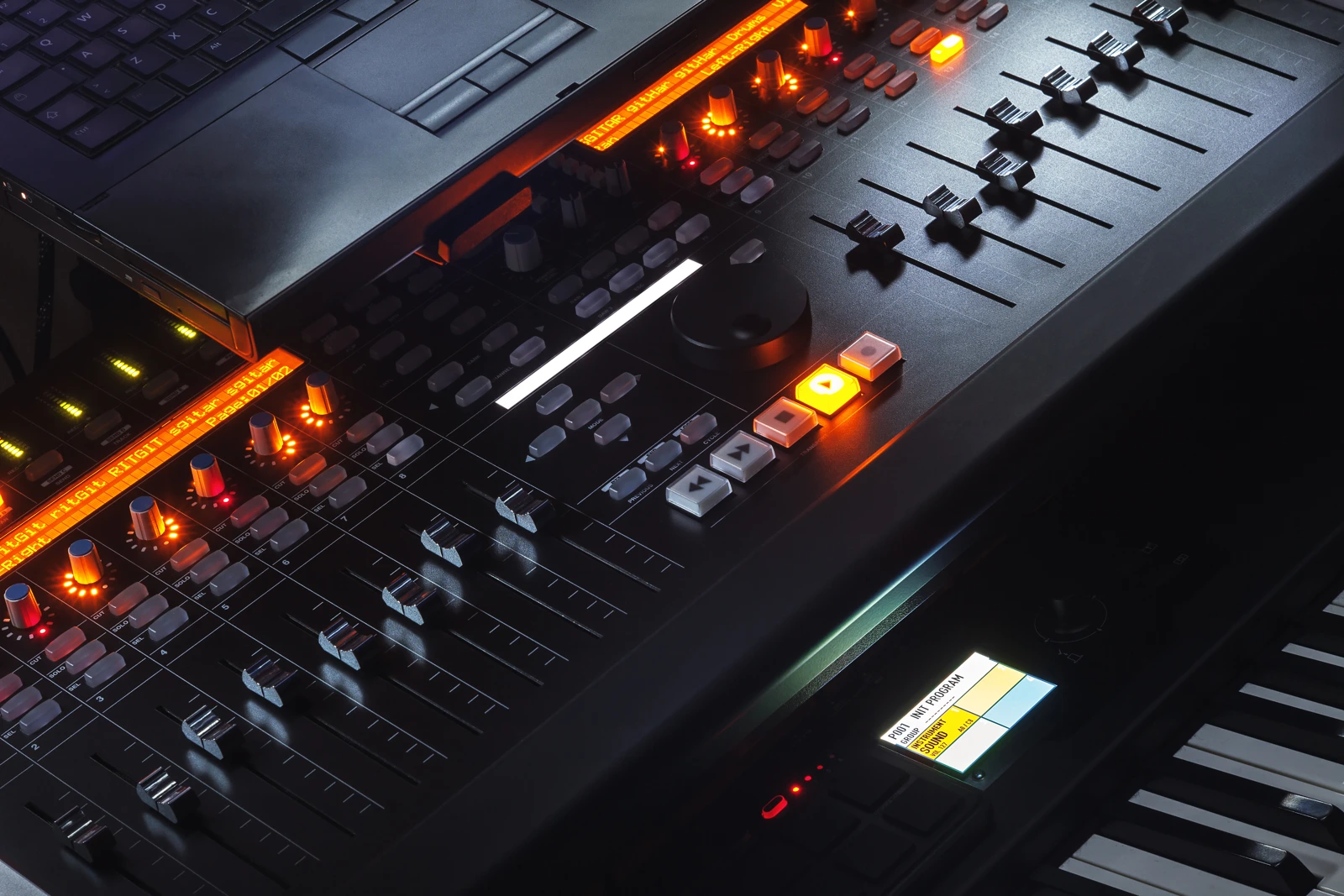
Meet the Cast of KPop Demon Hunters ↗2025-11-26KPop Demon Hunters Golden: Oral History ↗2026-02-18Han Kang: I never imagined The Vegetarian would find so many readers ↗2023-07-28The 92nd Academy Awards 2020 ↗2020-02-09Parasite: International Press Kit ↗2019Creator Resource Handbook ↗Incomplete Life: Japan Media Arts Festival ↗BGF History ↗Audio mixing equipment detail, 21 January 2019. Photograph Dejan Krsmanovic.
Dejan Krsmanovic · CC BY 2.0 · Resized and converted to WebP; no croppingUpdates & corrections
Dates record changes to this document, separately from the reference dates of its sources.
- Content update
Rewrote the article with fuller production, history, examples and source explanations.
- Document connections
Organised representative-document links, search descriptions, paragraph links and revision history. No factual correction.
- First published
Initial creation of the Korean and English document.