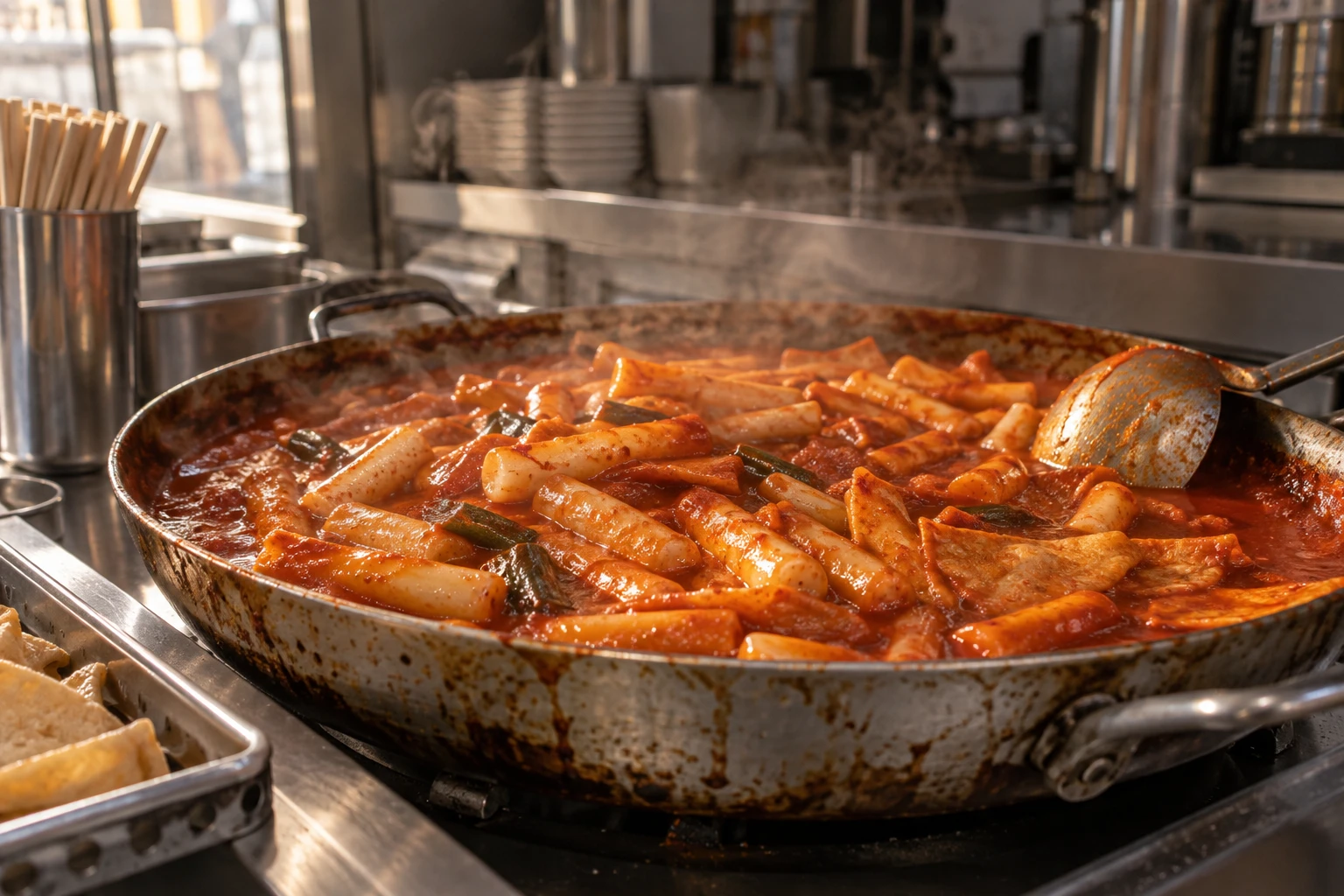
A rice cake reaches the pan already made
The first sensation of tteokbokki may be sweet, hot sauce. The next is resistance under the teeth. A thin cake bends readily, while a thick cylinder can retain a firm centre after its surface softens. Sauce clings when a cake rises from a reduced pan; in a soupier pot, a spoon can bring liquid to the mouth before any cake. These differences begin with how the cakes were made, their condition when cooking starts, and the water left when the heat stops.
Maangchi's garaetteok preparation offers a concrete rice-cake example: short-grain rice flour is heated with water, then pounded and shaped into cylinders. Loose flour becomes a cooked mass that can be worked and cut. In the tteokbokki pan, raw rice is not becoming rice for the first time. An already prepared cake is meeting hot water again.
Wheat-based cakes bring another raw material to the dish. Length alone does not tell the cook how a cake will behave. The material, thickness and starting condition all matter. A narrow flexible piece winding around a fork and a thick rice cylinder cut to check its centre demand different attention, even when their sauce looks alike.
Separating the pieces is part of the cooking
Some packets open into loose pieces; others contain cakes adhering to one another. A clump exposes its outside to the liquid but keeps adjoining surfaces covered. Separating the pieces lets liquid move between them and allows each cake to shift when stirred. That work happens before pouring in red sauce.
To open an adhering surface, work gently from the gap instead of pulling hard on both ends. A cold, rigid cake can crack when forced to bend. Follow the packet's preparation instructions, softening with water when directed, then spread the separated pieces across a shallow pan. A thick pile of fish cake on top makes it difficult to move the cakes underneath; leave room for a spatula to pass between the ingredients. Slowly bring the watery liquid and concentrated patches of sauce together so seasoning spreads over individual surfaces rather than remaining trapped inside a clump. Once the cakes become pliable, pushing down roughly can damage them. A broad, lightly filled pan therefore calls for a different stirring motion from a deep, crowded pot. The wider story of market trays and tabletop pots continues in tteokbokki through changing times.
A refrigerated cake can be cooked yet firm. When the outside yields but the centre remains hard, more heating is needed. Adding seasoning at that point changes the taste before it solves the texture. Liquid and heat must bring the centre to a pleasant bite without letting the sauce reduce too far.
How red liquid becomes a coating
In Maangchi's tteokbokki example, anchovy-and-kelp stock carries gochujang, chilli powder and sugar. The liquid both heats the cakes and distributes the seasoning. Salinity, sweetness and heat develop together rather than following the redness alone.
Initially, loose liquid flows through the gaps. As the pan simmers, cakes soften, steam rises and the liquid level falls. Starch released at the surface also affects its texture. A spatula that first pushed watery broth eventually moves a coating along with the cakes. A broad pan exposes a large surface; a deeper pot calls attention to the liquid level and the part touching the bottom.
If liquid disappears before the centres soften, seasoning can become concentrated and stick. If too much remains, cooked cakes can shed their sauce onto the plate. Lowering the heat, replenishing water or allowing more reduction follows the present state of the pan. A menu's chilli level is only one decision in making the mouthful enjoyable.
Fish cakes, eggs and noodles join in different states
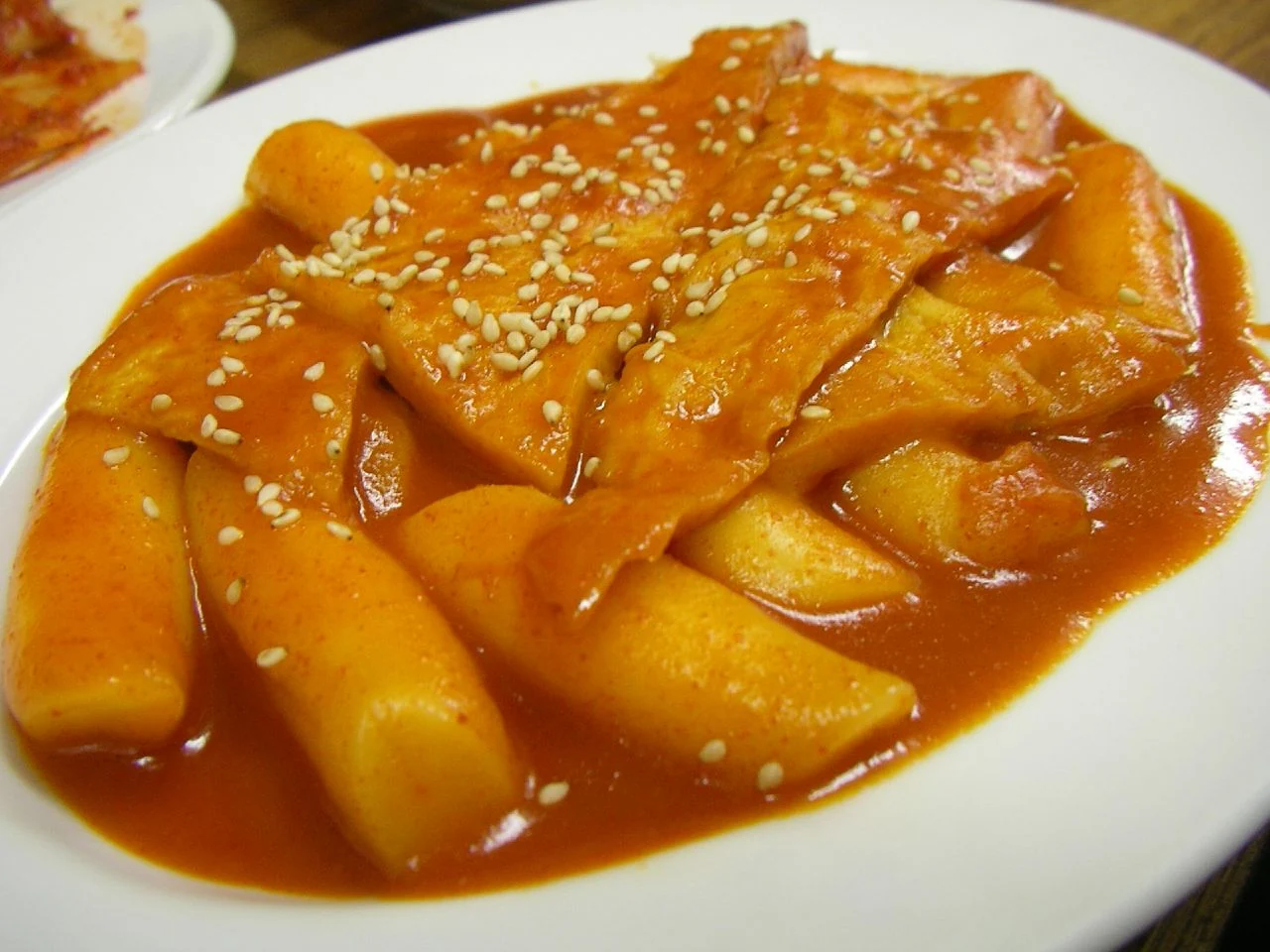
Flat fish-cake pieces fold among the cylinders and take up liquid. A peeled boiled egg enters already cooked: its outside becomes red, while the cut yolk meets sauce in the mouth. These additions supply different textures, not merely a larger portion.
In rabokki, instant noodles also take up liquid. As they loosen into long strands, the amount left in the pan changes. Adding noodles to an already reduced sauce differs from starting with enough liquid for both noodles and cakes. The preparation described in Korean instant noodles now shares a pan with rice-cake heating.
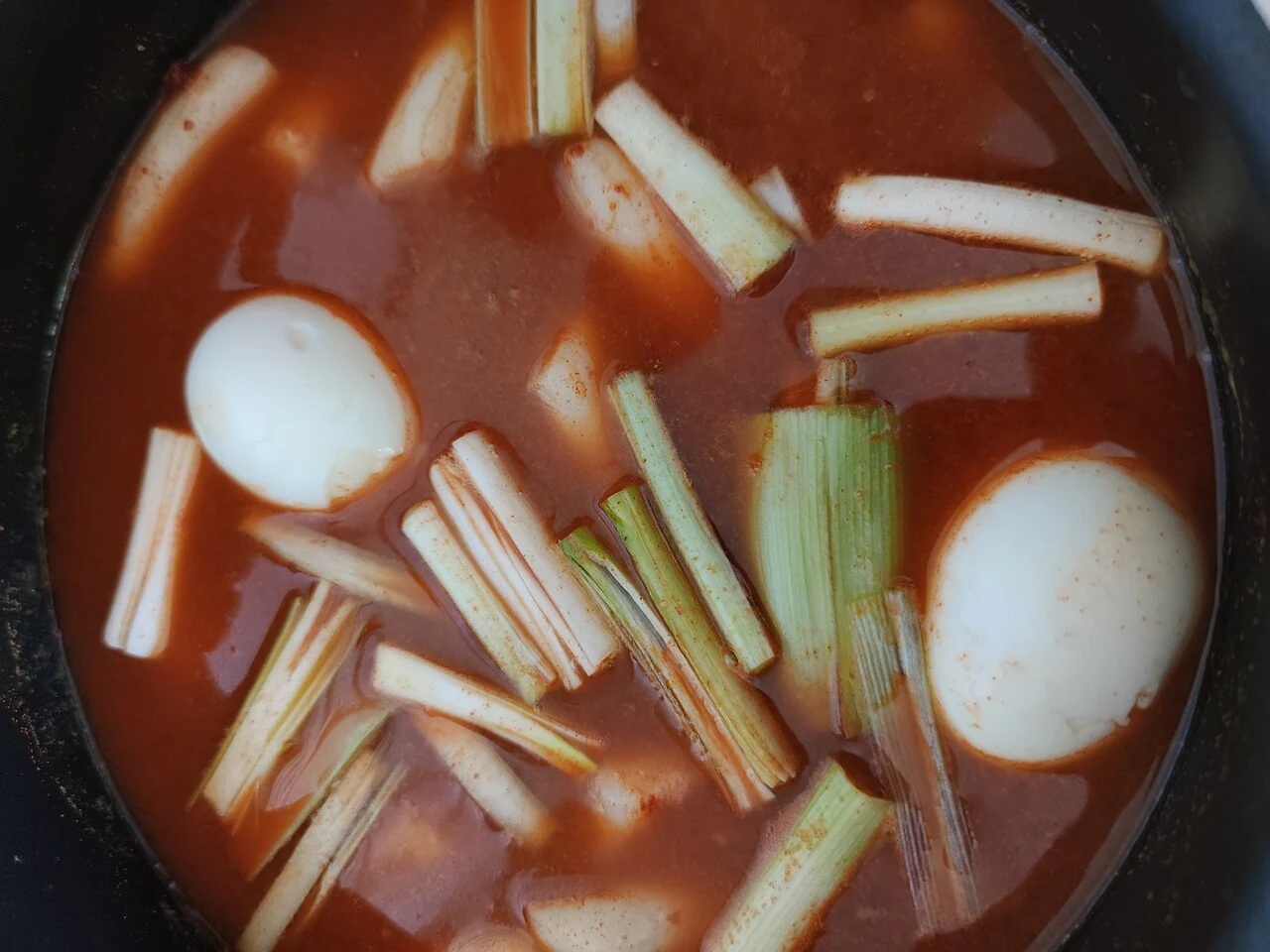
The black-pot photograph shows cakes, scallions and two peeled eggs in loose red liquid. The white-plate photograph shows sauce already clinging to cakes and fish cake. Between those states lie softening, a changing liquid level and the decision to stop heating.
Soy-seasoned tteokbokki begins with separate preparations
The Korea Tourism Organization's gungjung tteokbokki description brings rice cakes, beef, shiitake mushrooms and vegetables together with soy seasoning and oil. Meat and mushrooms change what the diner picks up beside a cake; removing red sauce is not the whole transformation.
Korean Bapsang's cooking example blanches cakes and prepares meat, mushrooms and vegetables separately before combining them. Thin meat exposes a different surface to seasoning and heat from a thick cake. Cut vegetables also have their own preparation. When everything meets, the softened cakes carry scattered strips of meat and vegetables rather than emerging from one uninterrupted boil.
Reducing a soy-seasoned liquid concentrates salt as well as flavour. The finish therefore involves judging how much should cling and how much should remain on the plate. Picking up a mushroom with a cake, then meat with vegetables, changes the combination within the same serving. The pleasure comes through the prepared ingredients as well as the sauce.
A pan product and a microwave cup leave different work
Packaged tteokbokki transfers some preparation to a factory. One Otoki pan product separates cakes, sauce and dried fish cake, leaving the stove to complete the dish. Measured components arrive together, but someone still heats the liquid, stirs and watches the cakes soften.
The company's 137g cup example instructs the user to add 40mL room-temperature water and microwave without the lid. Its stated times are two minutes thirty seconds at 700W or two minutes at 1000W. That is a different operation from pouring boiling water into a noodle cup and waiting. The packet's actual instructions determine the final heat and water this particular food needs.
Moving from a large serving pan to a small cup involves separating cakes, seasoning, packaging and final heating. It adds another place to eat: a shared serving beside a shop and a cup heated for one person create different meal times around related ingredients.
The final mouthful brings the preparations together
Two people sharing a plate may choose cakes and fish cake in a different order. Dipping a piece of gimbap brings rice and filling into contact with the remaining sauce. The work of preparing and rolling gimbap joins a second preparation on the table; the diners finish the combination themselves.
Tteokbokki's appeal becomes clearer in this cooking than in a competition over heat alone. Flour worked into a cake, pieces separated by hand, centres softened with water and a coating finished over heat all arrive in one bite. A different texture follows the initial sweetness, inviting another choice from the same plate.
When the last cake is lifted, sauce remains at the bottom. Its companions and thickness have made this a particular meal. The shops and products behind its changing forms continue in the story of tteokbokki. Here, the essential action is close at hand: give prepared cakes water and heat, then serve them at a moment when someone wants another mouthful.
Water and heat soften the centre and finish the coating. Several materials and preparations meet in one pan, then in the choices of a shared meal.
Sources & scope
Heating, pounding and shaping garaetteok ↗2013-01-17Stock and seasoning in red tteokbokki ↗2007-09-10Separate preparation for soy-seasoned tteokbokki ↗2021-01-20Ingredients in gungjung tteokbokki ↗2023-10-19Components of a pan-cooked tteokbokki product ↗Water and microwave instructions for a tteokbokki cup ↗Modules independently explains the verified sources. The lead image is AI-generated for illustration; it is not a documentary photograph of an actual place, event or product.
Updates & corrections
Dates record changes to this document, separately from the reference dates of its sources.
- Content update
Rewrote the article with fuller production, history, examples and source explanations.
- First published
Created Korean and English documents from verified sources.