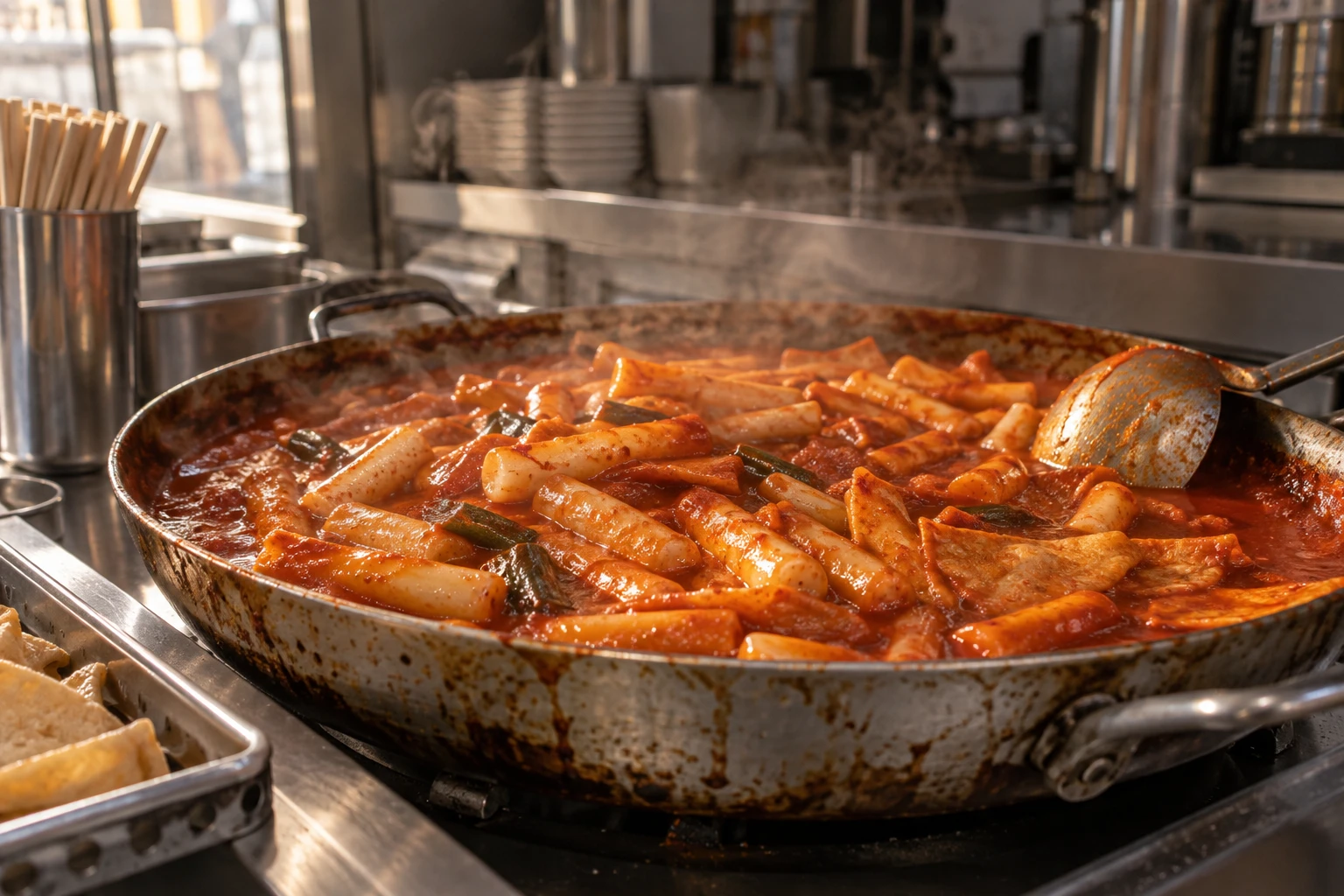
A plate of rice cakes before the red sauce
Tteokbokki is often introduced as spicy Korean rice cakes. The description fits a familiar red plate, but leaves out a great deal of cooking. Rice cakes with beef and vegetables, a vendor's simmering tray, a communal pot with noodles and a microwave cup all involve different preparation and different times to eat. Following those changes reveals a food whose history extends beyond the arrival of chilli paste.
The Korean Food Promotion Institute connects today's soy-seasoned gungjung tteokbokki with white rice cakes and beef described in the late nineteenth-century cookbook Siui Jeonseo. That provides a historical example of rice cakes cooked with meat and soy sauce before the familiar red version. Modern plates can include shiitake mushrooms, onion and carrot. A soft rice cake is followed by the chew of beef or mushroom, with soy sauce and oil linking them.
Preparation matters. Thin beef needs room to spread out; vegetables need cutting into pieces that can be picked up alongside a rice cake. Firm cakes may need softening first. Preparing meat and vegetables before bringing them together with the cakes prevents every ingredient spending the same long time in a watery pan. Final seasoning is judged as a bite of cake and beef together, rather than sauce tasted on its own.
The rice cake has already been cooked once
A tteokbokki pan does not start with raw rice. Rice is milled, hydrated and heated, then worked into a smooth mass and shaped. Cutting a long cylinder into short pieces determines both the outside surface that meets the sauce and the thickness to chew through. Tteokbokki reheats that prepared food into an enjoyable state.
Freshly softened cakes and firm refrigerated ones enter the pan differently. Separating stuck pieces gives liquid access between them. A red surface can conceal a firm centre, so colour alone does not tell the cook when to stop. Gentle pressure and a bite through a piece reveal whether warmth and softness have reached the middle.
Wheat-based cakes bring a different dough into the dish, but thickness, moisture and storage matter too. A cook adjusts water and heating to the batch in front of them. The rice-cake preparation reference follows the heating and shaping work behind the pan.
Sindang-dong put the pot on the table
Jung-gu's local food history dates Sindang-dong's tteokbokki beginnings to the 1950s and describes charcoal-briquette cooking in the 1970s followed by propane. Moving heat from a vendor's working area to a table changes the meal. Diners sit through part of the cooking rather than receiving only a finished scoop.
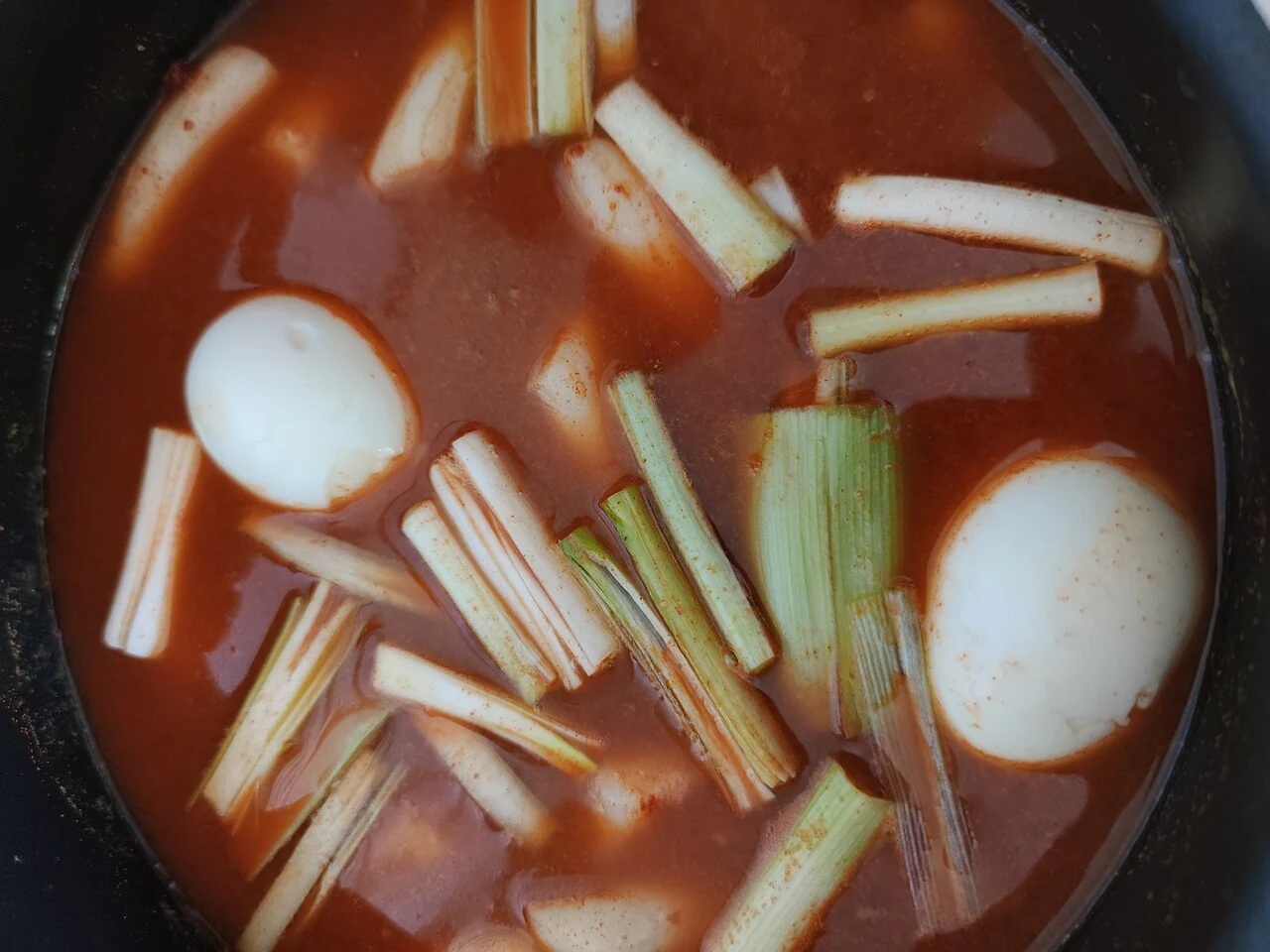
A communal pot can contain fish cake, vegetables, ramyeon, glass noodles, dumplings and boiled eggs. Dry noodles take up liquid as they loosen. Thin fish cake folds and absorbs broth. An already-boiled egg warms in the sauce, while its yolk mixes with liquid when cut. Dumplings need their wrappers and filling warmed through.
The pot changes while people eat. Noodles reduce the available liquid; continued heating thickens the seasoning. Eating noodles first and rice cakes later produces a different progression from finishing a plated serving. There is pleasure in choosing the next ingredient together and adjusting the heat as the meal continues.
A vendor's tray requires continuing attention
A large tray may serve successive customers without starting from an empty vessel each time. The cook watches what remains around its centre and edges, moves pieces without pressing them into a sticky mass, and selects cakes ready to serve. A fast scoop is the end of work that began before the customer arrived.
Koreana's 2021 report describes a Galhyeon Market shop separating and briefly boiling wheat cakes. Those small preparatory actions make space for liquid and heat to reach individual pieces. Back in a serving tray, evaporation and repeated scooping keep changing the quantity and consistency.
Adding more paste is not the answer to every thickening sauce. Water and existing seasoning have to be considered together. Sugar or syrup affects sweetness and the way sauce clings; gochujang contributes salt and fermented flavour as well as heat. Prolonged reduction concentrates salt too. The central task is bringing the cakes' softness and the sauce's consistency to a good stopping point together.
The accompaniments change the next bite
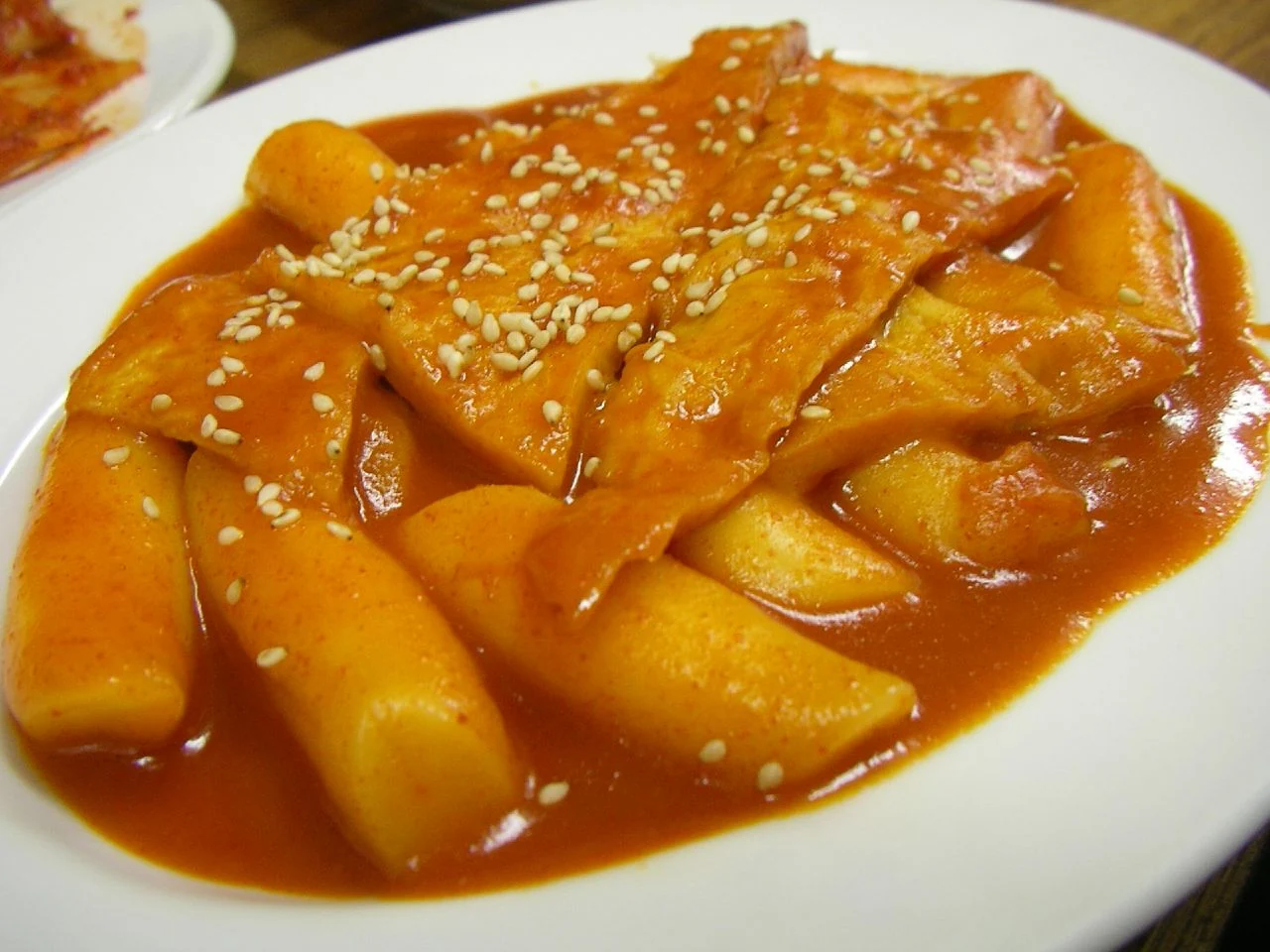
Fish cake need not be cut to imitate the cylinders. Broad folded pieces hold liquid differently. Egg white carries sauce on its surface, while a cut yolk disperses into it. The meal becomes an alternation of textures rather than a succession of identical rice cakes.
A fried snack dipped briefly can retain a crisp edge; left in the pan, its coating absorbs moisture. Gimbap takes sauce around its rice and filling, but a cut piece can loosen if soaked too long. Dipping and immersing create different bites even when the foods on the table are the same.
Ramyeon requires space and liquid to loosen. Adding dry noodles to an already thick tray can make its bottom tight and sticky. The hydration described in the ramyeon manufacturing and cooking reference continues here, changing the sauce as the meal progresses.
Rosé builds another sauce around the cakes
Rosé tteokbokki adds milk, cream or cheese to the red base, as the Korea Tourism Organization's 2025 description explains. Pale dairy ingredients change the colour towards orange, while fat and a different consistency alter the mouthful. Reducing the chilli base and adding generous dairy produces a different result from stirring a little cream into an already hot sauce.
Evaporation continues after the cream goes in. Prolonged high heat can make the mixture heavy or leave it adhering to the pan. Melted cheese links ingredients, then stretches and firms differently as it cools. Cooking the cakes and handling the new sauce together matters more than treating dairy as a final decoration.
The variation broadens the available combinations. Cakes that work with beef and soy sauce or fish cake and chilli paste also have a role in a creamy pan. Their thickness and spring remain central to the mouthful.
A cup divides preparation from final heating
A pan kit can provide separately packed cakes, sauce and dried fish cake; Otoki offers an example. Some measuring and mixing have already taken place, but the person opening the packets still finishes the cooking over heat.
A microwave cup makes its container the final cooking vessel as well as the serving bowl. Certain products require water and sauce mixed before microwave heating, rather than boiling water poured in and left to stand. Water amounts, lid handling and timing belong to the individual package instructions.
On 10 June 2026, Otoki announced Original, Rosé and Hot Spicy cup tteokbokki. Fish-cake toppings and rosé cream powder show ingredients moving into forms that can meet water and heat again at the point of eating. A small heating task at a desk or lodging joins the longer work of keeping a shop's tray ready.
The last cake does not close the other possibilities
New sauces have not removed every older plate. Soy-seasoned beef and cakes, a red serving from a tray, a table pot and an individual cup remain different ways to begin a meal. Each places some preparation with a different cook, vessel or eater.
For me, tteokbokki's appeal lies in that flexibility more than in competing levels of heat. Prepared cakes bring vegetables and beef together or link eggs and fish cake through one sauce. Dipping a fried snack or adding gimbap creates another combination at the table.
After the last cake is lifted, a little thicker sauce remains. Softer cakes, noodles eaten earlier and an egg saved for later have made a sequence out of a simple pot. From a soy-seasoned plate to a red tray and a small cup, tteokbokki keeps changing how cakes are prepared, where they are served and who finishes the work.
Tteokbokki changes through the preparation of its cakes, the placement of heat and the person who finishes each meal.
Sources & scope
Ingredients in soy-seasoned tteokbokki ↗2023-10-19Cakes and seasoning in red tteokbokki ↗2023-10-19Separating and precooking cakes at Galhyeon Market ↗2021 WINTERSiui Jeonseo and soy-seasoned cakes ↗2013-11-13Table pots and street trays in Sindang-dong ↗2023-11-04Dairy ingredients in rosé tteokbokki ↗2025-09-11Separate ingredients in a pan kit ↗Final heating of a microwave cup ↗Three cup variants announced in 2026 ↗2026-06-10Sindang-dong beginnings and changing cooking fuels ↗Heating and shaping garaetteok ↗2013-01-17Modules independently explains the verified sources. The lead image is AI-generated for illustration; it is not a documentary photograph of an actual place, event or product.
Updates & corrections
Dates record changes to this document, separately from the reference dates of its sources.
- Content update
Rewrote the article with fuller production, history, examples and source explanations.
- First published
Created Korean and English documents from verified sources.