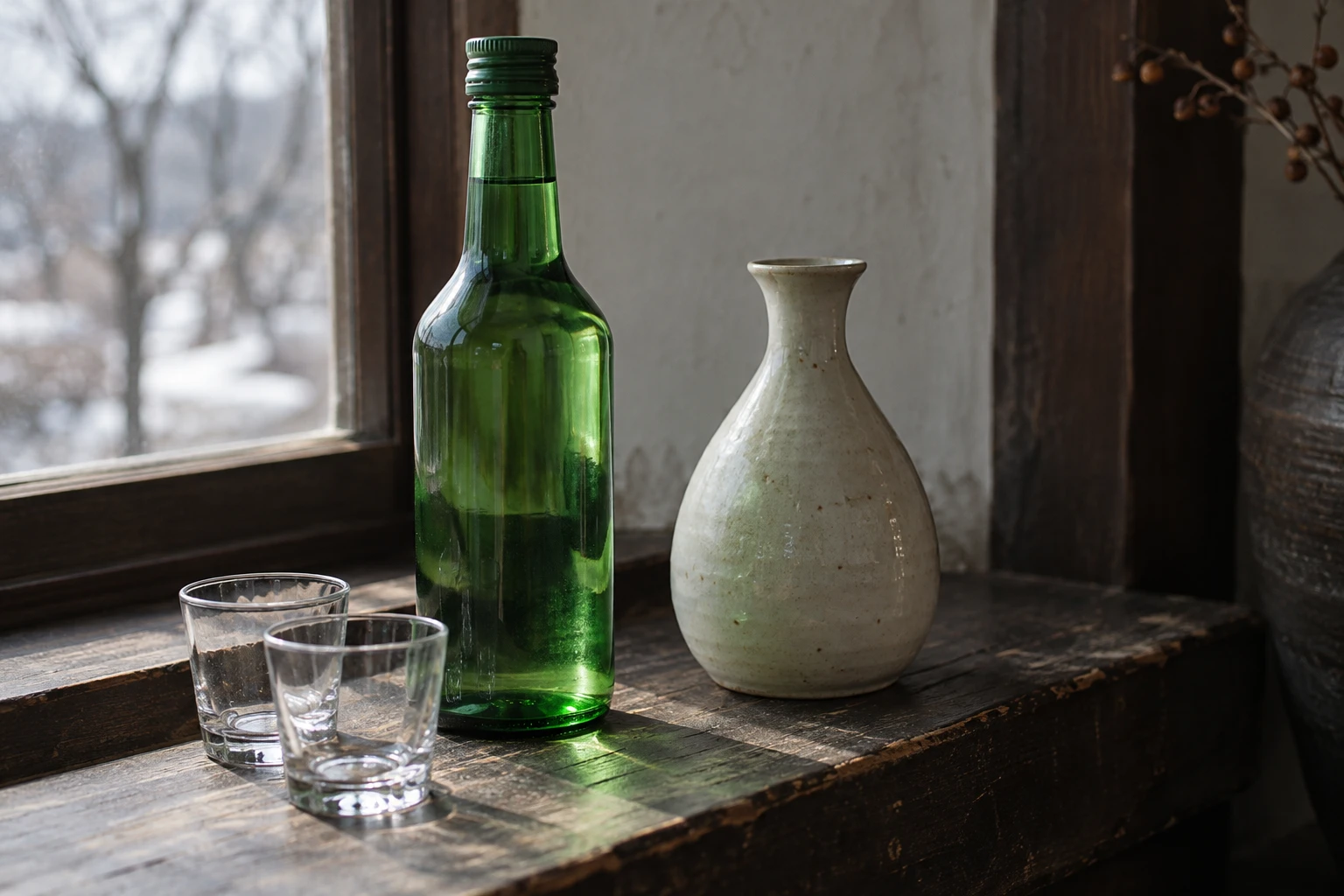
A familiar glass, more than one route to the bottle
At a Korean barbecue table, a green bottle often sits beside the grill and a row of small glasses. Yet drinks sold as soju can arrive there through different manufacturing routes. A grain mash may be fermented and distilled, retaining flavour from its ingredients. Alternatively, a producer blends highly refined alcohol with water and other permitted ingredients to make a finished drink. Overseas shelves add fruit-flavoured bottles and stronger spirits to the picture. The familiar colour has become one entrance into a much larger category.
The change involves tools, factories, access to grain, the preservation of local skills and products made for different markets. The soju reference explains the manufacturing structure. This story follows the historical and commercial changes that brought those different bottles to the same table.
Before clear spirit comes a cloudy mash
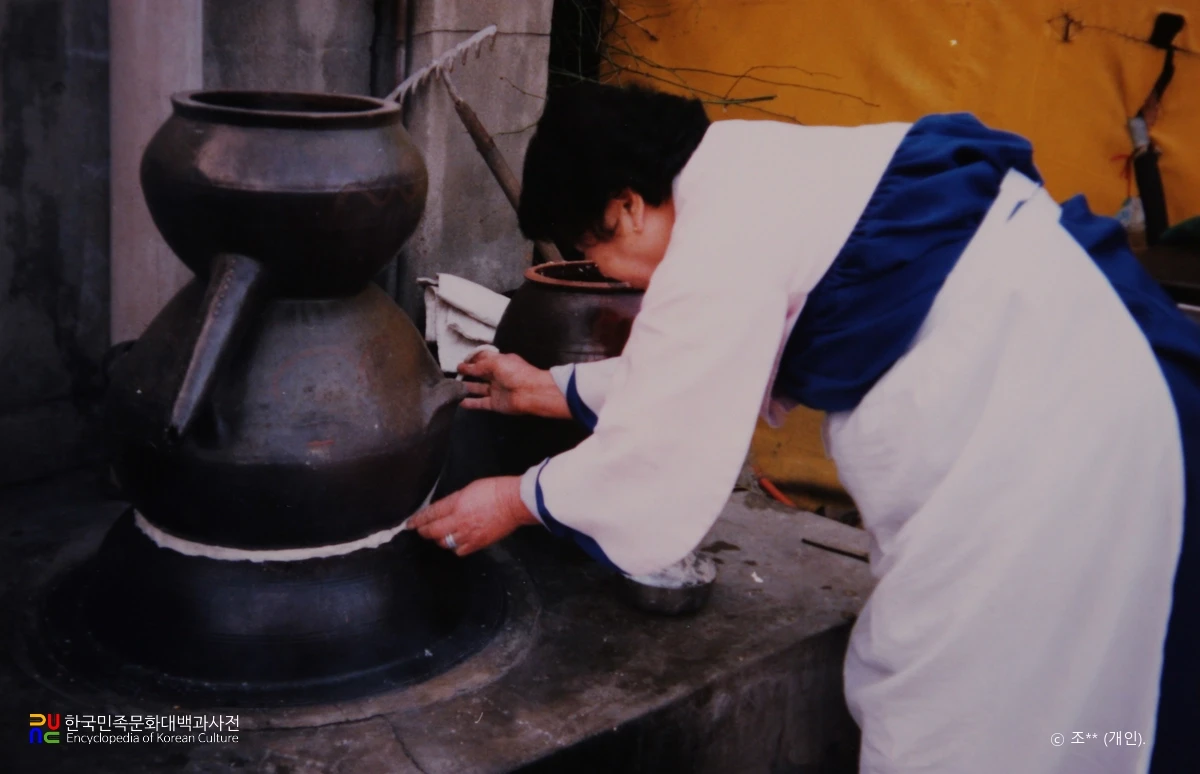
Traditional grain soju does not start by boiling rice into a clear drink. Cooked grain, water and nuruk, a fermentation starter, first form a mash. Enzymes help convert starch into sugars; yeast uses those sugars to produce alcohol. The grain mixture becomes an alcoholic material that can be distilled. Pressing nuruk dough into a shaped block is one of the preparatory jobs before that transformation.
The Academy of Korean Studies records different regional methods. A Seoul method mixes cooked rice with powdered nuruk and water, stirring twice daily during roughly three weeks of fermentation. A Pyongyang method begins with sorghum and adds rice and cooled glutinous-rice porridge later. Even before the still is lit, the ingredients and order of addition create different mashes.
Heating a fermented mash sends volatile components upwards as vapour. Cooling that vapour turns it back into liquid. Alcohol and water travel together during distillation; the process does not simply leave every drop of water behind. A cloudy fermented material becomes a clear collected spirit through the connected work of fermentation, heat and cooling.
The still needed both fire and cold water
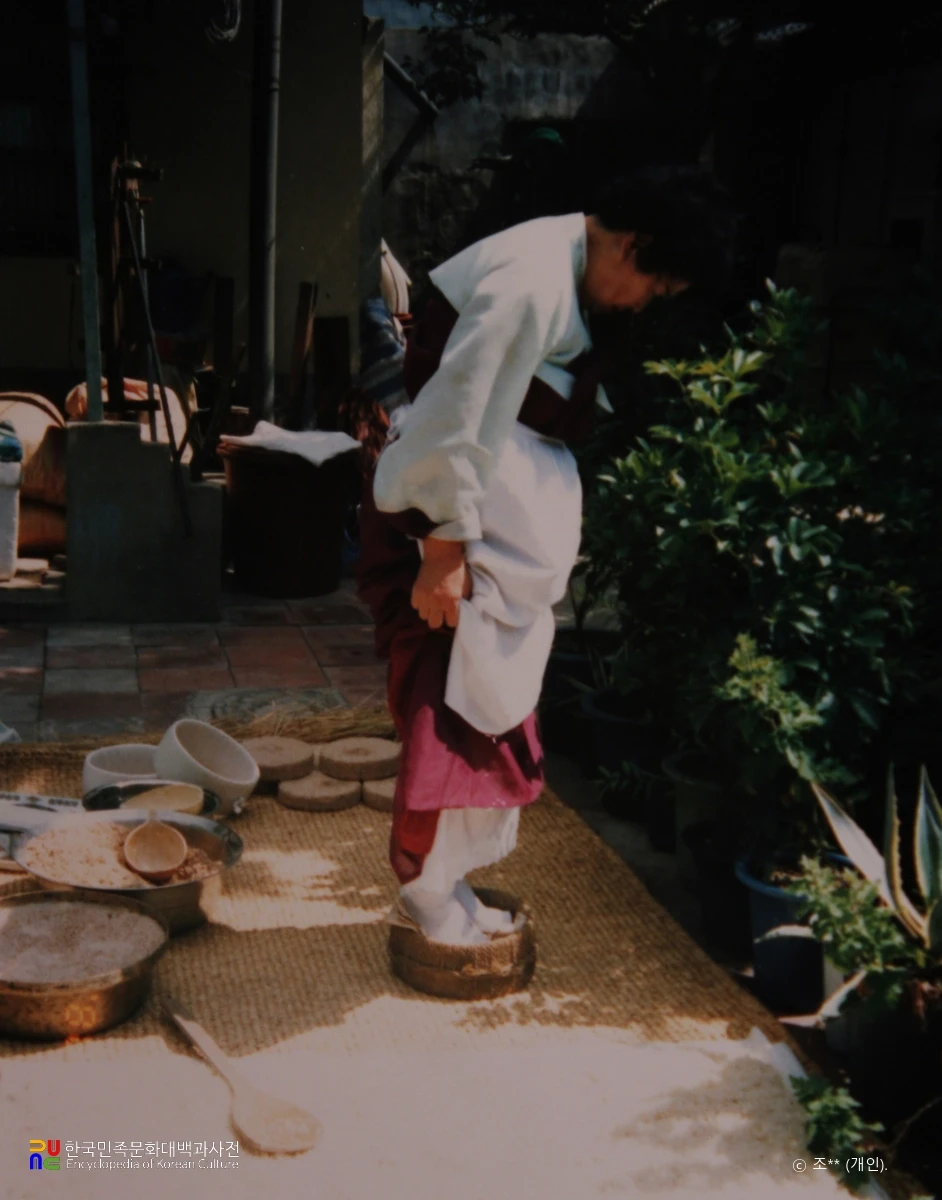
A traditional sojutgori stands above the heated vessel. Its joints help guide vapour towards the cooled surface rather than letting it escape. As the cooling water warms, it must be replaced. The fire below and the cold water above therefore require attention at the same time.
A stronger fire can increase the pace of collection, but scorching grain material can affect the smell. Warm cooling water changes how efficiently vapour condenses. Installing the apparatus, tending the heat and changing water are separate tasks. They explain why the tool is a working device rather than merely an emblem of an old drink.
Clay, copper or iron equipment, followed by other cooling arrangements, also changes the scale of work. A person handling a small still stands close to its fire and water. Larger equipment reorganises the supply of heat, the movement of cooling water and the preparation of the next batch. The physical principle continues while the workplace changes.
Andong's factory history and its inherited skill
Gyeongsangbuk-do's account of Andong soju records Kwon Tae-yeon's establishment of a factory in Nammun-dong in 1920. A regional drink already had a history of organised production as well as household equipment. Remembering only the small traditional pot leaves the factory out of the picture.
On 13 May 1987, the manufacturing skill of Andong soju received provincial cultural-property designation. Building a factory and recognising a skill serve different purposes. The first supports production and sale; the second recognises knowledge of preparing ingredients, fermenting and distilling that can be passed to another practitioner.
The two events give Andong a fuller history. Its soju has moved through workplaces and commercial conditions while its name and skills have continued. A present-day bottle carrying the place name also has an individual producer and manufacturing method. Geography connects these drinks without making all of their strengths or processes identical.
Grain restrictions changed the beginning of production
The Academy's account identifies the 1965 prohibition on using grain to manufacture soju. A restriction on raw materials operates before flavour preferences or bottle design. For a process that begins with fermenting grain, permission to use that grain directly affects what can be made.
Diluted soju uses highly refined alcohol as a base and adjusts the finished drink through blending. Fermentation and distillation still precede the base alcohol. Refining that alcohol and later blending it into a bottled product are different stages. Thinking only of the final addition of water hides the earlier work.
This production structure gives blending, bottling and distribution an important role. A repeatedly ordered restaurant product needs a consistent specification. Supplying that familiar bottle involves base alcohol, water and the preparation of a repeatable finished drink, followed by packaging and delivery. The short act of filling a glass rests on a much longer chain of production.
Modern distillation changes pressure and storage
Hwayo, established in 2003, describes low-temperature vacuum distillation in its own process account and maturation in onggi pottery. Lower pressure changes the conditions under which liquid boils. The equipment then supplies heat and condenses vapour under those operating conditions. The clear distillate must still pass through storage, strength adjustment and bottling before becoming a saleable product.
Onggi is also familiar from the storage of jang, Korean fermented seasonings. Its use beside modern control equipment makes the factory an interesting combination of materials and technologies. A pottery vessel can remain useful inside a manufacturing system that also regulates pressure and temperature. This producer example shows how a contemporary distilled soju can combine old vessels with new equipment.
A brand made the bottle recognisable
Jinro's overseas brand timeline records its 1924 beginning, exports to Vietnam in 1968, the launch of Chamisul in 1998 and a global-brand strategy in 2017. Exporting a spirit involves transport and retail as well as manufacturing. Consumers abroad meet a name, a flavour range and a strength on the shelf rather than the producer's entire workshop.
The launch of a product such as Chamisul establishes a bottle that can be stocked and ordered repeatedly. Refrigerators, restaurant orders and the return of empty glass containers connect manufacturing to daily life. Distribution gives the drink a recognisable presence beyond the individual batch.
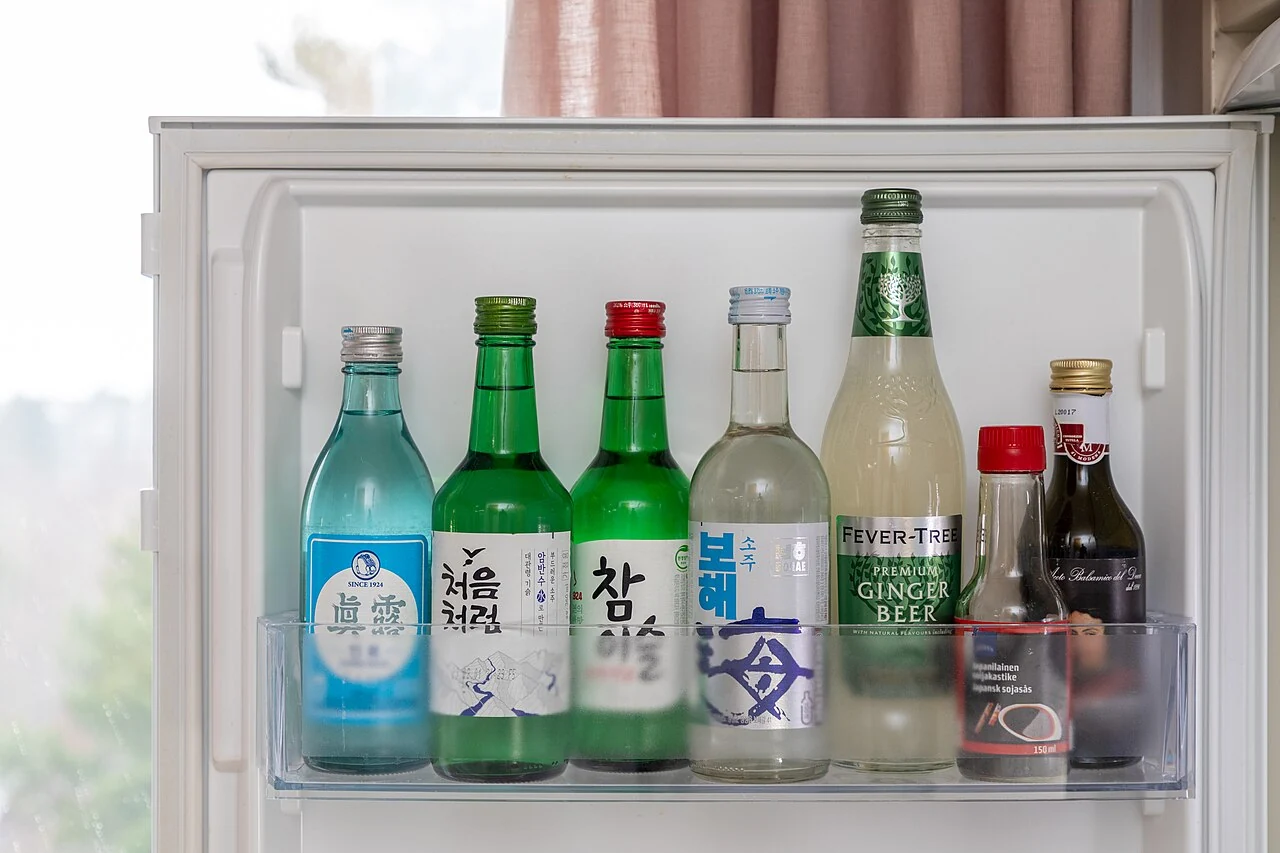
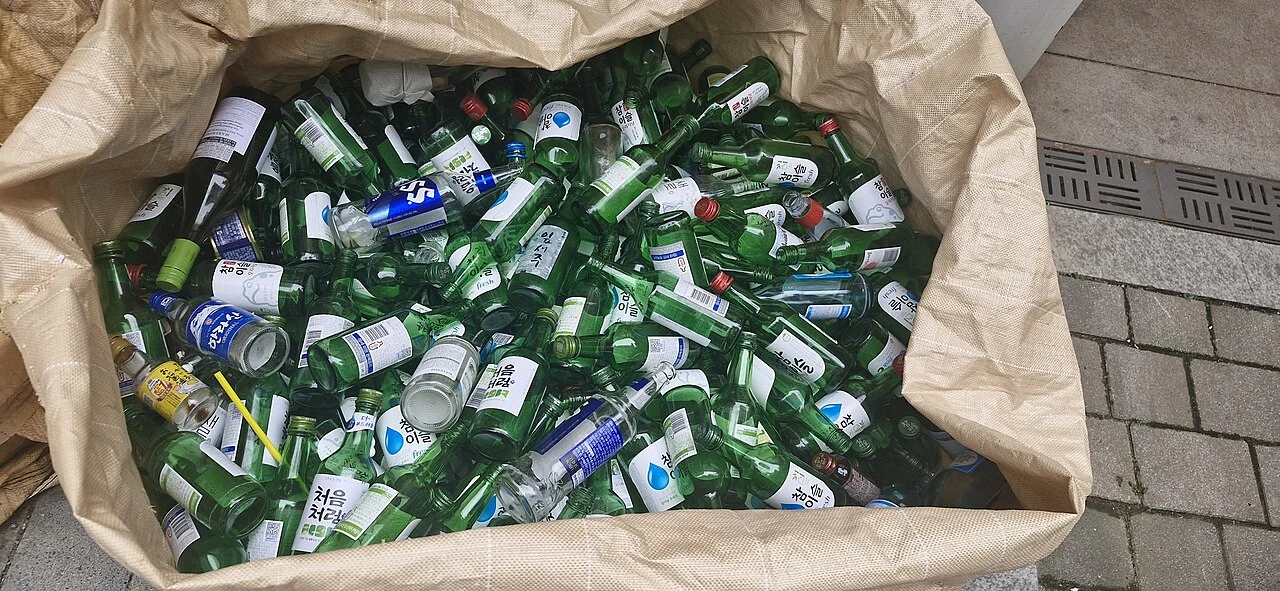
Photographs of refrigerator storage and recycling show later stages of that life. A bottle emptied at dinner remains as packaging. Regional skills, regular restaurant products and drinks kept at home occupy different places within the broad name of soju.
Overseas product lists offer another first encounter
Jinro's overseas catalogue, checked on 12 October 2026, lists grapefruit and green-grape products at 13% alcohol by volume, Chamisul Fresh at 16% and Original at 20.1%. These are the products on that particular list; an actual bottle's label supplies the specification for its market and version.
Glass size helps make the difference tangible. A 50 mL serving at 13% contains about 6.5 mL of pure alcohol by volume. The same serving at 20.1% contains about 10.05 mL. Sweetness and a fruit name do not describe that quantity. The flavour choice and the alcohol content are separate information on the product.
Someone encountering soju abroad may remember a fruit name before the green bottle. Someone trying a stronger distilled product may begin with grain aroma. These encounters enlarge the category's public image through the shelf and the menu.
The work that remains inside one bottle
Soju's history is compelling because new technologies did not simply erase older work. Shaping a starter, heating a still, cooling vapour, responding to grain restrictions, using storage vessels and blending a consistent product developed along different paths.
The green bottle remains an understandable memory of Korean dining. Alongside that memory, Andong's skills and contemporary production reveal a wider story. Following a cloudy mash into vapour and then clear liquid, or following a packaged drink from the factory to dinner and recycling, gives the familiar small glass more substance. Its contents carry the consequences of real choices about materials, equipment and distribution.
Soju’s different bottles reflect real decisions about materials, equipment, inherited skills and distribution.
Sources & scope
Fermentation, regional mash, the still and the 1965 policy ↗2023-02-07Andong’s factory and the 1987 skill designation ↗Hwayo production reported in 2022 ↗2022-08-04Jinro brand and export milestones ↗Hwayo’s beginning in 2003 ↗Strengths of overseas products ↗Hwayo’s vacuum distillation and onggi storage ↗Modules independently explains the verified sources. The lead image is AI-generated for illustration; it is not a documentary photograph of an actual place, event or product.
Updates & corrections
Dates record changes to this document, separately from the reference dates of its sources.
- Content update
Rewrote the article with fuller production, history, examples and source explanations.
- First published
Created Korean and English documents using verified official sources.