Preparing the outside and inside separately
Cut a mandu in half and wrapper and filling appear together. Eating combines them, but making them requires separate preparations. Rolling a sheet of dough and cutting meat, vegetables and tofu are different jobs. A wrapper drying too quickly resists sealing; liquid remaining in the filling wets the dough before cooking. The condition in which the two materials meet matters before the shape is finished.
Filling is a mixture of particles. Minced meat supplies fat and juice, tofu softer fragments, and scallions or chives an aroma released by chewing. Grinding everything equally fine creates a different texture from leaving recognisable pieces. Long vegetable strands or noodles can also reach into the edge where the wrapper must close. Cutting prepares both flavour and construction.
Kimchi mandu adds fermented vegetables. The Korea Tourism Organization describes fillings combining kimchi with ingredients such as tofu and meat. Acidity and seasoning enter a new mixture rather than remaining a separate side dish. Our article on kimjang distinguishes a stored food from the work of making it. Here that food becomes material for another dish, enclosed and cooked again.
Removing water while retaining a juicy filling
Kimchi, tofu and blanched sprouts carry water. If too much free liquid stays, it collects while dumplings are being shaped, wets the wrapper and interferes with the seam. Retaining juice developed during cooking and reducing liquid that escapes before cooking are related but different jobs. A moist dumpling needs more than a simply wet filling.
Korean Bapsang's kimchi mandu explanation discusses removing excess moisture from kimchi and tofu. Controlled ingredients distribute more evenly in the bowl. Finely cutting stems prevents a long piece from gathering at one side; breaking tofu up disperses its softer texture rather than leaving a single white lump. Mixing is the work of giving the first and last bite a reasonably coherent composition.
Seasoning adds another layer. More garlic or chilli can overwhelm other elements, while sesame oil brings its own aroma. Our jang reference follows the materials behind fermented condiments. If the dumpling will be dipped in soy sauce, the filling's salt level is part of a wider meal. Not every flavour has to be confined inside the wrapper.
Rolling, leaving room and closing the edge
Flour and water do not begin as a thin disc. Mixing, kneading and resting allow the flour to take up water and produce workable dough. Dividing and rolling portions lets the maker manage centre and edge thickness. Since the edge will become two joined layers, leaving it as thick as the centre produces a heavier band at the seam.
Thinness alone is not the objective. The sheet must hold filling and survive being lifted. Wrappers waiting uncovered can dry and crack while others are being shaped. Covering them and bringing out only what is needed is quiet work that makes a thin sheet usable. Purchased wrappers also need handling appropriate to their condition and instructions.
Filling should leave a clear margin for closure. Pieces caught in that margin prevent dough from meeting dough. A large pocket of trapped air can expand during cooking. Folding a disc produces a half-moon; bringing its ends together forms a rounded shape. Pleats arrange extra dough as well as decorating it. Behind a tray of apparently similar dumplings lies the repeated checking of individual seams.
Steam, pan contact and moving broth
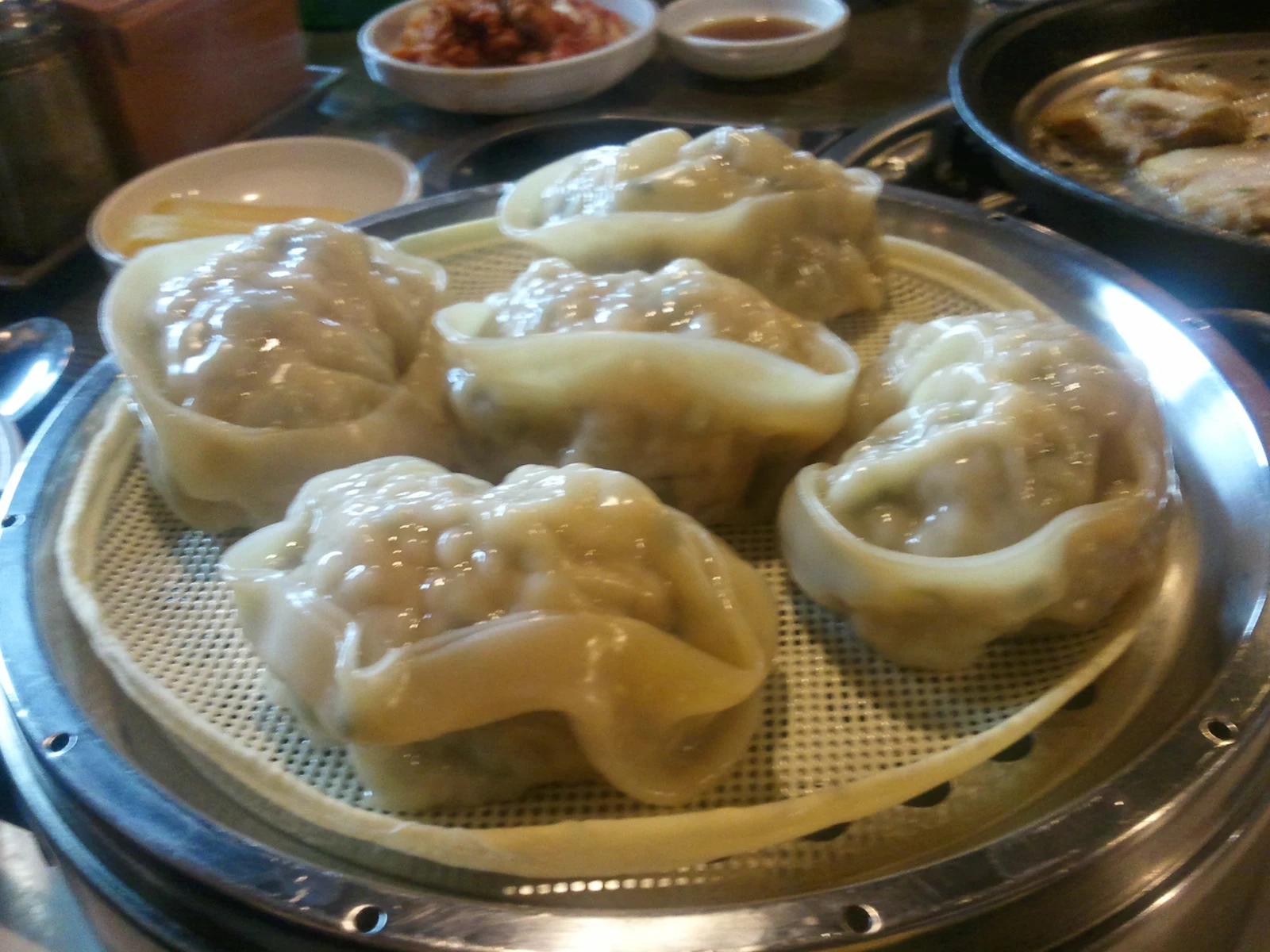
Steam brings moisture and heat to the wrapper. The outside becomes supple while the filling stays enclosed. Dumplings placed too close can adhere; separating them then tears cooked dough. Spacing is therefore part of cooking. Their surface continues to change after removal, so a hot wrapper and one left to cool need not feel the same.
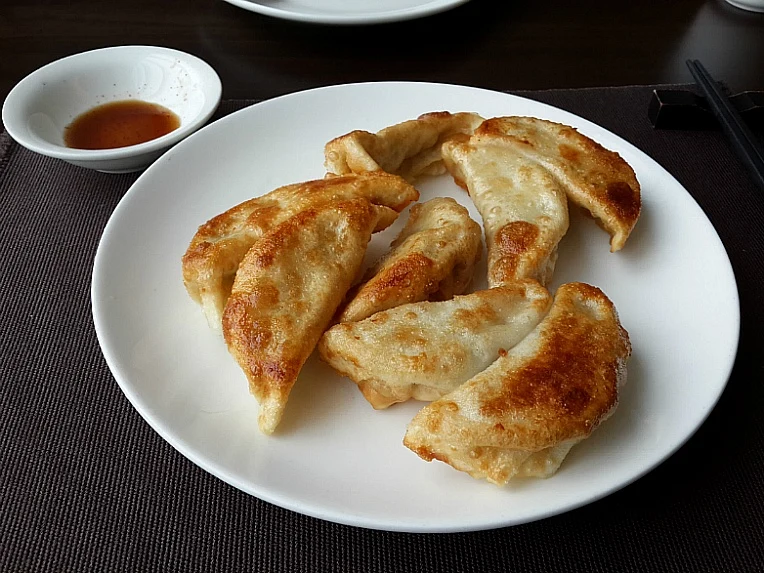
In a frying pan, the contacting surface changes first. Water leaves the base as oil and heat produce a crisp layer, while the centre warms more slowly. A method using water and a lid to cook the inside, then evaporating moisture, combines a steaming phase with a drying phase. The brown base and paler upper surface preserve these different conditions in one dumpling. Actual cooking times depend on size and whether the product has been precooked.
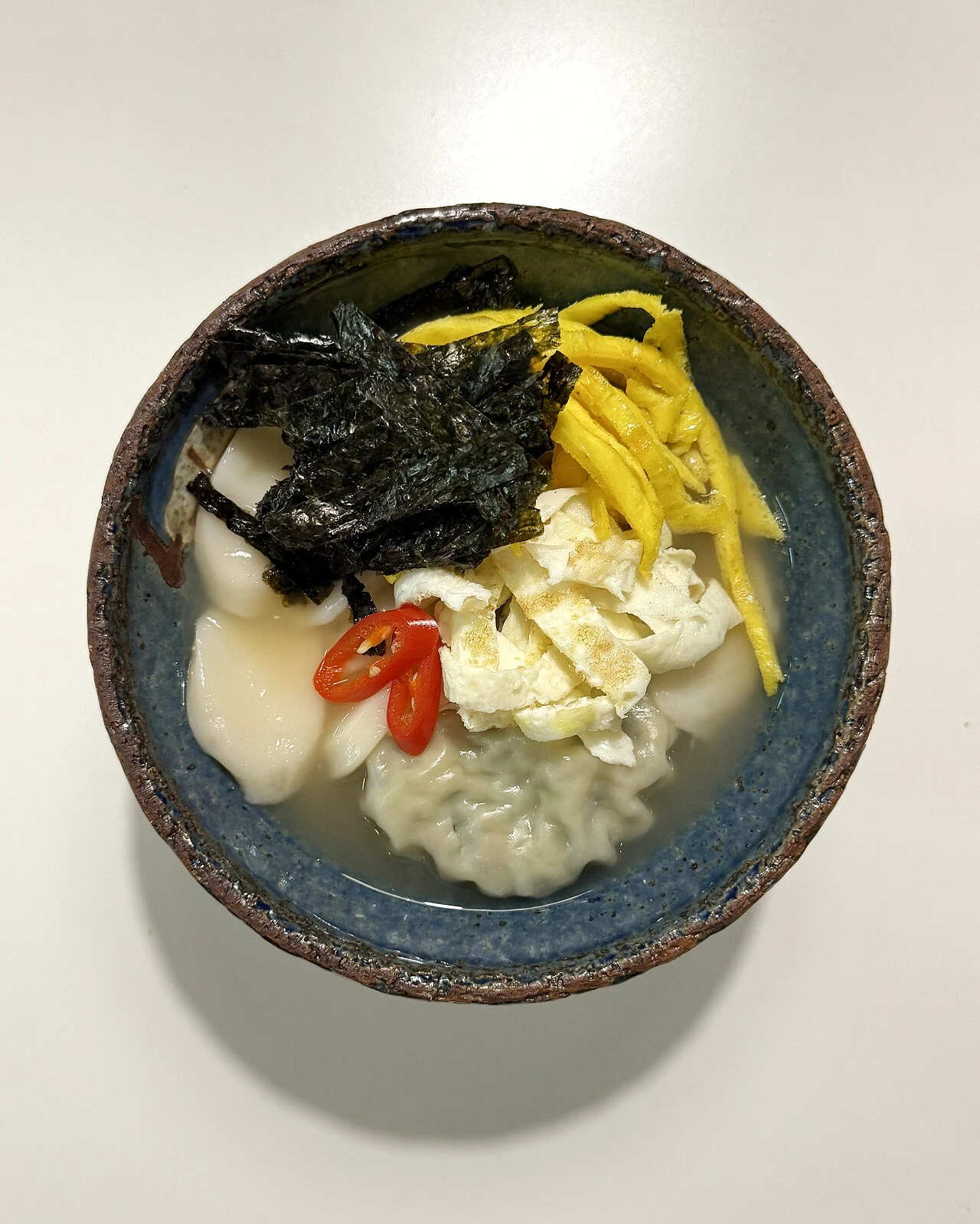
In soup, the wrapper encounters liquid and movement. A weak seam can open; extended soaking changes its texture. Tteok-manduguk puts chewy rice cakes, softer dough and particles of filling in one bowl. Cooking those different materials so they can be eaten together completes the dish. Its interest lies in alternating textures rather than the simple addition of two named foods.
An old word and a changing form
The document identified by the Academy of Korean Studies is Goryeosa, the history of Goryeo. Under King Chunghye it records punishment for stealing mandu from the palace kitchen. This is an episode involving court food rather than a written cooking method. It establishes a name and a setting, while leaving the precise wrapper uncertain. Raised dough steamed around a filling and a thin sheet enclosing one require different preparation. Keeping that practical distinction lets us picture a palace kitchen without turning its recorded food automatically into a modern frozen dumpling.
Home preparation also exposes divided labour. One person rolls, another fills, another arranges the tray. Several hands do not automatically make every task light: shopping, ingredient preparation and washing up still need allocation. Describing who does those jobs says more about the time of the meal than an idealised picture of holiday togetherness.
A factory redesigns the meeting of wrapper and filling
CJ's 2025 account of Bibigo's Juicy Mandu describes a changed filling movement. According to the manufacturer, a toothed injector crushed larger pieces; a partitioned former instead pushed them out. Cutting vegetables into large pieces at a board is not enough if they break just before entering the wrapper. Moving and enclosing the filling must preserve the size intended for the final bite.
A spoon can place a large vegetable piece into a handmade wrapper directly. Repeated production assigns that journey to equipment. The path taken by filling, the pressure on it and the closing position can affect the particles that remain. Larger pieces can push against the skin, so it must enclose them while holding a closed form. The meaningful change is not a machine's label but whether the prepared filling survives the forming stage at the intended size.
A frozen product transfers ingredient preparation, mixing and forming to a time before purchase. Cooking remains after it leaves the freezer. A quickly browned base does not establish that the filling is ready; use the product's cooking and storage directions. Convenience comes from relocating work, not from making all work disappear.
What remains worth explaining
A steamed dumpling's soft skin, a pan-fried brown base and a soup dumpling's moistened surface produce different results from the same parcel. Wrapper thickness, filling moisture and the final heat explain why. Even cutting large ingredients becomes an eating experience only if their size survives forming.
In a home kitchen, sharing rolling, filling and moving changes the work. In a factory, that meeting of skin and filling appears in dough and equipment design. Describing the movement someone changed tells us more than assigning care exclusively to handmade food.
Bite into a cooked dumpling and the wrapper opens onto pieces of vegetables and meat. Soup gives the mouth a wet surface first; a fried base breaks before the soft interior follows. That first contact leading inward is part of mandu's pleasure. One bag can make several different dinners because the water and heat chosen at the end create different entrances to the same filling.
Wrapper, filling, closure and final heat determine the mandu bite; hand preparation and factory forming connect different kinds of work to one dumpling.
Sources & scope
Historical records and names of mandu ↗2023-11-02Mandu wrappers, fillings and cooking types ↗Ingredients in kimchi mandu ↗2023-10-19Moisture and seams in kimchi dumplings ↗2019-10-03A forming-equipment change for larger filling pieces ↗2025-04-18Mandu photographed on 16 February 2011. The round dumplings on a steaming tray have visible filling at the top.
Raven9722 · CC0 · Resized to a maximum long edge of 1600 pixels and converted to WebP