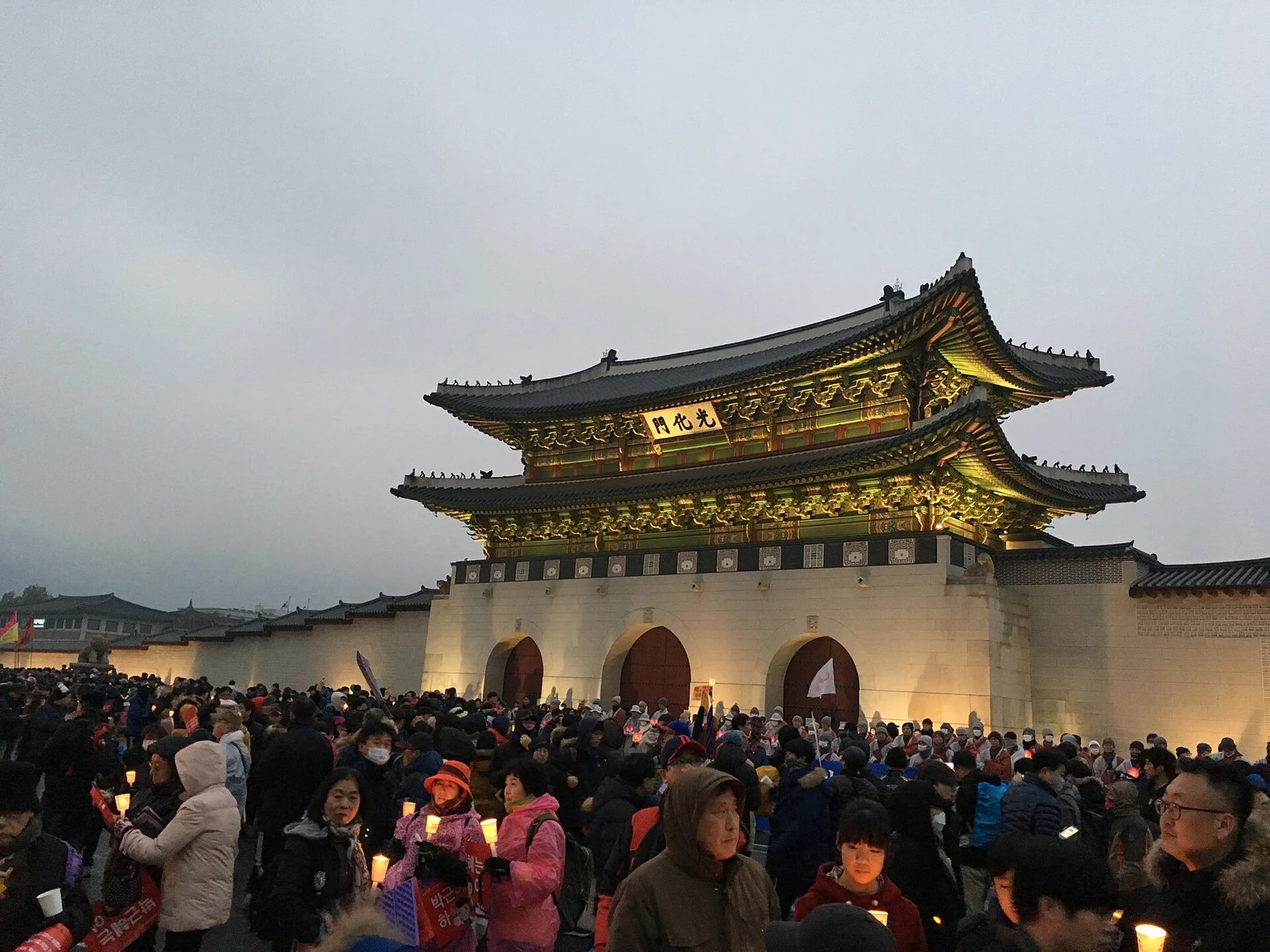
What brought people into the streets
Photographs of South Korean democracy often show crowds: students filling a road, families carrying candles, people raising concert lightsticks. The pictures can make the history look like a succession of demonstrations that changed presidents. What brought people together was more specific. An election was manipulated. A student died under police interrogation. Officials concealed how he died. A president sent troops to the National Assembly. Understanding those acts explains the crowds better than their size alone.
These events also followed different paths. A demand for an honest election became a demand for a president's resignation. Anger on a university campus spread into workplaces and across cities. Public demands reached parliamentary votes and judicial decisions. Following the April Revolution of 1960, Gwangju in 1980, the June movement of 1987, the impeachment of 2016–2017 and the martial-law crisis of 2024 reveals both advances and reversals. Korean places appear here as streets, assembly rooms, interrogation facilities and courts where those struggles took physical form.
1960: a manipulated vote and a missing student
South Korea held presidential and vice-presidential elections on March 15, 1960. President Syngman Rhee and the ruling Liberal Party sought to retain power. The manipulation extended beyond changing a total after ballots had been cast. The National Archives describes secret instructions for filling ballot boxes in advance, having people vote in groups where their choices could be checked, and excluding opposition observers. A ballot did not offer a free choice when another person could inspect it. Removing observers also removed an opportunity to check whether votes were being counted honestly.
People in Masan protested on election day. Police repression caused deaths and injuries, and the student Kim Ju-yeol disappeared. His body was recovered from the sea on April 11, with a tear-gas projectile lodged in his eye. News of the discovery connected electoral fraud with a death that demanded an explanation. Protesters wanted a new election and accountability for police violence. The missing student had become the center of another public confrontation.
The anger spread into university communities in Seoul and other cities. On April 18, Korea University students returning from a demonstration were attacked by political gangsters. The demonstration had finished, but participants could not return safely to campus. Violence against people criticizing the election widened the issue: it concerned how the government treated its opponents as well as what had happened inside polling stations.
April 19: gunfire, followed by a president's resignation
University students, secondary-school pupils and other residents joined demonstrations in Seoul on April 19. Police fired on protesters approaching Gyeongmudae, the presidential residence then occupying the site associated with the later Blue House. Protests and gunfire also occurred elsewhere. The government declared martial law, but the demand for responsibility continued after people had been killed and wounded. An election intended to preserve the regime had undermined its claim to govern.
University professors joined the streets on April 25. A declaration signed by 258 professors demanded responsibility for the fraudulent election and the government's departure; students and residents joined their march. Attempts to contain the crisis through the removal of particular officials did not satisfy a movement demanding that the president himself answer for it. The following day, Rhee announced that he would step down. The outcome depended on people continuing to protest after shootings and arrests, a cost that the word “resignation” alone cannot convey.
The political opening did not remain secure. A military coup on May 16, 1961 overthrew the Second Republic. Citizens had forced a president out, but that achievement did not prevent the military from taking power the next year. The April Revolution left a powerful experience of public action alongside a warning: winning a right and keeping the institutions that protect it are different tasks.
Gwangju in 1980: violence spreads from a campus into a city
Democratization demands grew during the spring of 1980. On May 17, emergency martial law was expanded nationwide. Students confronted airborne troops outside Chonnam National University the next day, protesting their inability to enter the campus. The violent suppression did not remain at its gates. Residents witnessed beatings and detentions on city streets, and more people joined the protests.
On May 20, demonstrations included taxis, buses and other vehicles. The movement now involved people whose daily work carried them through the city, as well as students. Geumnam-ro and the area outside the provincial government building became gathering places. Troops opened collective fire outside that building on May 21; citizens subsequently armed themselves. A photograph showing armed civilian fighters without this sequence leaves out the earlier military violence and shootings.
After troops withdrew from the center, civilian and student groups organized around the provincial building. People cared for the injured, distributed food and sought negotiations over detainees and an end to the crisis. They did not agree on every decision. Some favored surrendering weapons and negotiating; others argued that resistance had to continue. Protecting lives and preventing further harm presented difficult choices even while residents supported one another.
Troops entered the provincial building and other main positions before dawn on May 27 and suppressed the uprising. Families still had to find relatives who had died, been wounded or disappeared. Survivors faced detention, interrogation, stigma and pressure to remain silent. Efforts to preserve records and establish the truth continued for years because the violence and its victims needed public recognition and accountability. The end of armed resistance was not the end of the event's consequences.
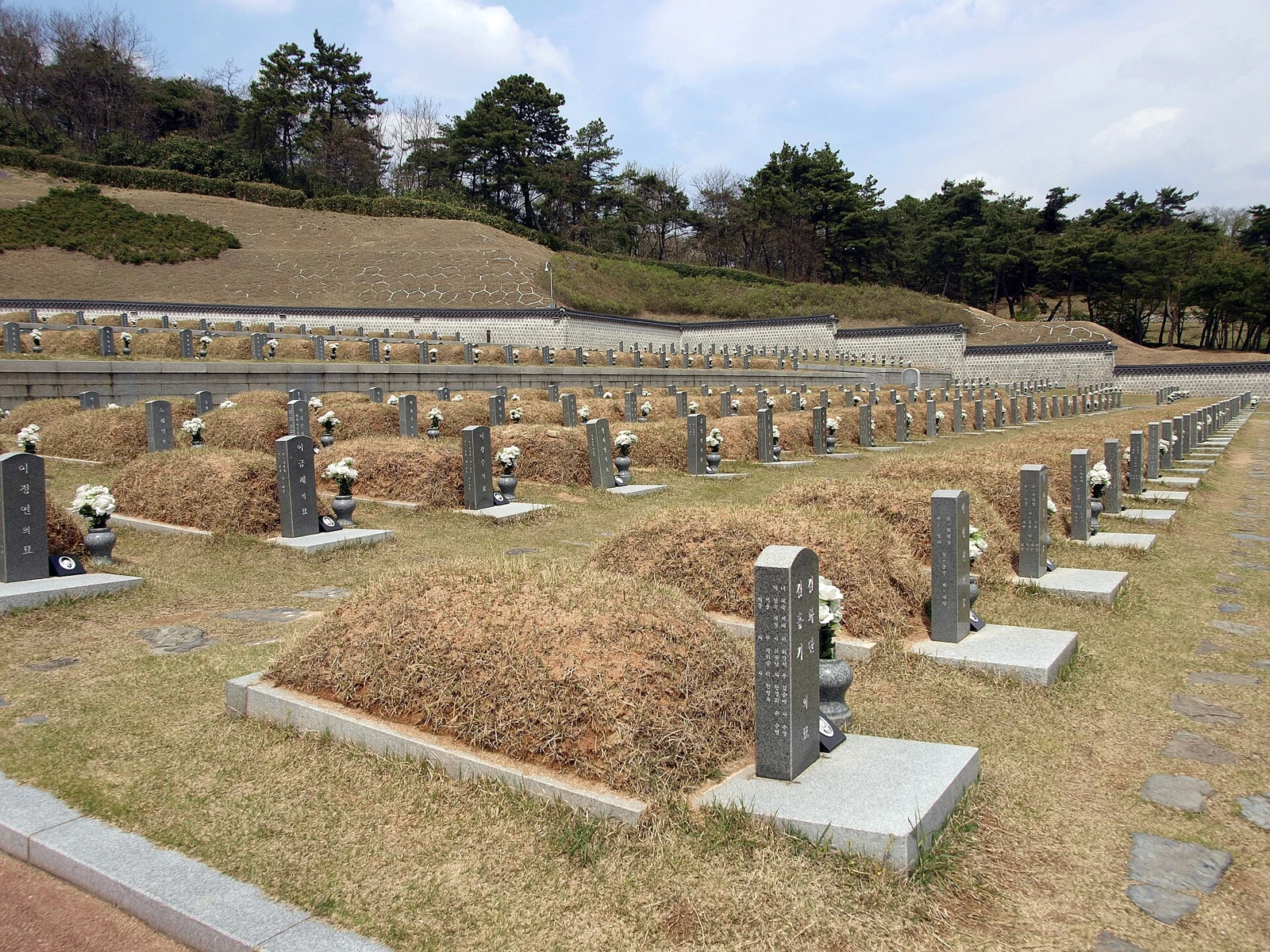
1987: a death in an interrogation room
On January 14, 1987, Seoul National University student Park Jong-cheol died during police interrogation at the Namyeong-dong anti-communist investigation facility in Seoul. Officers seeking the whereabouts of an older student subjected him to water torture. The police's first explanation concealed the torture. An autopsy, reporting, testimony and subsequent disclosures undermined that account. The institution responsible for the violence was also trying to control what the public could know about it.
While demands for the truth continued, President Chun Doo-hwan announced on April 13 that the existing constitution would be retained. That decision rejected demands for direct presidential elections and kept the indirect selection system. The dispute over a student's death became connected to the question of who could choose the next holder of power. A government resisting accountability also refused to open the presidential selection process to voters.
In May, the Catholic Priests' Association for Justice disclosed the cover-up and efforts to minimize the Park case. On June 9, Yonsei University student Lee Han-yeol was struck in the head by a police tear-gas projectile during a demonstration. He remained critically ill as protests spread and died on July 5. The June movement therefore unfolded while people mourned one student's death and confronted the possibility of another. These were immediate injuries and acts of concealment, rather than an abstract dispute over constitutional wording.
From a cathedral occupation to a direct presidential election
Demonstrations across the country on June 10 condemned the cover-up and demanded constitutional change. Protesters occupied Myeongdong Cathedral, making it a continuing gathering point. Supporters supplied water, food and medicine. Office workers joined during lunch breaks or after work; their visible presence became associated with the name “necktie brigade.” A movement organized in universities reached people with different working hours and places to gather.
Other cities had their own concentrations of protest, including Busan's Catholic Center and areas around stations and industrial workplaces in Incheon. Participation also continued into subsequent labor struggles over wages, working hours and union rights. Direct presidential election was a central demand, but the experience of collective action extended into who could speak and negotiate at work.
On June 29, ruling-party figure Roh Tae-woo announced acceptance of direct presidential elections and other reforms. Constitutional change followed, and voters elected a president directly in December. Roh won. The opening of an electoral channel did not immediately produce a president without ties to the preceding military regime. It did expand the means through which citizens could select a president and later hold power accountable. The institutional change and the particular electoral result belonged to related, but distinct, political processes.
2016–2017: private influence, candlelight and impeachment
In 2016, revelations concerned the influence of Choi Seo-won, then widely known as Choi Soon-sil, who held no public office in President Park Geun-hye's government. The Constitutional Court examined the transfer of presidential documents, Choi's comments and revisions, and her involvement in personnel and foundation operations. The issue went beyond a president taking private advice. Someone outside official responsibility and supervision had gained access to state information and influence.
People demanding accountability and Park's departure gathered at candlelight demonstrations. Families and participants of different generations appear together in the photographs. On December 9, 2016, the National Assembly approved impeachment. Park's exercise of presidential authority was suspended while the Constitutional Court considered whether the violations justified removal.
The proceedings also traced how money and organizations moved. Companies funded the Mir and K-Sports foundations, but major operational decisions were made by Park and Choi rather than the contributors. Choi arranged contracts between a foundation and an advertising company she operated. Presidential aides, acting on instructions, also asked companies to employ particular people or enter particular transactions. Public authority and money raised for ostensibly public purposes opened routes to private benefit. The Court found infringements of companies' property rights and freedom of management, as well as breaches of the president's duty to perform public office impartially.
Concealment mattered to the removal decision. Denying the intervention and hiding relevant facts obstructed opportunities for parliamentary investigation and media scrutiny. The Court assessed continuing violations and the absence of a demonstrated willingness to uphold constitutional limits. It was deciding the consequences of private use of presidential power and blocked oversight, rather than reviewing one unsuccessful policy.
Not every allegation was accepted. Some claims concerning personnel and pressure on a media company lacked sufficient evidence connecting the president's involvement with private benefit. On the Sewol ferry disaster, the majority held that an abstract duty to perform office diligently could not, by itself, establish a legal ground for removal. Two justices criticized the performance of duties in a supplementary opinion but also did not treat that failure alone as a removal ground. This did not settle every public argument about responsibility for the disaster; it identified what that particular impeachment proceeding could establish under its legal standard.
The Court removed Park from office on March 10, 2017. Public demonstrations did not substitute for the judgment, but demands for responsibility had reached a parliamentary decision and a judicial outcome ending a presidency. A subsequent election and criminal cases followed their respective procedures. The martial-law declaration of December 2024 would later require constitutional controls to operate again under very different circumstances.
December 3, 2024: an exceptional power enters ordinary political life
President Yoon Suk Yeol declared emergency martial law in a televised address on December 3. The Constitutional Court's account places the declaration at approximately 10:27 p.m. Yoon cited opposition impeachment efforts and budget reductions as causes of governmental paralysis. Those were his stated reasons. Whether they amounted to the emergency required by the constitution was a separate legal question subsequently assessed by the courts.
Article 77 of the constitution provides for martial law in wartime, armed conflict or a comparable national emergency when military needs or the maintenance of public safety and order require it. It is an exceptional authority. In ordinary political life, joining a party, attending a demonstration or criticizing the government does not depend on permission from a military command. The declaration attempted to insert military authority into precisely that civilian order.
Army Chief of Staff Park An-su, appointed martial-law commander, issued Proclamation No. 1. It prohibited political activity, including the activities of the National Assembly, local councils and political parties, and placed the press and publishing under martial-law command control. The prohibition included the Assembly, the very institution constitutionally empowered to demand that martial law end.
The proclamation stated an effective time of 11 p.m.; the Constitutional Court recorded its actual issuance at approximately 11:23 p.m. Procedural safeguards were missing too. The presence of ministers did not amount to substantive cabinet deliberation, the Court found. The declaration lacked countersignatures from the prime minister and relevant ministers, and the Assembly did not receive the required formal notification. Checks intended to examine the decision, attach responsibility to it and enable a parliamentary response had been bypassed.
Keeping the Assembly able to vote
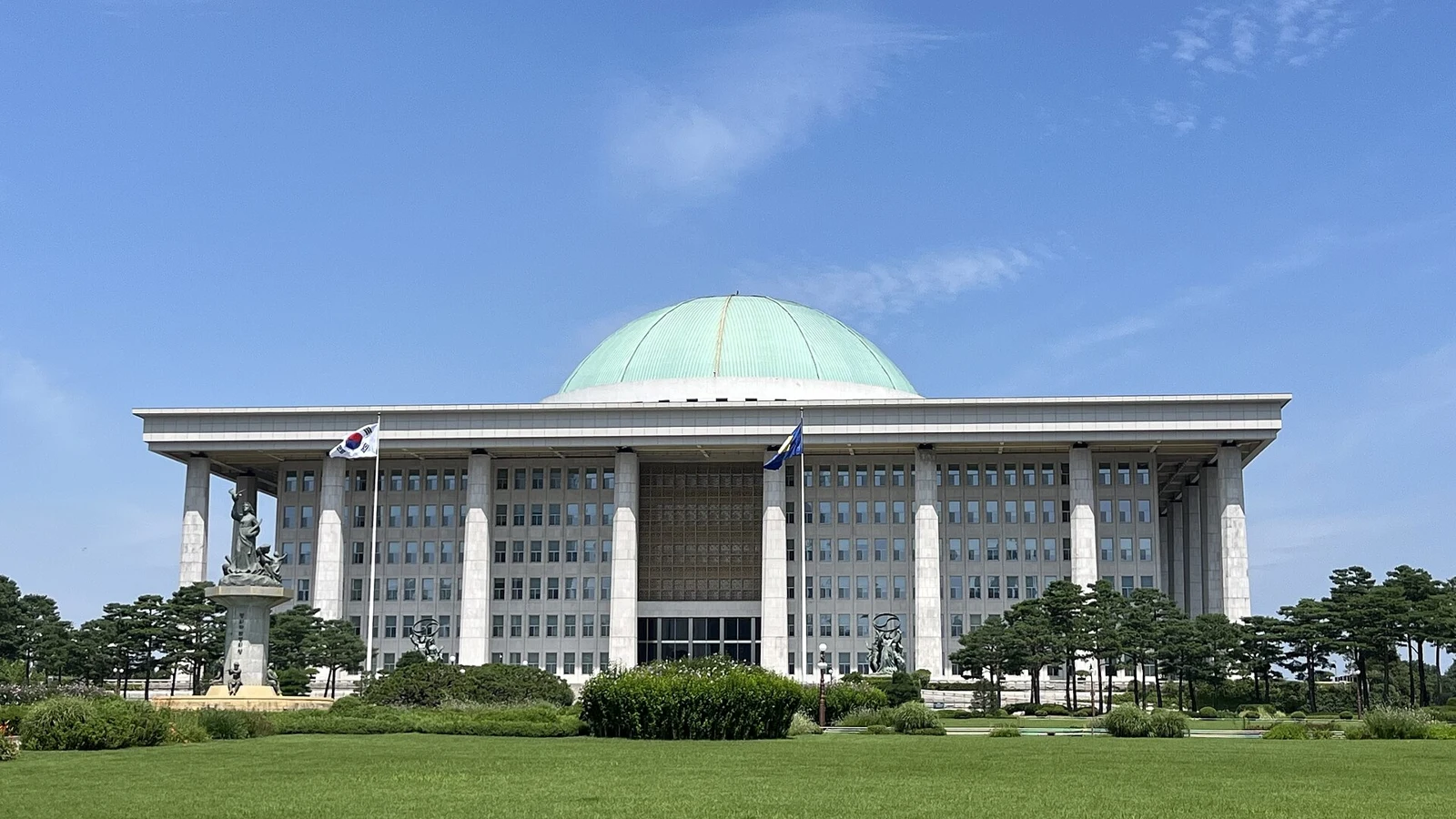
Article 77(5) requires the president to lift martial law when a majority of the Assembly's full membership demands it. That check only works if legislators can reach the chamber and vote. After the declaration, access to the Assembly became a practical struggle over the operation of a constitutional power.
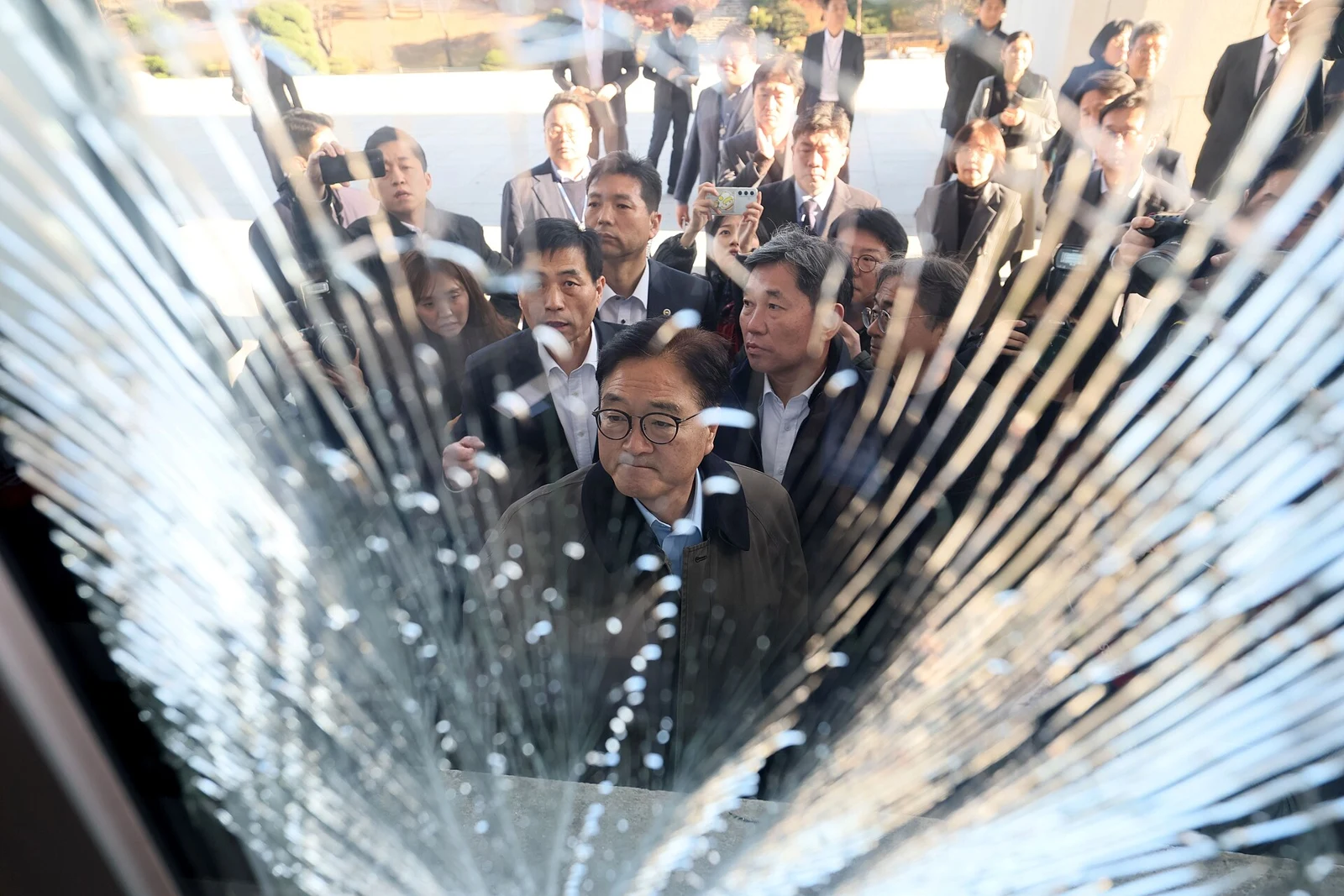
The Constitutional Court established detailed movements and orders. Ninety-seven members of the 707th Special Mission Group traveled to the Assembly by helicopter. At approximately 12:33 a.m. on December 4, sixteen of them broke two windows on the right side of the main building and entered. Personnel from the 1st Airborne Brigade also entered the grounds. Assembly employees and lawmakers' aides piled furniture into barriers, discharged fire extinguishers and used their bodies to impede troops. People were injured and the building and facilities were damaged.
The Court also found that Yoon telephoned the special warfare commander at approximately 12:30 a.m., saying the voting quorum appeared not yet to have been reached and instructing him to break doors and pull people out. Yoon denied the order. The Court evaluated commanders' testimony, the situation in which lawmakers were assembling, and speech relayed through an open microphone during a unit meeting, and did not accept his denial. Its findings connected the order with physically reducing the people available to carry out the parliamentary vote.
Troops did not enter the plenary chamber. Actions in corridors and at entrances gave lawmakers time to assemble. After the commander confirmed the passage of the demand to lift martial law, he ordered the mission halted and troops withdrawn. The constitutional check depended on keeping a real room accessible long enough for a decision to be made.
At approximately 1:02 a.m., all 190 lawmakers present voted for the resolution demanding the lifting of martial law. The president was constitutionally bound to comply. Yoon announced that martial law would be lifted at approximately 4:20 a.m., and the cabinet decision followed at approximately 4:29 a.m. The parliamentary vote, the president's announcement and the cabinet action were successive steps, not a single instantaneous reversal.
After the lifting: two impeachment votes
Lifting martial law did not remove responsibility for declaring it or deploying troops. Impeachment proceedings addressed whether the president's constitutional and legal violations were serious enough to justify removal. Criminal investigations addressed whether particular acts met the elements of offenses and warranted punishment. The processes arose from the same crisis but had different purposes and legal standards.
The first impeachment vote on December 7 failed to reach the required quorum. Presidential impeachment required approval by at least two-thirds of the Assembly's membership: 200 of its 300 seats. Most governing-party lawmakers did not participate. Neither the lifting of martial law nor the strength of public demands eliminated the voting requirement.
On December 14, a second motion passed with 204 votes in favor out of the 300 members. Yoon's exercise of presidential authority was suspended. This was not yet removal. The Assembly had voted to impeach; the Constitutional Court still had to adjudicate the grounds. Crowds and concert lightsticks outside the Assembly formed the public scene around decisions that the institutions had to make under their own authority.
Hannam-dong: a warrant meets a security barrier
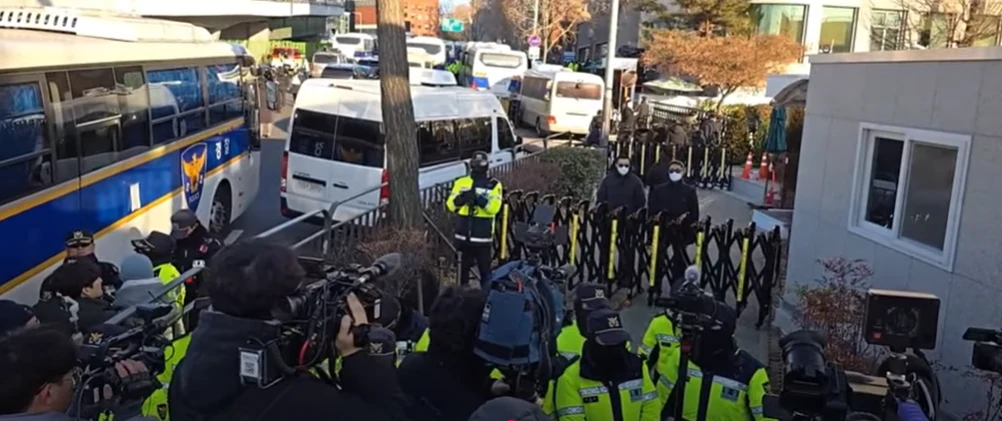
Investigators sought to secure Yoon for questioning. On January 3, 2025, the Corruption Investigation Office for High-ranking Officials, usually called the CIO, and police attempted to execute an arrest warrant at the presidential residence in Hannam-dong, Seoul. Presidential security personnel obstructed the operation, and it was halted after a confrontation. A court had issued a warrant, but executing it required access to the person behind a guarded entrance.
Presidential protection and control over a criminal investigation are different powers. Yoon's side disputed the CIO's investigative jurisdiction and the warrant's legality. Investigators sought to execute the court-issued warrant. These arguments took physical form in access restrictions, personnel placement and the movement of officers around the residence.
Later criminal proceedings described vehicle barricades, human scrums and force against investigators. After the first attempt failed, preparations to block another execution included wire fencing, barricades, scrum drills and patrols intended to demonstrate force. The Supreme Court accepted the appellate court's finding that ordering such actions to obstruct a warrant did not constitute legitimate presidential protection.
The Court also addressed the jurisdiction argument. Presidential immunity from prosecution did not prohibit every investigative act during office. In this case, the CIO had substantively investigated abuse of authority, an offense within its jurisdiction, and encountered directly related insurrection allegations. The related-crime provisions of the CIO legislation covered that investigation. This was a determination about the crimes and their relationship in this case, rather than a general power for the agency to investigate any offense.
Claims that the residence contained military secrets did not create an unlimited right to refuse a search. The Court required concrete, objective reasons to fear damage to a major national interest. It found no such justification had been presented by the security chief in this case, upheld the finding that the refusal was unlawful, and held the execution of the search warrant lawful.
The separate obstruction and related-offenses case resulted in five years' imprisonment at first instance, seven years on appeal, and a final Supreme Court decision on July 9, 2026. Both the defendant's and special prosecutor's appeals were dismissed. Individual charges were still distinguished: a conviction concerning the creation of a false martial-law declaration document did not make mere storage of that document in a drawer an act of using it. The acquittal on that latter charge remained. A headline saying “obstruction conviction” cannot describe every finding in the case.
The Kisses protesters in the snow
After the failed warrant operation, people demanding Yoon's removal continued demonstrating near the Hannam-dong residence. During the night of January 4 and the early hours of January 5, participants stayed in snow and cold wrapped in silver emergency blankets. Their rounded, foil-covered silhouettes were compared with wrapped Hershey's Kisses chocolates, giving rise to the names “Kisses protesters” and “Kisses brigade.” The name described a scene and its participants rather than one formally constituted organization.
Remaining outside for hours required warmth, food and somewhere to rest. Contemporary reporting described nearby rest spaces and meals supplied by supporters. People occupying the street were part of a wider effort involving those who provided practical supplies and shelter. Concert lightsticks associated with K culture became a visual symbol of the demonstrations; emergency blankets helped people remain there.
Snow was an environment participants had to endure. The warrant remained unexecuted while the investigation faced delay. Staying near the residence sustained a demand that the operation continue. Wrapping a person in a blanket, sending warm food and opening a place to rest connected public protest with the work of getting through the night. The memorable silver image contains that practical labor and care.
January 15: arrest and the next judicial stage
At 10:33 a.m. on January 15, the CIO and police arrested Yoon during a second warrant execution, twelve days after the first attempt had ended. Investigators had secured custody. Arrest did not establish guilt on all allegations.
Initial arrest and continued detention also required different steps. Keeping a person in custody beyond the initial arrest period required further judicial examination of the relevant conditions. Yoon was questioned before a judge at the Seoul Western District Court on January 18, and the detention warrant was announced in the early hours of January 19. The arrest, the hearing and the later warrant were successive procedural acts.
The Constitutional Court was simultaneously hearing the impeachment case. Determining whether Yoon could remain president and investigating possible crimes proceeded alongside one another. Removal would not itself be a criminal conviction; arrest did not dispense with the impeachment hearing. Distinguishing the steps helps explain the different decisions appearing in the news at the same time.
January 19: an attack on the court
After news of the detention warrant, some Yoon supporters entered the Seoul Western District Court and damaged its facilities. The location was a court, and the immediate trigger was its decision to authorize continued detention. This was a distinct incident from the standoff at the presidential residence and the demonstrations demanding impeachment.
Court decisions can be criticized and contested through legal procedures. That does not authorize breaking into offices, destroying equipment or threatening people. Equally, attendance at a gathering outside the court does not establish that every participant joined the attack. Criminal responsibility depends on evidence of particular conduct.
The confrontation had begun before the warrant decision. Supporters gathered during the January 18 hearing. That evening, some attempted to enter through the rear, and CIO staff returning from the hearing were prevented from leaving in their vehicles. Facts later confirmed in a Supreme Court case included people striking vehicle windows at the front while a human scrum prevented reversing at the rear. Employees who had completed court duties could not depart.
The report to the National Assembly the following day shows the sequence inside the court more clearly. On January 20, Court Administration Minister Cheon Dae-yeop said that the CIO received the physical warrant and records at about 2:53 a.m., the court announced the decision at about 2:59, and news reports followed around 3. His account placed the breach of the police line and entry into the grounds at roughly 3:07, followed by entry into the building through damaged doors and windows at about 3:21. These are times in the initial next-day report, distinct from the more detailed locations and timings later recorded in the white paper and individual judgments. Announcement, entry into the grounds and entry into the building were successive stages, not one instantaneous scene.
The duty office normally handles overnight warrant work. That night it also became a place to block entry and seek shelter. Deputy Court Administration Minister Bae Hyeong-won told the committee that employees moved a vending machine to obstruct the entrance, but retreated upstairs when the duty-office window broke and people entered. He also reported damage to its CCTV equipment and efforts to recover it. The later white paper records two employees and one injured police officer sheltering in the overnight-rest room. Guarding an entrance and protecting those inside happened together. Calling this simply property damage misses the fact that damage to working equipment and the search for refuge unfolded amid the same danger.
Evacuation did not end with one journey to the roof. The account read into page 5 of the parliamentary minutes describes employees placing chairs against the rooftop entrance in case intruders followed. They later moved to the basement-level-two equipment room because of the risk of another incursion, waiting for the situation outside to settle. Roof and basement were not just architectural locations: they were places where employees had to protect themselves and decide whether to move again. Their evacuation makes it impossible to read the attack as though the court had been empty or all danger had remained outside.
Some intruders reached the seventh floor, where judges had offices. Cheon’s report described people looking for the warrant judge and damage to that office; judgments in the case later made final record specific acts of kicking a door, damaging its lock and searching offices. A reporting official’s suspicion must not become a claim that every participant’s advance plan was proved. In the initial parliamentary account, police began interior suppression and arrests at about 3:32 a.m. and had removed the intruders from inside by about 5:15. Confrontation outside continued, with most people reported to have dispersed by about 7:28. Securing the interior and calming the surroundings were different moments.
Resuming hearings and public services the following day did not mean every injury to the institution had been repaired. Cheon told the committee on January 20 that staffing and facilities support allowed that day’s work to proceed. In the afternoon, he explained that employees were reporting psychological trauma and that continuing care was being prepared. Committee questioning also asked whether rapid reopening left sufficient room for recovery. Replacing windows, doors, computers and surveillance or access equipment, serving litigants and helping threatened people feel safe again do not proceed at the same speed. A court reopening its doors and an attack being over are consequently different judgments.
On April 30, 2026, the Supreme Court finalized findings in case 2026Do999 concerning entry, obstruction of official duties, confinement of employees in vehicles and damage. The defendants in that case received different outcomes, including prison terms, suspended sentences and a fine. The courts distinguished conduct and the extent of participation, including entry using collective force and individual building trespass. Finalization of that case did not close every proceeding arising from the attack.
Restoration costs also led to a civil action. According to a Supreme Court release, on August 26, 2026 the judiciary sued five participants with final convictions, seeking approximately 1.176 billion won in restoration expenses plus interest for delay. This was a claim, not a sum already awarded or paid. Earlier damage estimates and later restoration claims covered different items and stages. Removing intruders from the premises left further work: restoring a public facility and determining responsibility for the cost.
The deployment of soldiers to the Assembly and the court attack involved different actors and legal cases. In this article's judgment, both raised a related question: may an institution be physically prevented from making a decision because that decision is unwelcome? Parliamentary votes and judicial warrant reviews cannot operate only when everyone agrees with their conclusions. The attack threatened a place where disagreement should be resolved without endangering the people carrying out its work.
April 4 removal, followed by continuing criminal proceedings
The Constitutional Court removed Yoon from office on April 4, 2025, recording the pronouncement at 11:22 a.m. It examined the declaration and subsequent acts against constitutional and legal requirements. Calling martial law a high act of government did not exempt it from judicial review. Exceptional powers still had conditions and controls.
Yoon argued that the declaration warned the public about opposition conduct and was soon lifted, so the violations were not sufficiently serious. The Court rejected that position. Restrictions on political activity and fundamental rights, and military interference with the Assembly's authority, had already harmed the constitutional order. The Assembly had been able to vote because of public resistance and the restrained execution of orders by soldiers and police, the Court explained, rather than because the president had protected its freedom to operate. Compliance with the subsequent lifting demand did not erase earlier violations.
Troops also entered the National Election Commission. The Court found that occupying its premises and directing searches and seizures of computer systems under the pretext of resolving electoral-fraud allegations infringed the commission's independence. The parliamentary obstruction, intervention in election administration and restrictions on expression affected separate institutions and rights. Considered together, they justified removal to protect the constitution.
An election and transfer of power followed the presidential vacancy, while investigations and trials continued. On February 19, 2026, the Seoul Central District Court's 25th criminal division sentenced Yoon to life imprisonment at first instance in the insurrection-leadership and abuse-of-authority case. Other defendants received different findings and sentences according to their roles and the evidence.
The trial court considered the gravity of a president bound to uphold the constitution declaring martial law without the required emergency and attempting to blockade the Assembly through military and police forces. Its sentencing reasons addressed damage to their political neutrality, the situation of subordinates confronted with questionable orders, and social costs including another presidential election and extensive investigations and trials. It also considered the short duration, restraint in physical force, absence of fatal injuries, and plans that did not reach execution. Those factors did not eliminate responsibility because the intended objective had failed.
As of October 2026, the main insurrection case remained on appeal. The first-instance life sentence must not be presented as final. The seven-year sentence in the separate obstruction and related-offenses case had become final in July. Cases originating in the same martial-law declaration still involved different charged conduct and procedural stages. Ending presidential office did not end the courts' work of determining individual responsibility.
A room for a vote, a door for a warrant
In 1960, possessing a ballot did not ensure a free choice when someone else could inspect how it was marked. In 1987, citizens could not directly choose the president, and the public had to establish what police had done in an interrogation room. In 2024, direct elections and the Assembly's power to demand the lifting of martial law already existed, but people had to resist troops so lawmakers could reach a voting chamber. The barriers to exercising rights changed; so did the work of overcoming them.
At the presidential residence, access needed to execute a warrant was blocked. At the court, the workplace that had reviewed a warrant was attacked. People sustaining a demonstration through a winter night needed blankets, meals and rest spaces. Employees returning to court had to keep public work going with damaged equipment. Beneath the headline outcomes were people and places that made decisions and their execution possible.
An important achievement in South Korea's democratic history is that these struggles reached presidential removal and judicial findings. The coup after the April Revolution and martial law decades after democratization also show that acquired rights can be threatened again. A person must be able to contest an unwelcome decision through law without forcibly stopping another person's vote, investigation or trial. Maintaining that condition remains work for the periods between elections and demonstrations too.
Democratic decisions need places where people can vote, investigate and adjudicate safely. South Korea’s history shows how those conditions were won, defended and threatened again.
Sources & scope
Korean democratization history: 1960 ↗Democratization during the April Revolution period ↗Korean democratization history: the 1980s ↗May 18 Democratic Uprising documentary heritage ↗Constitution of the Republic of Korea, Article 65 ↗1987-10-29Constitution of the Republic of Korea, Article 77 ↗1987-10-29Summary of the Park Geun-hye impeachment decision ↗2017-03-10Constitutional Court newsletter: second half of 2024 ↗Summary of the Yoon Suk Yeol impeachment decision ↗2025-04-04Candlelight, national flags and understanding generations aged 50–70 ↗2017Yoon Suk Yeol impeachment: major constitutional case ↗2025-04-04Instructions and methods behind the March 15 electoral fraud ↗The university professors’ demonstration on April 25 ↗The course of the May 18 Democratic Uprising ↗The June 10 democratic movement ↗Records of Park Jong-cheol and the June movement ↗2024Hun-Na8: Constitutional Court decision and findings ↗2025-04-042026Do6500: final judgment on arrest obstruction and related offenses ↗2026-07-09Kisses protesters spending the night in snow ↗2025-01-05The second execution of the arrest warrant against Yoon ↗2025-01-15White paper on the January 19 Seoul Western District Court riot ↗2025-12-232026Do999: final judgment on court intrusion and related offenses ↗2026-04-30Civil action seeking restoration costs after the court riot ↗2026-08-272025Gohap129: first-instance insurrection leadership judgment ↗2026-02-19Proceedings in the insurrection appeal as of October 2026 ↗2026-10-06Parliamentary Judiciary Committee minutes, January 20, 2025 ↗2025-01-20Actual Supreme Court judgment 2026Do999 ↗2026-04-30Appeal judgment 2025No2439 ↗2025-12-29A gathering demanding Park Geun-hye’s departure at Gwanghwamun, November 26, 2016. Photograph: Jjw.
Jjw · CC BY-SA 4.0 · Resized and converted to WebP