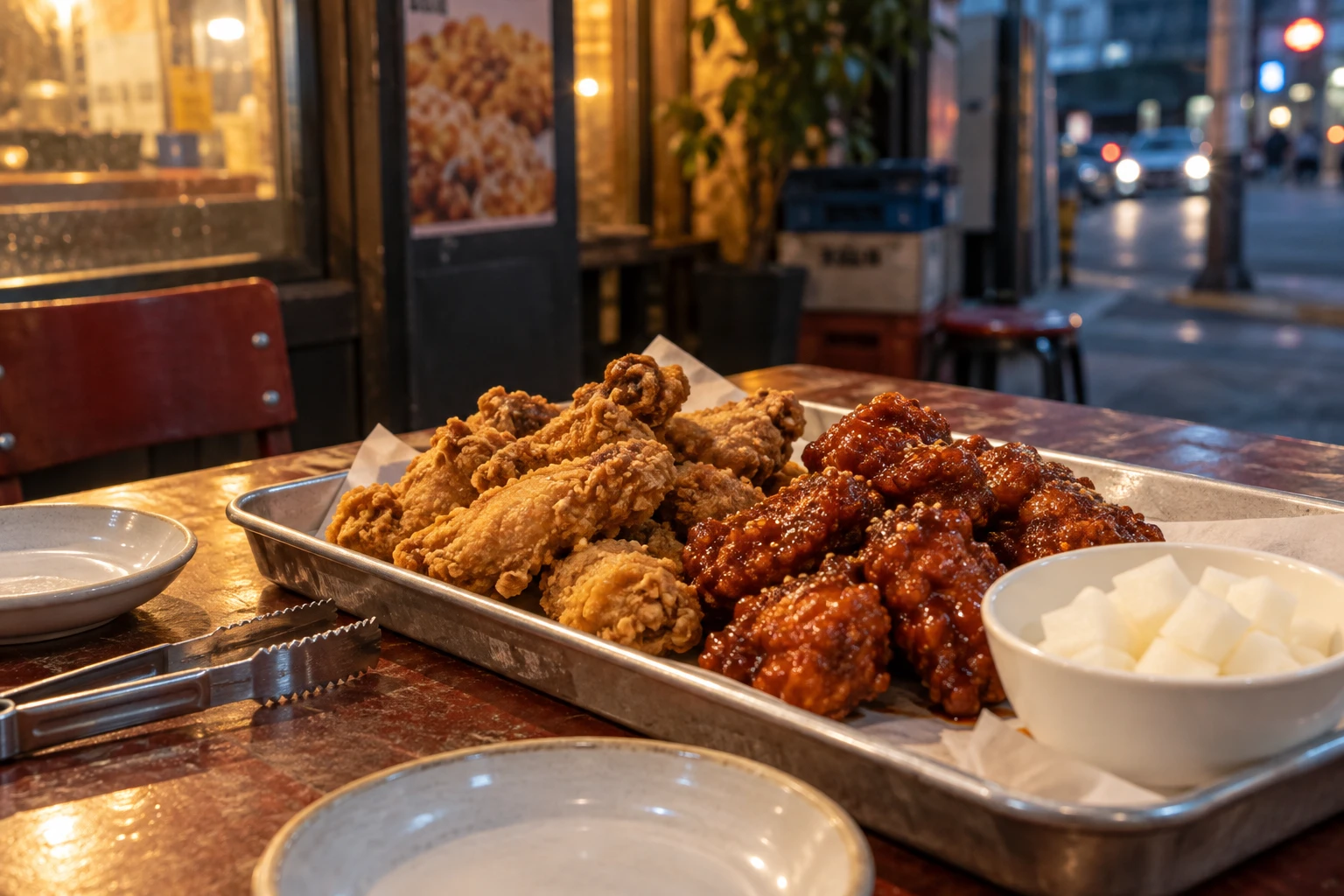
The bird was divided before the box opened
Open a chicken box and pieces have different shapes. A drumstick gives the hand a bone to hold; a wing leads the eater around joints. Boneless pieces can be lifted directly with chopsticks. The box contains a cooked bird and the result of earlier cutting into eating-sized units.
If golden pieces occupy one side and red-sauced ones the other, another division has happened. Some fried pieces were left plain; others were tossed with sauce. The eater chooses a part and a finish. Adding rice makes a meal, while picking up pieces between drinks gives a slower rhythm. The divided food makes either movement straightforward.
Before delivery, hands cut the bird, a coating formed in hot oil, sauce met a prepared surface and someone packed the results. Following those jobs shows how a whole bird became a box with choices inside.
From a whole roast to a counter selling pieces
KTO's 2025 account includes the 1960 electric-roast example of Wonjo Yeongyang Center in Myeongdong. A whole roasted bird keeps its body shape until service. Detaching legs and wings and dividing the body meat then continues at the table. Cutting skin and meat makes portions after the bird has cooked.
Frying pieces moves that division earlier. The raw bird is cut so each piece exposes its surface to coating and oil. Pieces have different thicknesses and surface areas. The kitchen works with those individual units; at the table, selecting a cooked piece becomes the central action.
Lims Chicken's official history records its first branch in the basement of Shinsegae's main department store in 1977 and a Maseok factory in 1982. A selling counter and a preparation facility appear within the company's timeline. The route into a meal can include more than the location handing over the finished food.
Drumsticks, wings and boneless meat are different bundles
Lims Chicken's published menu lists original, seasoned and boneless chicken, wings and drumsticks-only chicken. It is a concrete example of one bird becoming orders defined by parts and preparation. A drumsticks order gathers similar shapes rather than including broad body pieces. Wings provide smaller joints and a different relationship between skin and meat.
Removing bones shifts another job away from the eater. Meat can then be divided into small bites or larger pieces. How much skin remains changes the fried exterior too. Preparing pieces with similar thickness helps the kitchen work with them within a cooking sequence.
The table requires different movements. Bone-in chicken leaves bones, making a spare plate and paper for the hands useful. Boneless pieces eaten with rice allow chopsticks to move between meat and side dishes. Convenience begins with grouping parts and preparing them before service. The detailed coating and cooking continue in Korean chicken preparation.
A coating forms outside the meat
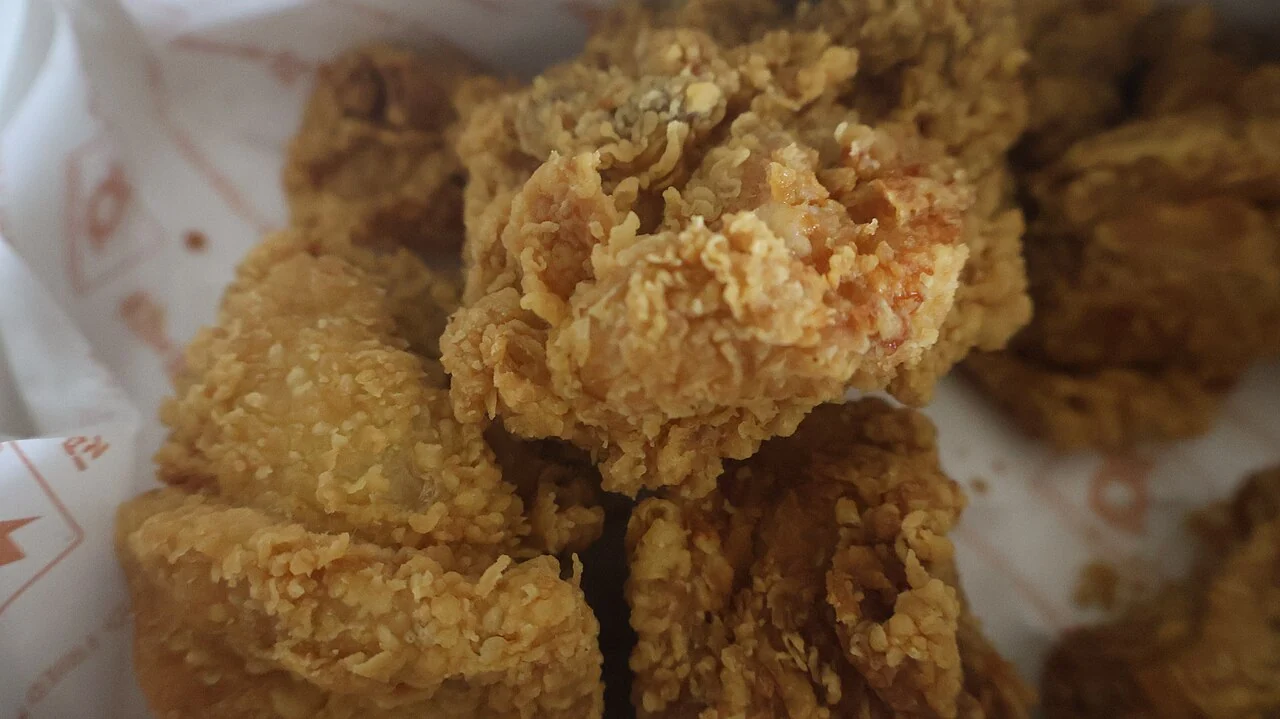
Flour, starch or batter first meets the chicken's surface. Dry material adheres to moisture; a batter spreads around irregular contours. Folds near joints and smoother meat surfaces receive different shapes of coating. That outer material cooks in oil into a texture distinct from the meat underneath.
In hot oil, moisture leaves the exterior and the coating sets while heat also reaches the meat. Introducing many pieces changes the cooking environment, so one customer's order and one frying batch need not be the same operation. The kitchen moves pieces to keep them apart and provides a place to drain them after lifting them from the oil.
Maangchi's published yangnyeom-tongdak example prepares fried chicken and sauce separately before combining them. Building the irregular fried exterior and adding flavour to it become successive jobs. The visible crisp layer includes material created around the chicken, beyond its own skin.
Seasoning handles the finished surface again
Pelicana's official account records a Daejeon Station shop in 1979, franchising in 1981 and sauce development in the 1980s. A menu that adds sauce to fried pieces entered that company's selling history.
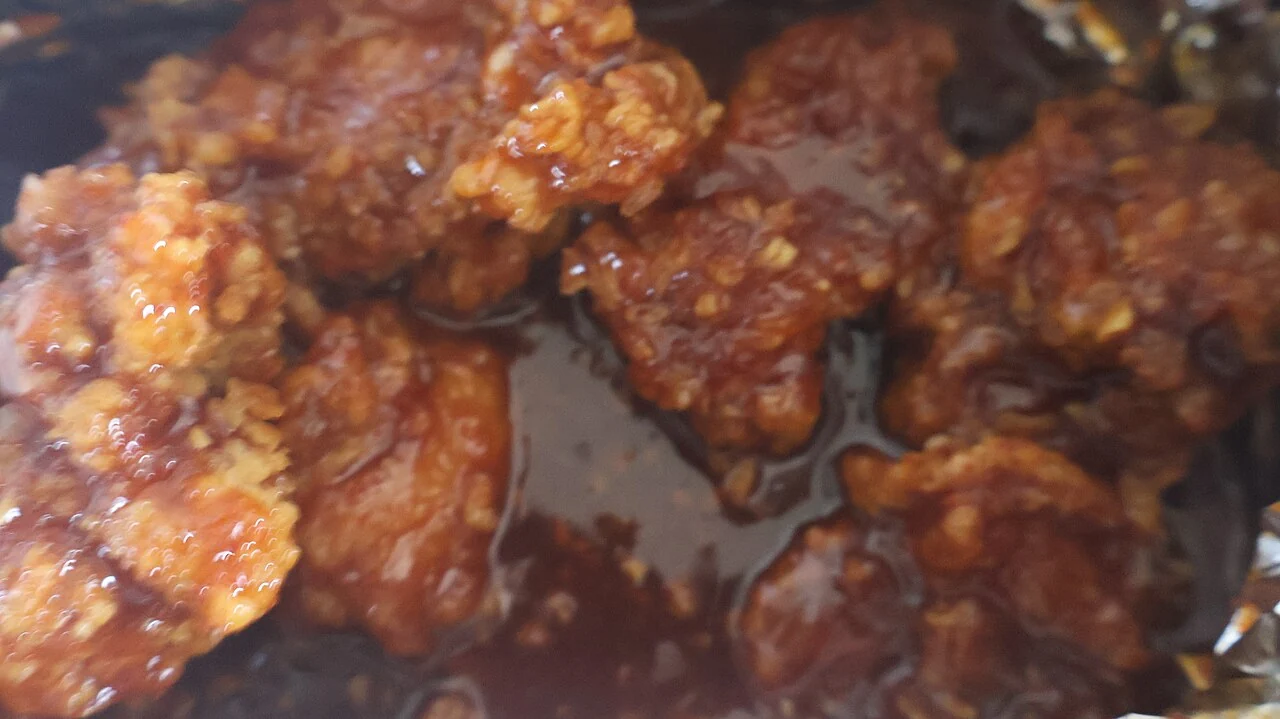
To coat fried chicken, prepared sauce and pieces meet in a bowl or pan. Sauce pooling at the bottom reaches lower pieces first; pouring only over the top can leave other faces bare. Turning and tossing carries sauce around their curves. The exterior is handled again to distribute the finish.
The eater encounters a sticky sauce, then the fried layer and meat. Dipping into separate sauce instead leaves the area and amount to that person's hand. Adding liquid to a prepared surface creates places that remain crisp and places that become moist. Seasoning is a flavour and an additional operation after frying.
Half-and-half divides the final operation
A combined plain-and-seasoned order can use fried pieces as a shared starting point. Some are tossed with sauce while others are packed without it. Packing separates positions or containers so the finishes do not mingle too much. Two parts of one order have passed through different last movements.
Opening the lid reveals golden and red areas. A person may begin with a plain drumstick and take a sauced piece next; two people can choose different sides. A large ordering unit retains small selectable pieces inside it. What was decided at the counter remains usable at the table.
The pleasure of half-and-half lies partly in keeping those first mouthfuls different. Food arrives together, yet each piece meets the mouth with another surface. Ordering together and choosing individually work within the same package.
Dakgangjeong makes a smaller bite
KTO's dakgangjeong description presents fried boneless pieces glazed with sweet-spicy red-chilli-paste sauce or sweet soy sauce. Preparing a small piece brings the coated exterior close to the eating unit.
With a large bone-in piece, cracking the surface and separating meat continue as the eater works around the bone. A small boneless piece can bring its exterior and interior into one bite. Similar-sized pieces also give a more regular amount to pick up; turning them through sauce leaves a coating around each.
Small pieces can move frequently from a plate to the hand or sit alongside another dish. The same bird and frying method gain a different rhythm through cutting size and surface finish. The ingredient background of saltiness and sweetness continues in jang before the table.
The box weighs more than chicken meat
The Korea Consumer Agency's 2022 test covered 24 products from ten brands. Its report recorded total weights of 625–1,234g and edible weights after bone removal of 495–1,085g. The edible portion still included coating and sauce; it was not isolated chicken meat.
A box brings flesh and bones together with fried flour and added sauce. Removing the bones gets closer to what can be eaten, but the remaining weight still contains the exterior. A thickly sauced piece and one with a thin coating can hold different compositions within the same measurement.
These are measurements of products bought for that 2022 test. At the table, portions also depend on other foods and the pieces people choose. As a plate fills with bones and the box empties, the meal eaten becomes more tangible than the menu expression “one chicken”.
Packaging carries the time between frying and eating
Newly fried food continues to release heat and water vapour. Pieces served immediately on a plate and pieces enclosed for transport pass through different surroundings. Reduced escape for vapour and droplets forming on cooler surfaces can affect the fried exterior they touch. Moisture from sauce and moisture during the journey can both be present when the box opens.
Spread the box open and its pieces become accessible. Open the pickled-radish container and cold white cubes sit in liquid separately. Taking a cool, sour cube after fried chicken changes temperature and taste. The hand moves between chicken, radish and a drink, building a sequence for the meal.
The box's lasting appeal is in preparing those small choices and sending them together. A kitchen's earlier cutting, a coating formed in oil, another sauce finish and a separately packed accompaniment meet at one table. Even when the last piece is gone and bones and containers are cleared, the convenient dinner carries the concrete work of dividing, cooking and moving a bird.
A chicken bite combines prepared meat, coating, heat and sauce. Its texture keeps changing during the journey to the table.
Sources & scope
Dated restaurant examples in Korean chicken history ↗2025-02-20Pelicana company history ↗Maangchi’s yangnyeom chicken preparation ↗2025-03-05Chicken weight testing in 2022 ↗2022-11-14Lims Chicken history ↗Lims Chicken menu by parts ↗Dakgangjeong pieces and glaze ↗2023-10-19Modules independently explains the verified sources. The lead image is AI-generated for illustration; it is not a documentary photograph of an actual place, event or product.
Updates & corrections
Dates record changes to this document, separately from the reference dates of its sources.
- Content update
Rewrote the article with fuller production, history, examples and source explanations.
- First published
Created Korean and English documents using verified official sources.