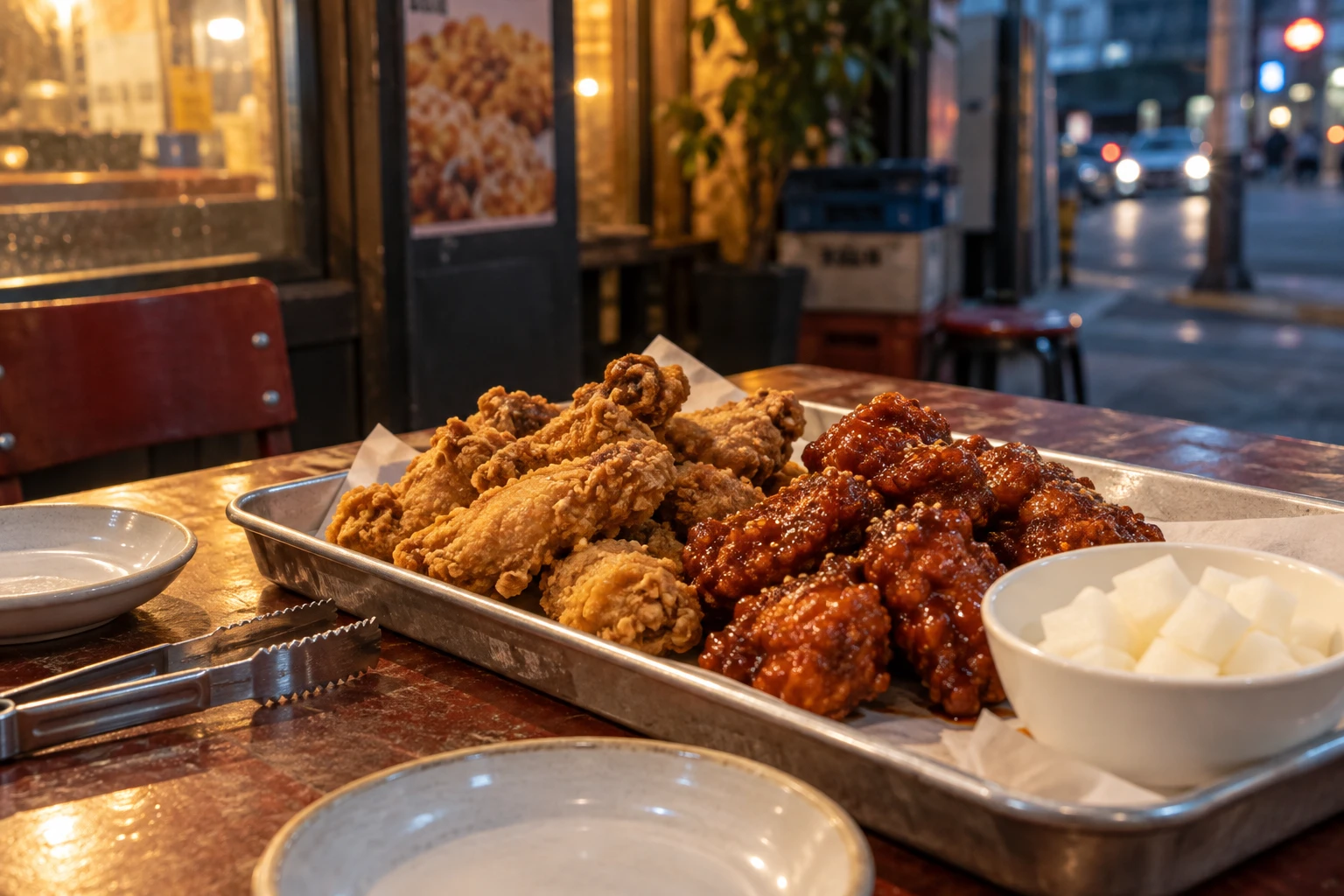
A chicken has passed through several hands before the box opens
Open a box of Korean chicken and the first things you see are folds of skin and uneven ridges of fried coating. Some pieces retain a recognisable drumstick or wing shape; others are small boneless chunks. A bird cooked whole, a bird divided at its joints and meat removed from the bones present different surfaces to the oil. They also create different bites. Preparation in the kitchen determines what remains for the eater's hands to do.
A whole cooked bird still has wings and legs to separate. In portioned chicken, that work has already been done, leaving pieces that people can pick up individually. Boneless chicken replaces picking meat off bones with eating small pieces and coating together. Products may use thigh or breast meat, so their ingredient descriptions explain the character of the flesh. A thigh's irregular shape and a breast's thicker broad surface remain different after cutting. The process begins well before anything turns golden.
From a whole roasting bird to separately fried pieces
The Korea Tourism Organization's 2025 account gives two dated examples: Yeongyang Center in Seoul in 1960 and Lim's Chicken at Shinsegae Department Store in 1977. Lim's own website also identifies 1977 as its starting year. These are concrete restaurant histories through which to follow changing preparations, rather than a single inventor's claim over every chicken dish.
Roasting a whole bird cooks the body with the skin facing outward. Frying pieces puts coating around each separated portion, including newly exposed cut surfaces. The kitchen must handle pieces of several sizes instead of a single body. This change makes another meal possible: a box can open onto a selection of parts, ready for different people to choose.
Pelicana's company account describes a shop near Daejeon Station in 1979 and the start of its franchise business in 1981. It connects its sauce development with the 1980s franchise business. Sauced chicken introduces another action after frying. Cooking the flesh no longer finishes the product; the kitchen must also decide what will cover the hot pieces. That finishing stage becomes something a customer can order by name.
Water and powder build a layer around the meat
The coating does not arrive as a finished envelope. Flour or starch meets moisture and other ingredients, and the mixture adheres to the chicken. With a dry dredge, moisture on the meat wets the powder. With batter, an already mixed preparation covers the surface. Lifting and coating pieces leaves folds and ridges. The quantity remaining on a piece changes the thickness that eventually reaches the mouth.
Flour and starch may be used together. Starch changes when heated with water; as moisture leaves the surface, a brittle texture can develop. Flour also contributes structure to the mixture. The choice and proportion of powders and the amount of liquid belong to a product's preparation. A thin covering lets the contours of chicken skin show, while a rougher, thicker covering places more of the fried layer in the first bite.
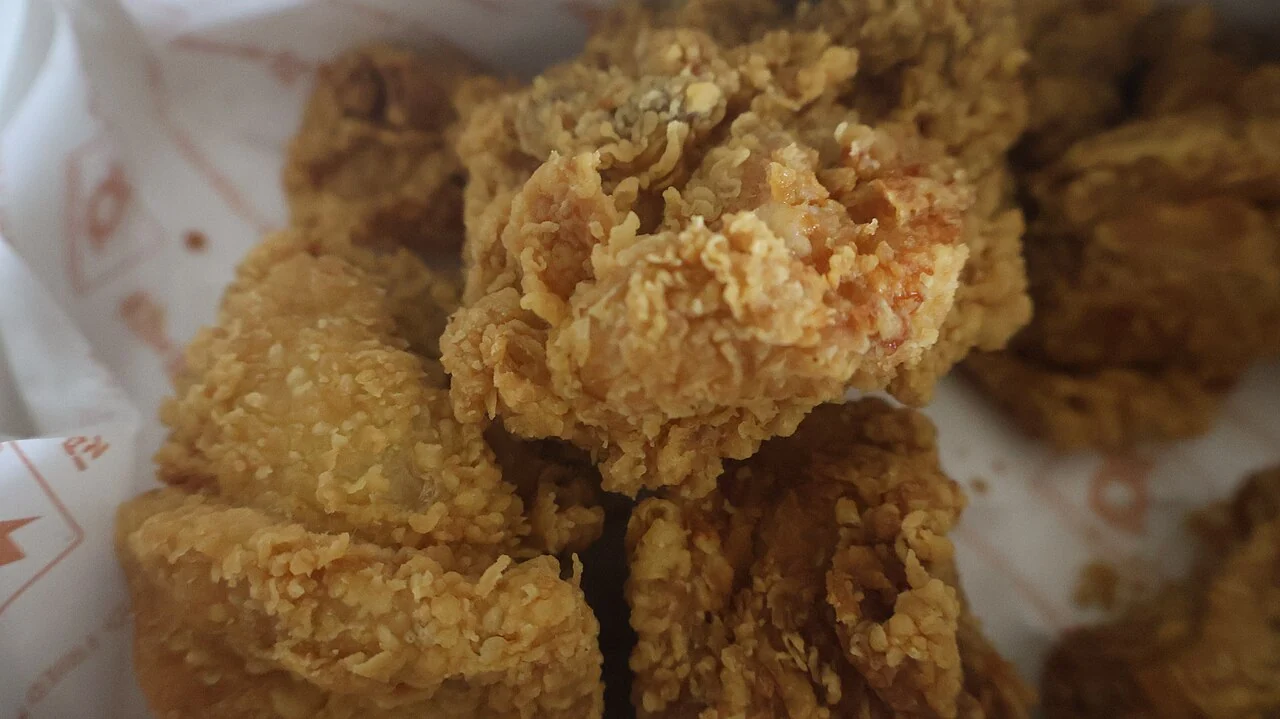
The documentary photograph of plain chicken shows golden ridges overlapping darker cooked patches. It cannot reveal the restaurant's formula, but it shows where the texture sits. Seasoning the meat itself with ingredients such as salt and pepper, as well as seasoning the covering, lets flavour continue after the first contact with the surface. Plain fried chicken has preparation behind its taste even without a red sauce.
Hot oil cooks the covering and the flesh
When a piece enters oil, moisture leaves its surface and coating in bubbles as the covering sets and changes colour. Heat travels inward. A narrow wing piece and a thick chunk of meat have different distances between the exterior and centre. Preparing consistent pieces helps a kitchen obtain consistent results. The exterior's brown colour alone does not describe what has happened throughout every piece.
Loading too many cold pieces at once lowers the oil temperature and can make coatings stick together. Working in batches and separating touching pieces allows oil to reach their surfaces. After lifting the chicken out, a rack or strainer lets oil drain. Piling freshly fried pieces on a flat surface leaves the bottom ones in contact with liquid and steam, making it harder to keep their exteriors dry.
Double frying is one real technique. Maangchi's yangnyeom-tongdak recipe removes the chicken, fries it again and then combines it with sauce. Returning it to oil provides a finishing stage for the surface. Kitchens do not all use this sequence; cuts, coating and equipment shape their cooking method. This account explains the work rather than prescribing a restaurant's temperature or timing for an unspecified home batch.
Red sauce adds a second surface
For yangnyeom chicken, cooked pieces meet sauce towards the end of preparation. Minced garlic contributes aroma; gochujang or chilli powder brings heat; sugar or syrup adds sweetness; ketchup or vinegar can supply acidity. Warming and mixing the sauce dissolves sweet ingredients and produces a mixture that spreads over the pieces. A similar red colour can therefore accompany different balances of immediate sweetness and lingering heat.
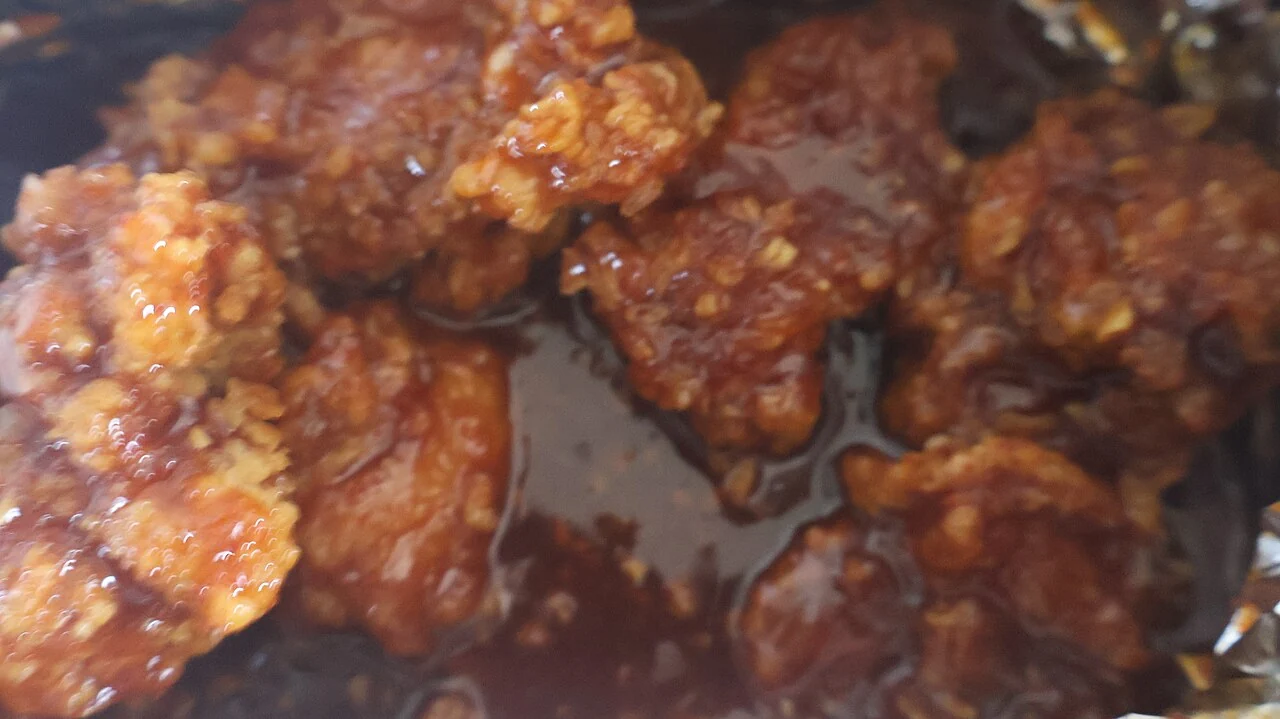
Turning pieces in a large bowl or pan brings sauce into the ridges. Lightly coated surfaces retain more of the fried covering's feel, while heavily coated ones foreground gloss and stickiness. A liquid sauce keeps changing the coating as it remains in contact with it. The interval between frying and mixing, and the later interval before eating, both enter the finished experience. In the photograph of seasoned chicken, red gloss covers the surface while the uneven fried structure remains visible underneath.
Soy sauce and garlic add saltiness and aroma without requiring a red finish. Dry seasoning leaves particles rather than a broad liquid layer. A half-and-half order places different finishes within one selection. Arranging them so that sauce does not flow across the plain pieces helps preserve two surfaces in the same box.
The weight of an order includes more than muscle
A Korea Consumer Agency investigation in 2022 covered 24 products from ten brands. Its actual report records total product weights of 625–1,234 grams and weights after bone removal of 495–1,085 grams. These ranges describe the tested products at that time. The two measurements account for a material that remains after the meal: bones.
The bone-removed portion is not a measure of pure chicken muscle. Coating and sauce remain attached to it. Even when a kitchen begins with similarly sized birds, cooking removes water while coating and sauce add material. A heavier, generously sauced product cannot automatically be read as containing more flesh. The production steps explain why.
An order described as one chicken offers a familiar purchasing unit, but diners encounter individual pieces. A person choosing drumsticks and another reaching for small wings can quickly exhaust a particular part. A menu of selected parts or boneless meat changes that arrangement. These are different choices from choosing two sauces. The menu's structure becomes visible during the meal itself.
The surface keeps changing inside the box
Newly fried food still carries heat and moisture. Steam condensing in a closed container returns water to surfaces; sauce continues touching the covering. Sauce served separately and sauce mixed into the chicken in the kitchen therefore produce different paths towards the first bite. Cubed pickled radish in a small container adds a crunchy, sour pause between chicken pieces. It changes the sequence of flavours rather than cancelling the food's nutritional composition.
Chimaek names one setting for this meal, pairing chicken and beer. Choosing no alcohol still leaves a meal in which people select pieces. The box transports the kitchen's work to a home or shared gathering. The interesting feature is less a single secret than a succession of surfaces and portions made for that journey: prepared chicken, attached coating, drained oil and the final sauce meet in one bite.
A piece crisp when the box opens can soften as the evening continues and sauce enters its coating. While one diner chooses a wing and another takes a drumstick, the same bird becomes several different bites. Continue with the story of a chicken box and several dinners, or explore the fermented seasoning behind some sauces in the article on jang.
A chicken bite combines prepared meat, coating, heat and sauce. Its texture keeps changing during the journey to the table.
Sources & scope
Dated restaurant examples in Korean chicken history ↗2025-02-20Pelicana company history ↗Lim’s Chicken and its 1977 start ↗Maangchi’s yangnyeom chicken preparation ↗2025-03-05Chicken weight testing in 2022 ↗2022-11-14Modules independently explains the verified sources. The lead image is AI-generated for illustration; it is not a documentary photograph of an actual place, event or product.
Updates & corrections
Dates record changes to this document, separately from the reference dates of its sources.
- Content update
Rewrote the article with fuller production, history, examples and source explanations.
- First published
Created Korean and English documents using verified official sources.