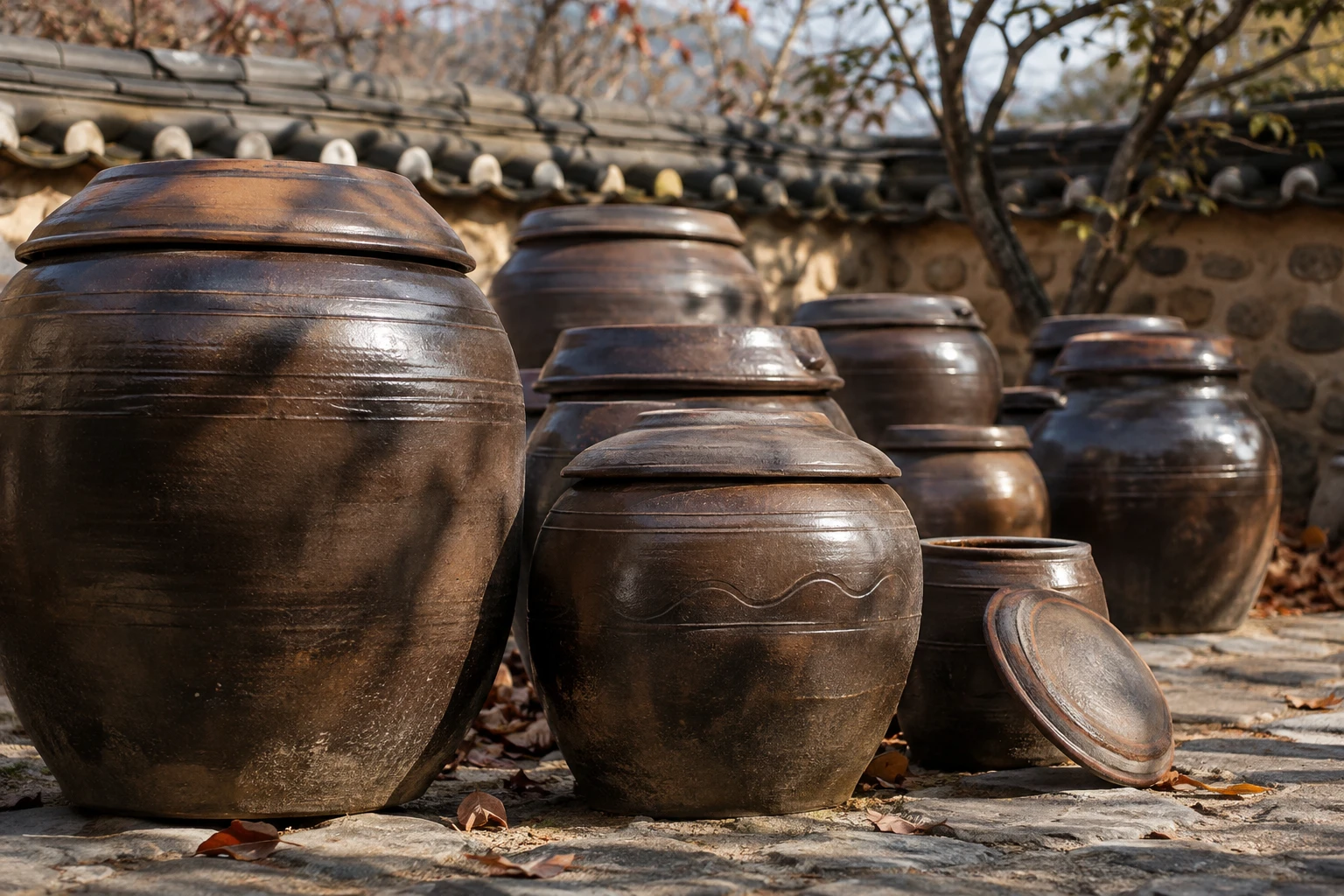
Flavour starts before the soup does
A spoonful of doenjang breaks apart in a pot of water. Before tofu or vegetables arrive, the broth has already acquired colour and aroma. A hand adding soy sauce or stirring gochujang into a dressing performs a similarly brief action. Yet the material on the spoon has been cooked, dried, fermented or separated long before those minutes of cooking. Jang is an ingredient that begins a dish, as well as a condiment accompanying it.
The jang reference compares soybean paste, soy sauce and chilli paste. Here we follow how beans become blocks, enter brine and divide into liquid and solids. Products from one vessel can serve different dishes; grain-based gochujang follows another path. The meal becomes more interesting when its preparation includes the work before the cook opens the container.
Why beans first become a block
Soybeans for meju absorb water and are cooked until they can be crushed. Pounding changes separate grains into a mass that holds together. Shaping, drying and fermentation produce the block called meju. Putting beans straight into brine and putting previously prepared meju into it are different starting conditions.
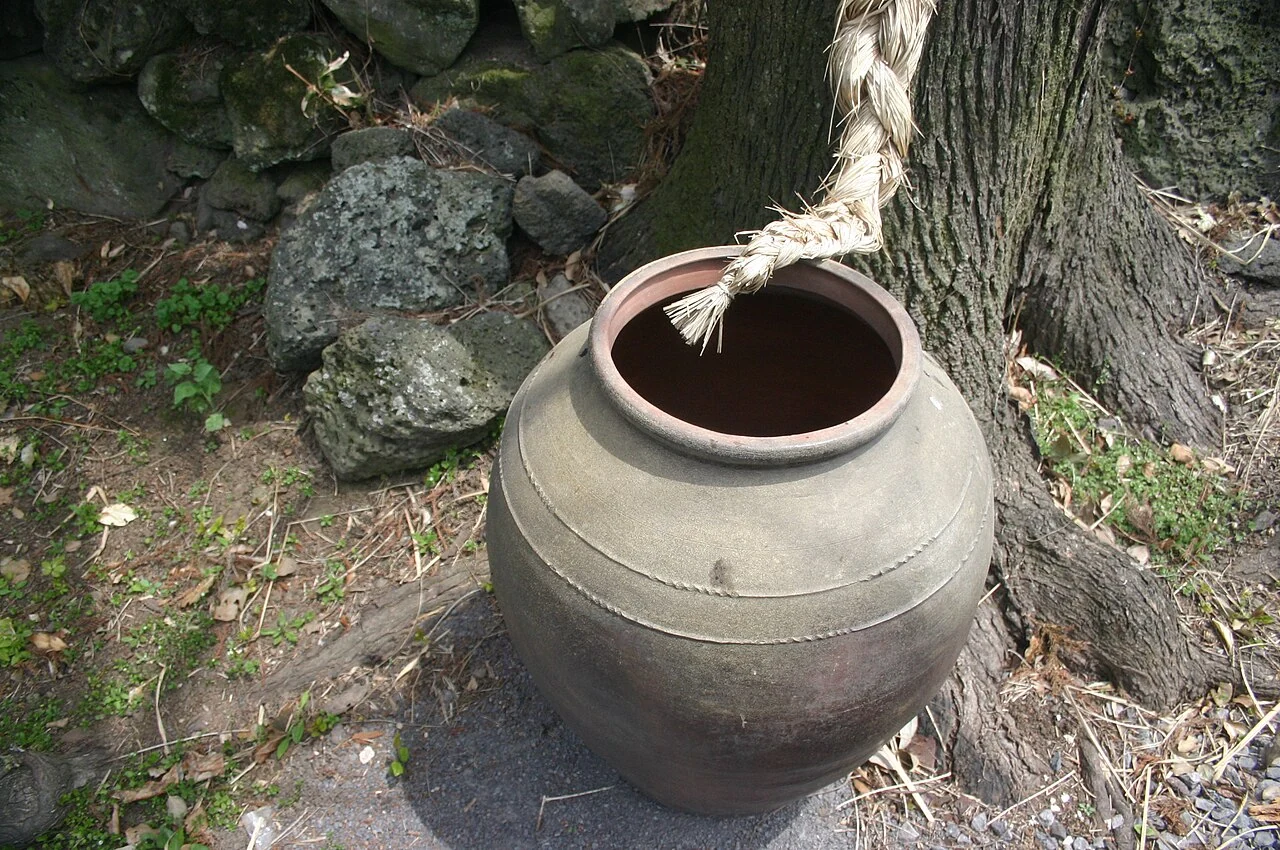
A shaped mass has an outside and an interior. Its surface encounters air before the hidden centre does; drying and fermentation change moisture and aroma. The block is a manageable form for continuing transformations, rather than merely a convenient package. A place to suspend or support it is part of handling material awaiting another operation.
The Encyclopedia of Korean Culture’s entry on jang making recounts a seasonal sequence in the agricultural poem Nongga wollyeongga: winter cooking and pounding of beans for meju, followed by spring jang making. Producing a finished seasoning was not an immediate extension of obtaining soybeans. An intermediate material passed from one seasonal task into another.
One brine leads towards two ingredients
During soaking, meju and brine spend time together. Components from the beans move into the liquid while the solids absorb water and salt. Separating jang directs the liquid towards soy sauce and the bean solids towards doenjang. Further handling and maturation follow: dividing the contents is not the end of every operation.
Separation requires tools for lifting solids and vessels to receive liquid. Catching liquid draining from a lifted block differs from filtering smaller particles from the remaining liquid. Solids must be broken down and gathered into their next container. The resulting array of vessels represents actual transfers of materials, not simply two labels placed on the same food.
Liquid can spread thinly or dissolve through a broth. Paste can be scooped, dispersed or left thickly on a vegetable. The choice changes particles, colour and the texture remaining on a spoon. The encyclopedia’s doenjang entry also describes production aimed at paste without first drawing off soy sauce. Some brown soybean pastes therefore follow a different purpose and sequence from the two-product separation route.
Jang in wedding goods and relief supplies
Long history does not supply a single invention year. The jang-making entry cites jang and si among wedding goods recorded for King Sinmun in 683 in the Samguk sagi. They were already goods worth obtaining and transferring. Those historical names need not correspond exactly to one present-day jar on a supermarket shelf.
The same entry connects jang and salt in 1018, and si in 1052, with relief supplies in Goryeo. Food appears as something procured and distributed when ordinary meals were difficult. Storage, transport and recipients belong to this history alongside flavour. A vessel’s contents mattered partly because of whose later meal they could enter.
The cookbook Sangayorok, around 1450, describes several jang preparations and ways of correcting their taste. Written cooking knowledge included attending to an already-made material, rather than only mixing it and waiting. Contemporary manufacture need not duplicate each old method to share this sequence of preparing ingredients and returning to assess the result.
Clear liquid and visible bean particles
Saltiness alone does not explain the choice of soy sauce. A little liquid colour becomes visible across a clear broth. Seasoning soup and making a darker braising coating have different aims. The historical soy-sauce entry distinguishes colour and uses at different maturation states. Those old names are not a direct translation of contemporary product labels; the practical question is what colour and aroma the ingredient contributes to this dish.
Doenjang introduces bean solids as well as flavour. Dispersing a lump in water redistributes an ingredient into smaller pieces suitable for soup. Mixing it through vegetables uses less liquid; keeping it thick beside a leaf wrap leaves another texture. The same paste can become several cooking materials through dilution and mixing.
Preparing a small dressing before adding vegetables helps spread the paste rather than leave one lump at one side. Distributing seasoning over surfaces and dissolving it through a pot demand different tool movements. Knowing the state wanted in the dish is practical knowledge alongside knowing the ingredient’s name.
Grain gives gochujang another route
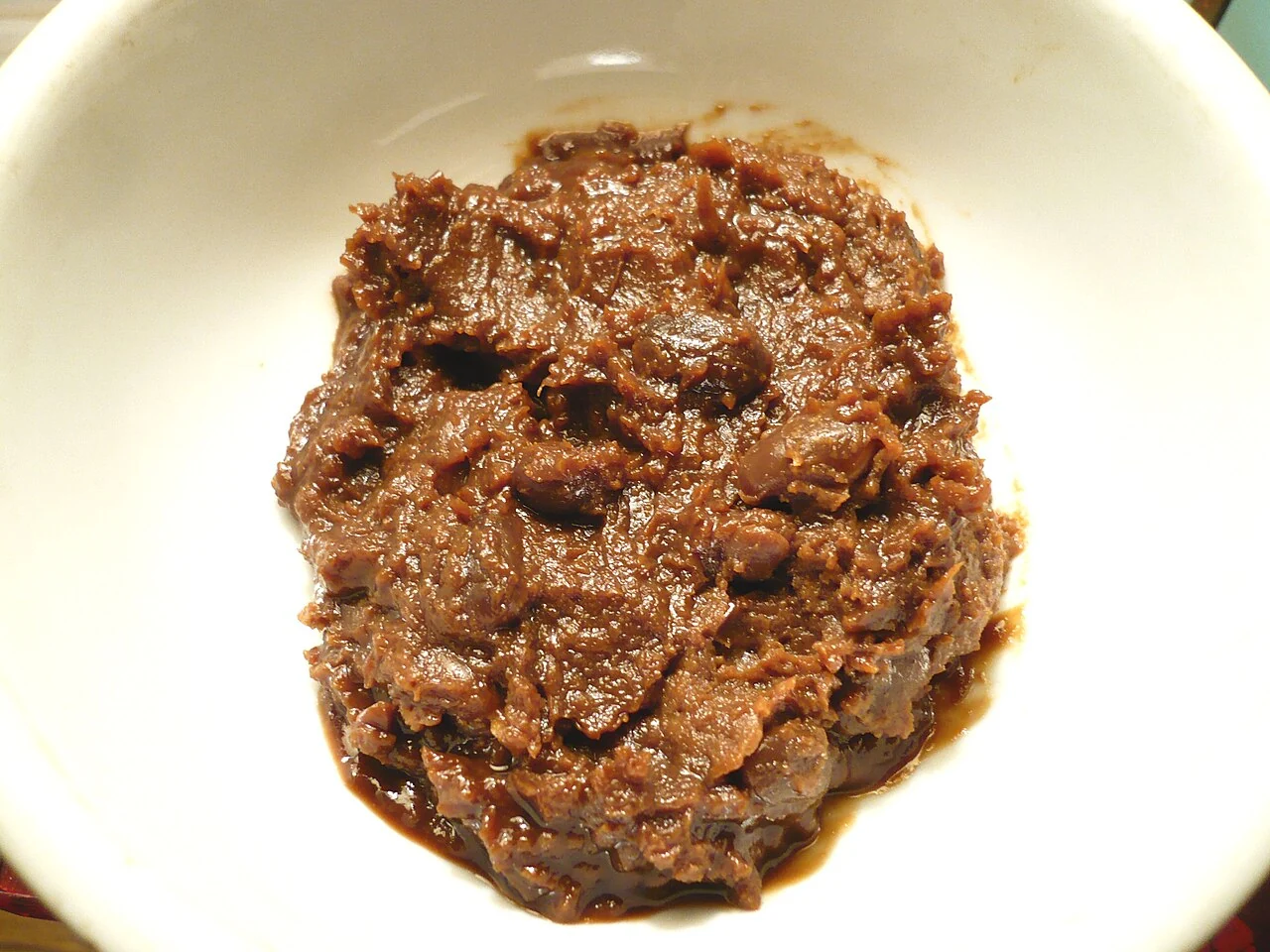
Gochujang is more than doenjang with chilli sprinkled in. Grain and changing starch matter. The encyclopedia’s gochujang entry describes a Gyuhap chongseo method combining cooked beans with rice cakes in preparing meju. Grain participates in the fermentation material itself, rather than merely providing colour at the final stage.
A 2020 agriculture-ministry explanation of the international gochujang standard likewise includes converting grain starch into sugars and fermentation. Malt or microbial activity can participate in that conversion. Sweetness cannot therefore be explained solely as sugar added at the end. Actual products may also include added sugars: their ingredient lists distinguish that addition from transformation of grain.
Chilli contributes heat and colour; grain transformation contributes sweetness and material properties; salt contributes saltiness and the fermentation environment. A spoonful changes consistency and sweetness as well as heat. A paste diluted into a simmering sauce and a thick coating spread on food start with the same ingredient but finish in different conditions.
Passing on the next judgment
Korea designated jang making as national intangible heritage on 27 December 2018. UNESCO inscribed knowledge, beliefs and practices related to jang making in 2024. These records concern practice and knowledge, rather than a quality certificate on every bottle. What can be passed on includes working beans, moving blocks and transferring separated material to another vessel.
For a learner, meeting intermediate material matters. Cooked soybeans and dried meju are different states, as are brine before separation and soy sauce afterwards. Knowing what to attend to at a stage connects it to the next. Without a large jar platform, a cook still works with these ingredients by dispersing purchased doenjang or adjusting a dressing after seeing the sauce’s colour.
A flavour lasts when there is another use for the spoon
Jang can overwhelm other ingredients or support them. Diluting smaller additions through broth or first combining them into a dressing changes the condition that reaches the mouth. Using a prepared seasoning well involves knowing how it should spread in this meal, rather than merely repeating its historical name.
Like kimjang, which prepares vegetables for later tables, jang gives beans and grain necessary work before the next dish. I find the cooked block, the brine, the hands separating material and the spoon redistributing it more interesting than a generic label of national symbolism. Connected to a particular pot and its other ingredients, earlier fermentation work becomes tonight’s flavour.
A spoonful connects cooked soybeans, meju, brine and separated ingredients to a present meal.
Sources & scope
Jang making: history and seasonal work ↗Doenjang: separation and paste-focused methods ↗Gochujang: grain and historical methods ↗Ganjang: maturation and cooking uses ↗Knowledge, beliefs and practices of jang making ↗2024The 2020 gochujang international-standard explanation ↗2020-10-14Modules independently explains the verified sources. The lead image is AI-generated for illustration; it is not a documentary photograph of an actual place, event or product.
Updates & corrections
Dates record changes to this document, separately from the reference dates of its sources.
- Content update
Rewrote the article with fuller production, history, examples and source explanations.
- First published
Created Korean and English documents from verified sources.