Two cups, two different afternoons
Imagine two customers ordering Americanos. One puts a lid on the cup and leaves; the other sets it down and takes a book from a bag. The coffee may be similar, but what follows is different. The first needs a drink that travels easily and a quick handover. The second needs somewhere to open the book. Korea’s café story concerns both the drink and the activities attached to it.
Behind those choices is a working counter. A barista prepares cups, extracts coffee, fills ice and matches finished drinks to orders. A latte adds milk preparation; warmed bread adds another task. While one customer settles into a chair, somebody is making the next cup. A place that accommodates an unhurried afternoon is also a small production site.
Putting dabang, coffee chains and converted factories on a single ladder misses their different jobs. Convenience made coffee easier to prepare elsewhere, while other formats made a café worth travelling to. These developments can share the same day.
A small marker remembers an order
Seoul’s tourism records date Hakrim to 1956 and Eulji Coffee Shop to 1985. Eulji’s red chips mean coffee; green ones mean ssanghwacha. That compact system looks different from a mobile screen, but it also separates orders.
Suppose a table asks for two coffees and one tea. The worker must retain the drink types and quantities, prepare them and send each cup to the appropriate table. A coloured marker makes the type recognizable without rereading a sentence. A written ticket or a name on a cup addresses a related problem: turning a customer’s words into a sequence of work.
Dabang also offered a reason to sit opposite somebody. Choosing sweetened coffee and choosing espresso express preferences through different forms. An old address matters because repeated orders and meetings accumulate there, not simply because its furnishings predate a new café.
A packet moves the preparation
Dongsuh Foods dates its coffee-mix launch to December 1976. Combining coffee, sugar and creamer beforehand reduces separate measuring. Opening a packet, adding water and stirring differs from grinding beans, extracting coffee and disposing of grounds. Instant coffee dissolves an already extracted, dried material; ground coffee requires extraction followed by separation from the remaining particles.
Imagine three colleagues dividing tasks after a meeting. They can prepare their own cups without a grinder or filters on the table. The simplification concerns where preparation happens. A visit to an equipped shop becomes a short break in the room.
A café offers something else: a meeting place, a conversation about beans or a pastry shared across the table. The same person can use a packet during work and order filter coffee at the weekend. It is a coexistence of different preparations, rather than a march from inferior drinks to expensive ones.
From a counter to a screen
Starbucks Korea records its Ewha branch opening in 1999 and Siren Order’s introduction in 2014. Its official application guide still identifies menu ordering as a function. Part of an order once spoken at a counter can now be transmitted through a screen.
Consider an iced Americano and a hot latte. Temperature, size and serving choices must accompany the drink names. The selections become preparation tasks in the shop. Sending an order ahead does not eliminate extraction or milk heating. Several incoming orders still require a final match between cup and customer. Digital ordering reorganizes the communication around human work.
A familiar chain menu makes ordering easier in an unfamiliar neighbourhood. A small roastery can instead make discussion of its beans part of the visit. A predetermined drink suits a hurried journey; a slower afternoon leaves room to ask and choose. Neither supplies the only legitimate café experience.
Gangneung makes production visible
Terarosa began as a roastery in 2002. Gangneung’s museum guide describes a view through glass into roasting and packing. Before the brown liquid reaches a cup, visitors encounter work with whole beans.
Roasting involves heat, an endpoint and cooling, distinctions also set out in illy’s technical explanation. Beans may then be packed for sale or allocated to café brewing. Grinding and extraction belong to a later stage. Roasting a batch and preparing a drink are separate jobs.
Picture an independent small roastery marking batches and weighing portions into bags. Coffee for the counter and coffee for retail need different handling. The bar serves one order at a time while packing prepares drinks for customers who have not ordered yet. A visible production area brings some of that longer preparation into a visitor’s stay.
A factory acquires a different job
Seoul’s tourism guide describes Onion’s Seongsu premises as a 1970s building formerly used to make small parts. When a factory becomes a café, the people and objects moving inside change. Cups, trays, bread and chairs replace the movements associated with manufacturing.
In a general bakery-café workflow, people choosing bread and ordering drinks meet at payment. Customers collecting cups cross paths with those returning trays. Food preparation requires storage, washing and water services.
Bread changes the table as well. Plates and cutlery occupy space; two people cutting and passing pieces create small pauses in their conversation. When a café accommodates food as well as drinks, preparation and clearing increase. As with Korean homes, a change of use appears both in furniture and in the work supporting it.
The wait behind a paper filter
Hand brewing makes preparation visible. A paper filter is rinsed, grounds are wetted and the remaining water is poured gradually: a short sequence shown in Starbucks’ pour-over guide. Position and pace determine where water meets the coffee.
If grounds are piled unevenly and water repeatedly lands in one place, its route can become uneven too. A level bed and a distributed pour change the contact. Espresso instead sends pressurized water through a coffee bed in a portafilter. The familiar distinction between adding milk for a latte and water for an Americano follows an earlier extraction task. Measurement and clearing are part of even a small cup.
While somebody reads, that sequence restarts: a new order, a discarded filter, an emptied basket, a wiped counter. A customer’s quiet hour contains many short jobs for the people making it possible. Convenience-store meals organize preparation and clearing around a different kind of short stop.
What remains after the cup
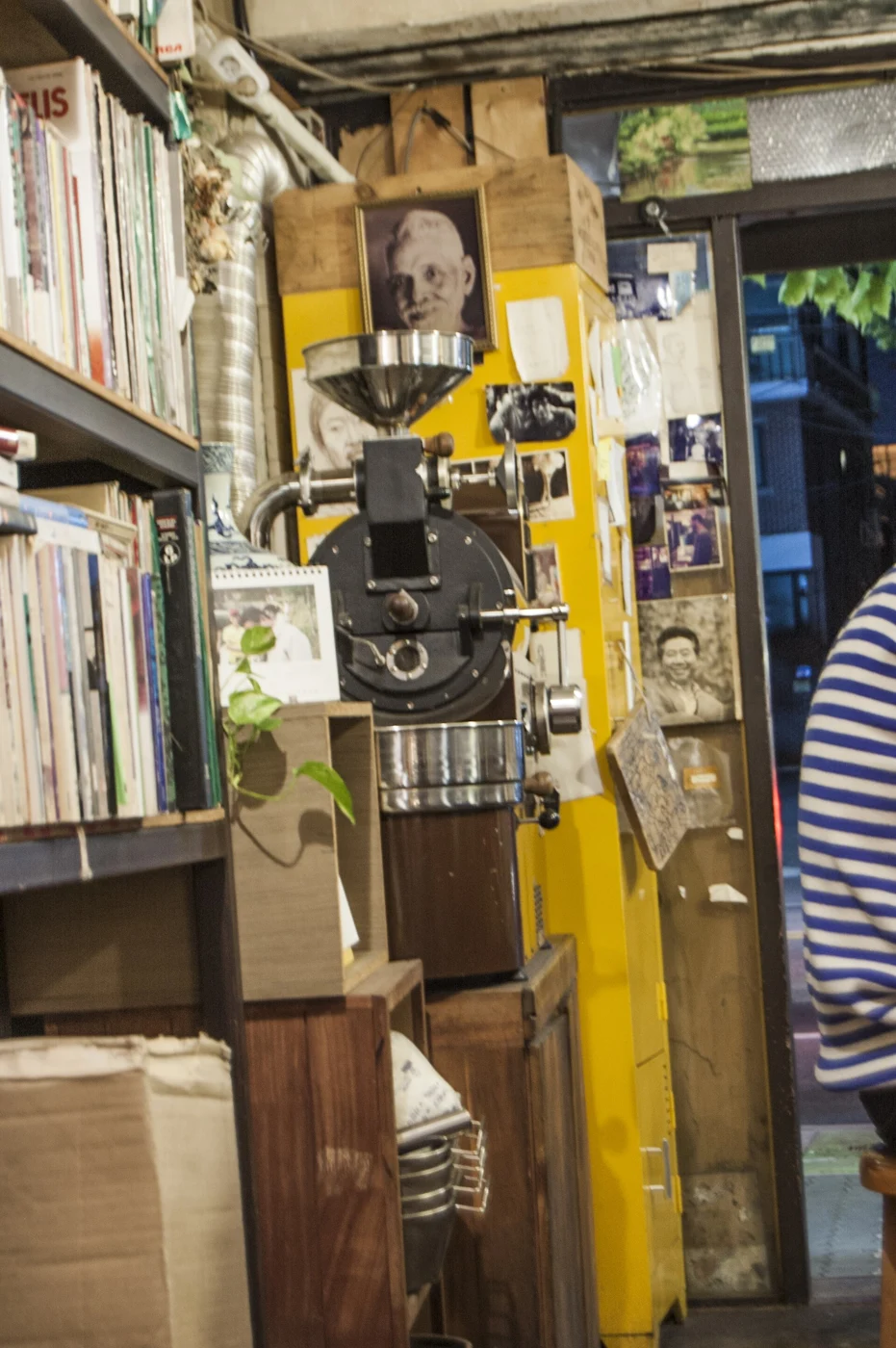
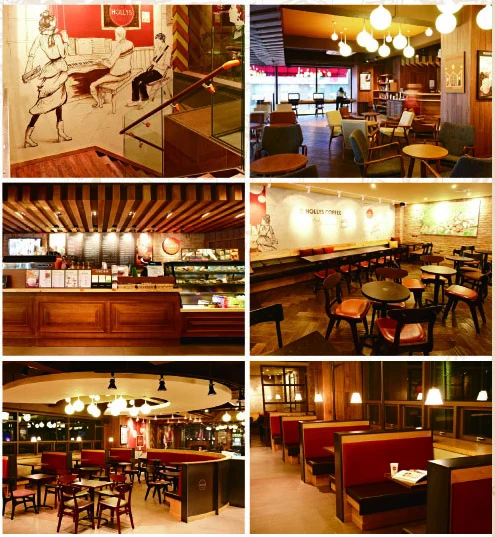
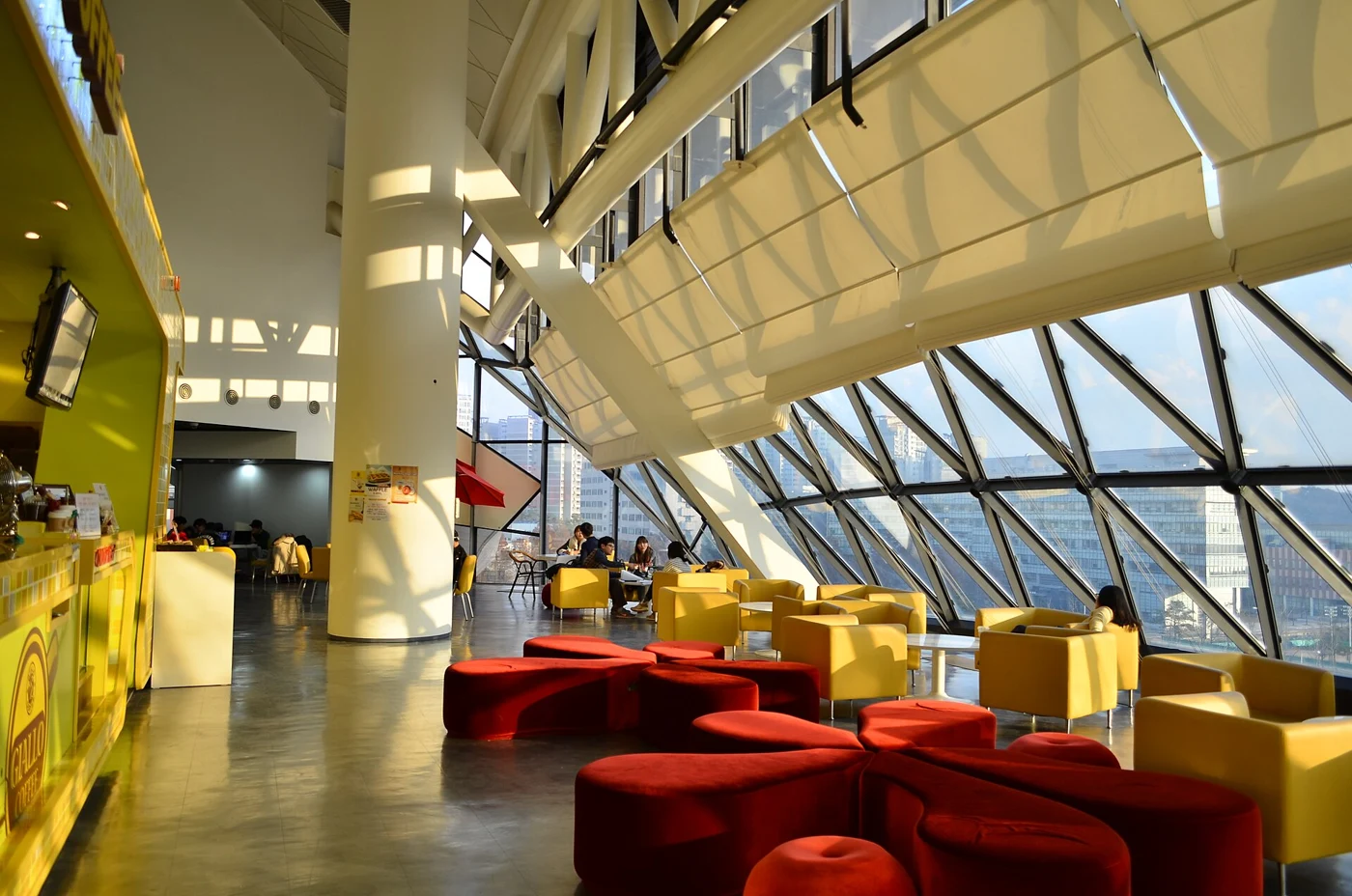
The photographs here show a Seoul bookshop café, a chain interior and a university-library café at different dates. Books, entrances and chairs attach other activities to a drink. A reader sits down between browsing; two people meet; a paused sentence is reopened.
We find Korea’s café landscape interesting because packets, dabang, chains, roasteries and converted buildings have not entirely displaced one another. A quick cup sits beside a slow extraction; an established address beside a repurposed structure. Striking décor alone supplies neither good coffee nor a comfortable stay. Longer visits also extend the work of making and clearing. A lasting café continually connects the cup to its place. Wanting to arrange another meeting after the final sip is one sign that a coffee business has become part of everyday life.
Korea’s café landscape accommodates a quick cup beside a longer stay. Preparation and clearing belong to that experience too.
Sources & scope
Seoul dabang history and order markers ↗2018-05-24Dongsuh coffee-mix chronology ↗Starbucks Korea store and ordering history ↗Onion Seongsu building history ↗2017-02-06Terarosa Museum and production view ↗Terarosa founding year ↗Filter-coffee preparation ↗Application ordering functions ↗Heating, stopping and cooling in roasting ↗Coffee production and grinding stages ↗2026-05-05Bookshelves and a roasting machine inside a Seoul bookshop café. Photographed 9 October 2015.
jillllybean · CC BY-SA 2.0 · Resized and converted to WebP