One cabbage becomes a side dish; many become a winter plan
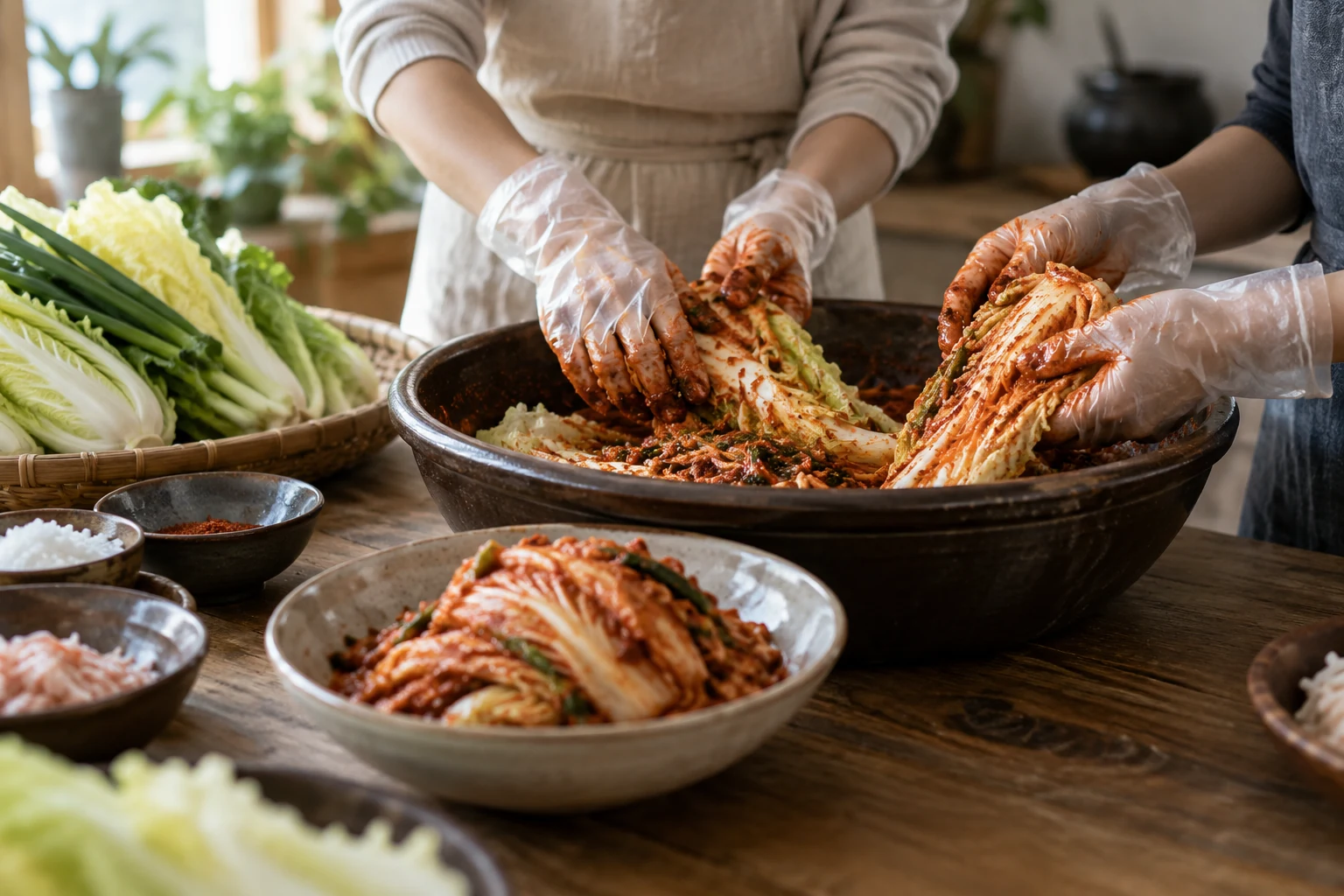
Cutting a piece of cabbage kimchi brings thin leaves and thick white ribs onto the same board. Once it is divided into bites, the earlier work disappears from view: opening the base, salting, rinsing between leaves, cutting radish, spreading seasoning and preparing containers. Someone arriving at a kimjang day may notice the number of basins and baskets before noticing the chilli.
Kimchi names the food. Kimjang is the larger undertaking of preparing a supply for winter and sharing it. A small batch for tonight still requires material preparation, but a batch for several households changes how the work connects. Drained cabbage needs somewhere to wait; finished cabbage needs a container before the next portion can occupy the table. The kimjang reference explains the materials and manufacture. Following a making day shows how those operations organize a place and its people.
Thick ribs and thin leaves require different handling
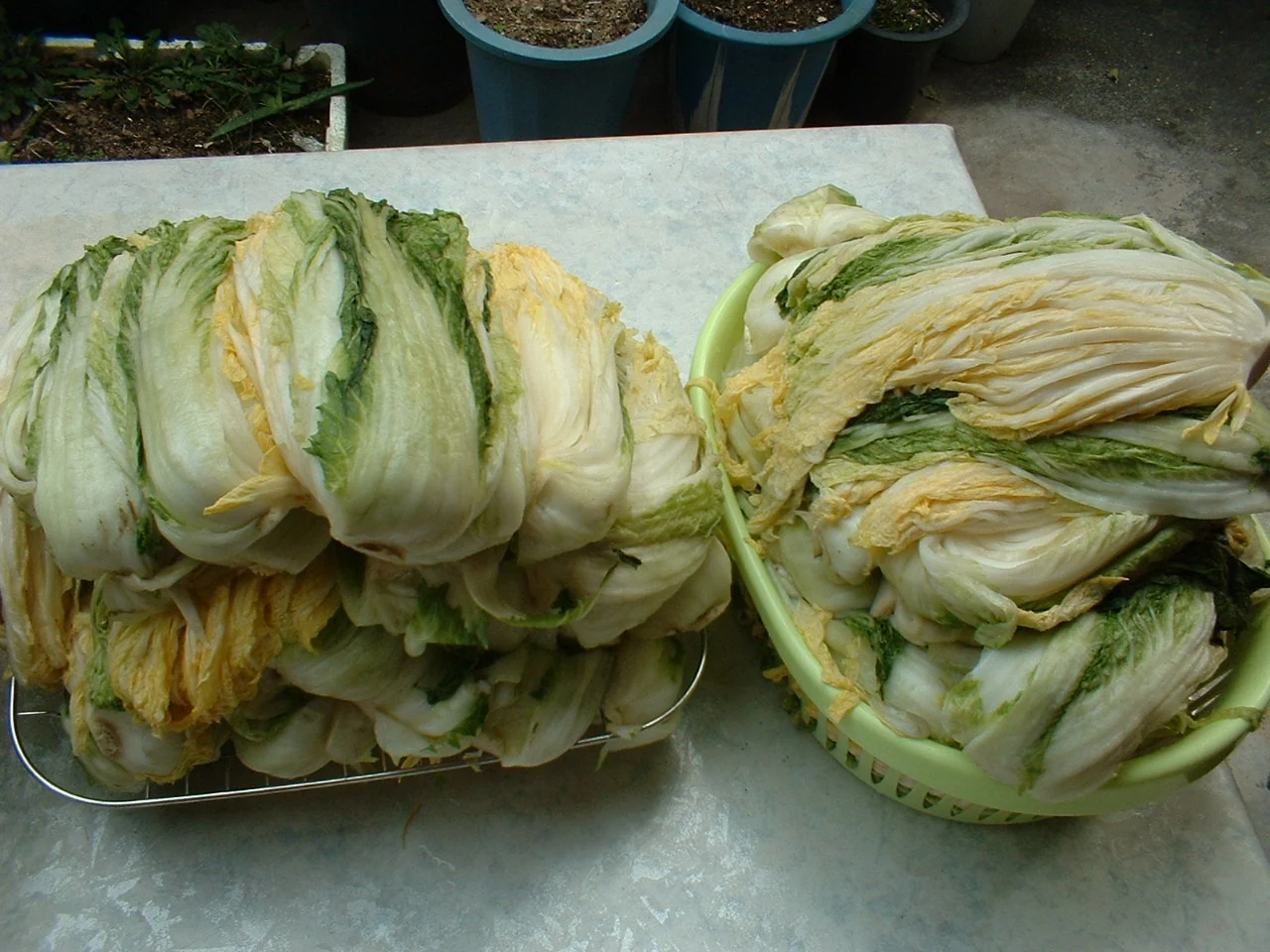
A napa cabbage consists of leaves folded around one another. Dividing it through the base gives a hand access to the interior. Its thick white ribs and delicate tips have different shapes and thicknesses. Salting makes the vegetable more pliable for opening, filling and folding. The difference between folding fresh cabbage and folding salted cabbage begins before either has red seasoning.
Salt contributes to movement of water and changes in the vegetable’s tissue, not merely a salty taste. Water leaving the cabbage joins liquid in the basin; dry salt and wet leaves do not remain in their original condition. Rinsing then removes excess salt and cleans between the leaves. Draining has another job: water clinging to the cabbage otherwise travels into the seasoning bowl.
These stages occupy space. Cabbage waiting to be rinsed, cabbage already rinsed and cabbage ready for seasoning can look similar from across the room, but mixing them makes someone check the same material again. Separate places for washing and draining make the next handover legible. Scaling up is thus a matter of arranging the movement of wet materials as well as recruiting more hands.
Filling moves between leaves; work moves between basins
Cabbage-kimchi filling can include radish, chilli powder, garlic, ginger and scallions. Fermented seafood, or its omission, and the use of a starch paste vary with the preparation. The sequence is more revealing than an ingredient list. One person cuts radish while another prepares aromatics; the time cabbage spends draining can overlap with mixing the filling.
Making the outside red and placing filling between leaves are different operations. An attractive outer surface does not tell us what lies underneath. Lifting each leaf lets the hand reach the inner spaces, encounter the thicker ribs and distribute filling before gathering the cabbage together. As a basin empties through successive portions, judgment has to continue beyond the first cabbage.
Another person moving completed portions into containers clears a place for the next one. The hand that seasons and the hand that packs participate in a connected process. Learning it includes what to do when cabbage arrives unusually wet, filling runs short or a container becomes full. These ordinary changes turn a memorized list into usable knowledge.
Preserved vegetables existed before today’s red cabbage
The Encyclopedia of Korean Culture’s entry on kimchi making describes cucumber, aubergine and radish preparations in the cookbook Sangayorok, compiled around 1450. It also mentions summer preparations and quickly made kimchi. The documented repertoire included different vegetables and eating schedules, rather than only a large winter stock.
Its account of the 1766 Jeungbo sallim gyeongje describes a cucumber split open and filled with chilli powder and sliced garlic. That is a specific operation on a different vegetable, not a description of today’s whole-cabbage kimchi. The 1809 Gyuhap chongseo’s mixed-vegetable preparation includes several fermented seafood seasonings and chilli. These examples reveal changes in ingredients, cuts and filling across written culinary records.
Today’s preparations make such differences easy to taste. Kkakdugi coats cut radish cubes; whole-cabbage kimchi places filling inside layered leaves. Dongchimi combines radish and aromatics with brine, and its liquid is eaten too. White baekkimchi uses cabbage, filling and liquid without red chilli powder. Eating a seasoned vegetable, drinking its liquid and biting through filled leaves are different experiences made by different operations.
From an earthen jar to smaller refrigerated containers
Closing a lid does not preserve that day’s flavour unchanged. Fermentation changes aroma and acidity; storage temperature influences its pace. Kimjang therefore prepares both a food and a schedule of future meals. Fresh cabbage flavour at one meal and more sour kimchi in a stew are different moments of the material.
The same encyclopedia entry recounts a winter-preparation scene in the agricultural poem Nongga wollyeongga: jars wrapped in straw and buried to protect their contents from freezing. Keeping a vessel in the ground organized storage around a particular place. Dividing kimchi among smaller refrigerated containers changes how it is carried, opened and used.
Opening one container can leave others closed. A container to send elsewhere can be separated from those retained at home. Deciding which to eat first connects storage with a household’s meals. More acidic kimchi can become material for another dish: acidity distributed through a hot stew tastes different from a cold leaf eaten directly. The later cooking stage gives fermented ingredients another task.
Food for the makers is part of making day
People making winter food also need to eat that day. The encyclopedia describes a custom of providing workers with cabbage soup, boiled pork, yellow inner cabbage leaves and seasoning, then sharing salted cabbage interiors, seasoning and freshly dressed geotjeori with neighbours. A day devoted to storing food included a meal made from materials available before long fermentation.
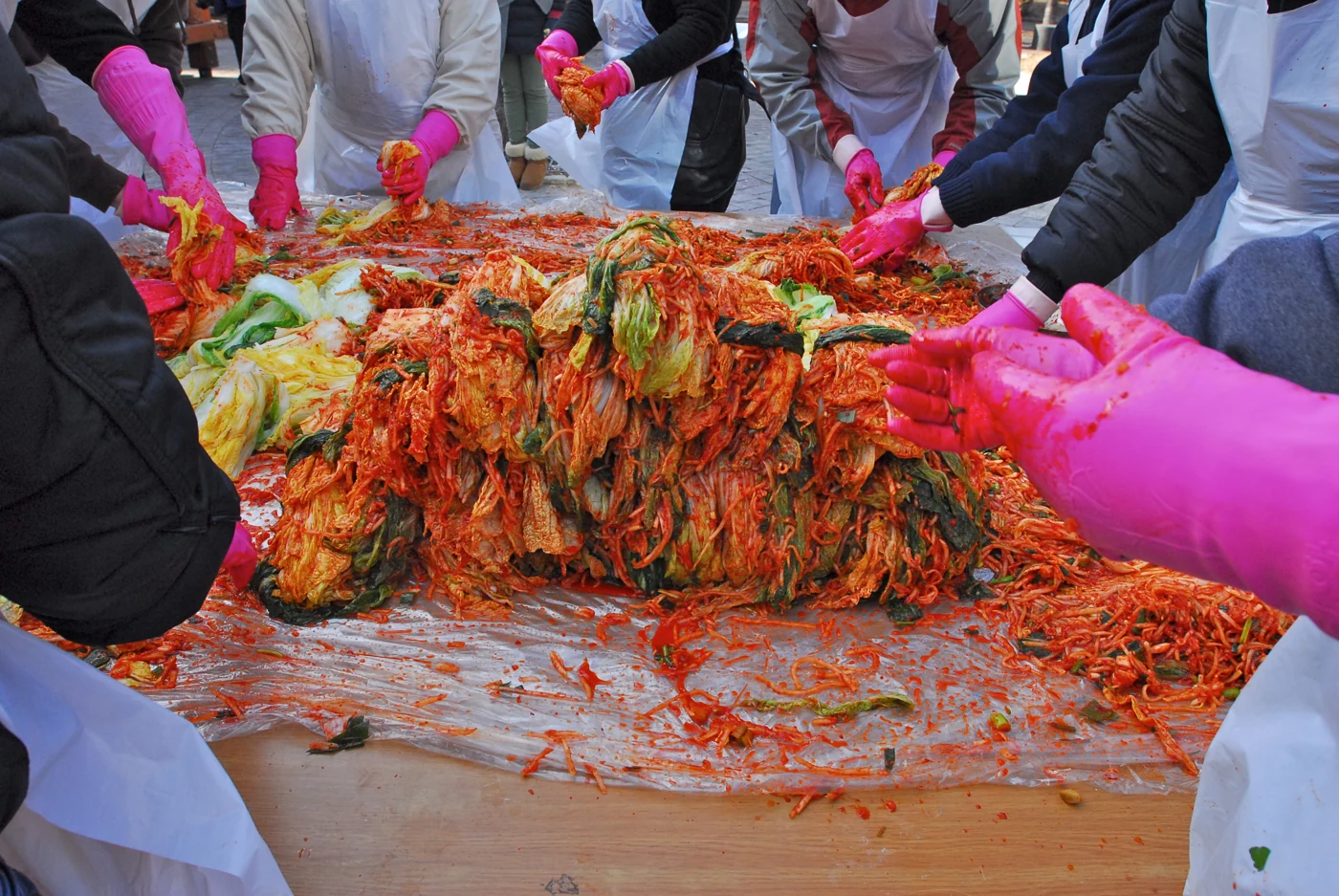
Sharing is more than weighing equal finished portions. Obtaining cabbage, salting it, carrying containers and cleaning basins are different contributions. A delivered container shows its contents but not the hours spent preparing and clearing away. For me, the convincing part of collective work is less the number in a group photograph than who finishes the remaining tasks and where the food arrives.
Buying pre-salted cabbage or making smaller batches moves some work beyond the home. Seasoning, storing and sending food still require attention. The living practice is better explained by the tasks people actually retain or change than by requiring everyone to repeat an identical allocation of labour.
The hands preparing winter make the next table possible
UNESCO inscribed kimjang, making and sharing kimchi, in 2013. Korea’s national designation for kimchi making, dated 15 November 2017, is a separate record. Before those titles, there are places for drained cabbage, hands opening leaves, people bringing empty containers and someone washing the final basin. Their connected actions produce a supply for winter.
Jang prepares future ingredients through soybeans, brine, meju and separation. Kimjang prepares future meals by working vegetables, adding filling and storing them. Their processes differ, but both place necessary work before the day of cooking. A piece of kimchi is appealing partly because earlier handling has brought the vegetable to the condition being eaten.
I would want kimjang to continue for that practical ability, rather than for the spectacle of enormous cabbage piles: transforming vegetables into food, preparing tomorrow’s share and delivering it to someone unable to make it alone. Preserving the practice also means respecting the time of its makers. The small dish finally set on a table is the last scene of a much longer day.
Kimjang connects vegetables to future tables through practical preparation, storage and sharing.
Sources & scope
Kimjang: making and sharing kimchi ↗2013Kimchi preparation and historical storage ↗2024-05-28Salted-cabbage study: foundations of salting ↗2020-08Modules independently explains the verified sources. The lead image is AI-generated for illustration; it is not a documentary photograph of an actual place, event or product.
Updates & corrections
Dates record changes to this document, separately from the reference dates of its sources.
- Content update
Rewrote the article with fuller production, history, examples and source explanations.
- Document connections
Organised representative-document links, search descriptions, paragraph links and revision history. No factual correction.
- First published
Initial creation of the Korean and English document.