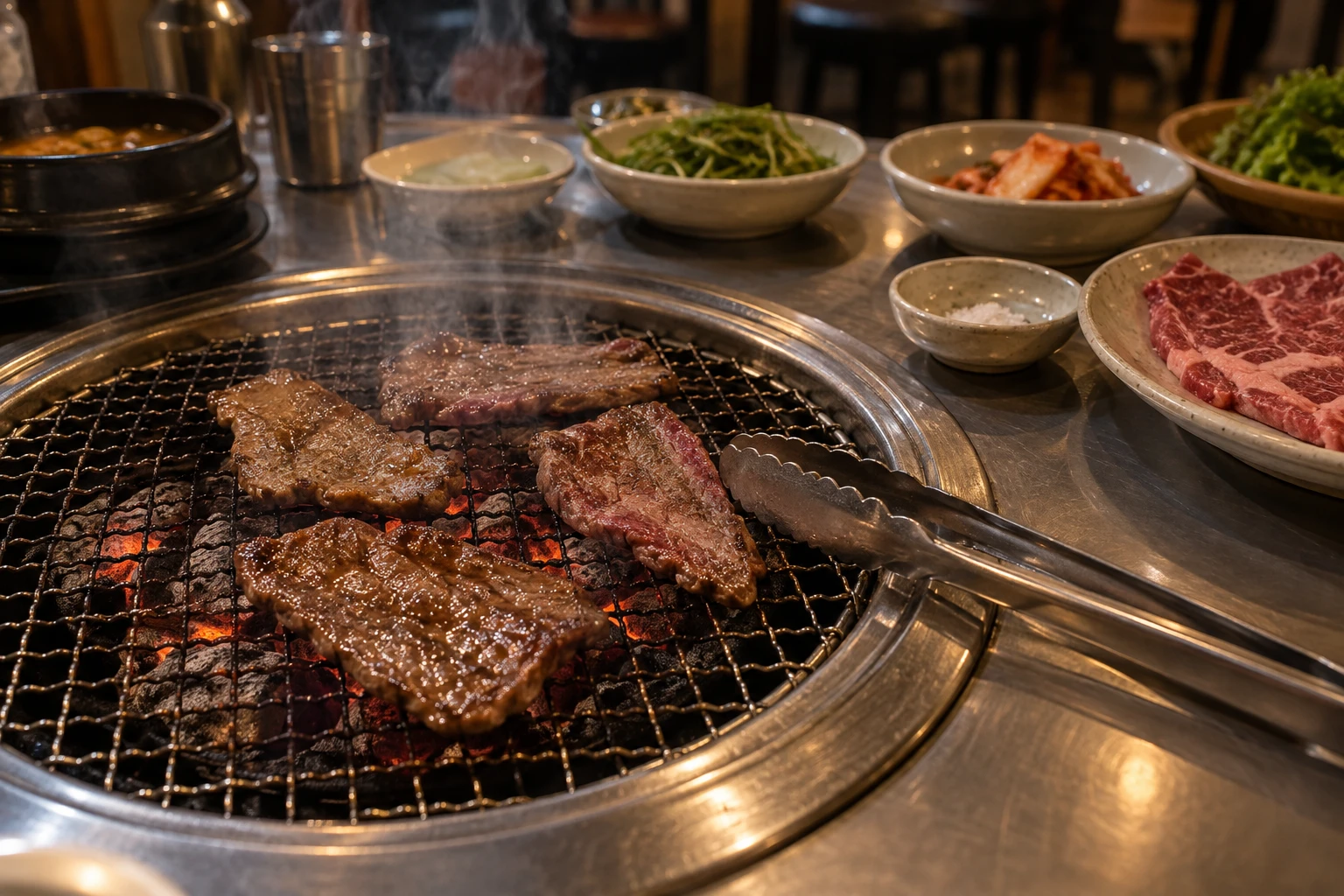
Questions at the butcher's counter
The pale lines in a slice of beef and the price beside it attract attention before anything else. But reading “Hanwoo” on three trays does not settle the choice between ribeye, brisket and shank. Would expensive grilling beef also make better soup? Does the breed matter more than the grade? Should meat for a quick dinner and meat for a long simmer be selected in the same way? These questions become easier when the information on the package is separated into the jobs it actually does.
Hanwoo identifies Korean cattle; a cut names a part of the animal. Weight describes this package, while a grade records an assessment. Storage, trimming, thickness and cooking then intervene before dinner reaches the table. Understanding Hanwoo therefore involves more than recognising an expensive name. It means following the records attached to an animal into a shop, and then following the decisions made by the person holding the tray. The Hanwoo reference explains the underlying production and cuts in more detail.
Imagine shopping for two people: one wants quickly grilled beef tonight; the other wants soup that will also provide tomorrow's lunch. Trying to answer both wishes with one tray brings cooking into the decision before any discussion of prestige. The cattle's name starts a conversation. It does not finish the shopping.
A working body and a different measure of value
Move away from the meat counter and picture cattle pulling a plough. An animal supplies forward force while a person guides direction and depth. Breaking and levelling the ground involves a coordinated movement of animal, tool and handler. Sustained work and manageable movement matter in this imagined agricultural scene. Applying today's meat grade backwards would tell us little about that task.
Mechanisation changed the work cattle performed. Korea's National Institute of Korean History identifies the appearance of powered tillers in the 1960s. A Rural Development Administration account published in 2020 places the start of the Hanwoo improvement programme in 1969 and the early implementation of carcass grading in 1993. These are milestones in different changes, rather than a date on which every farm converted its animals to a new purpose.
Once meat production becomes the concern, growth and carcass traits become important records. A shopper sees only a few printed characters at the end of that history. Behind them is a long change in what people measure and what they want to carry into another generation. A working animal becoming a branded food is not simply a change of packaging.
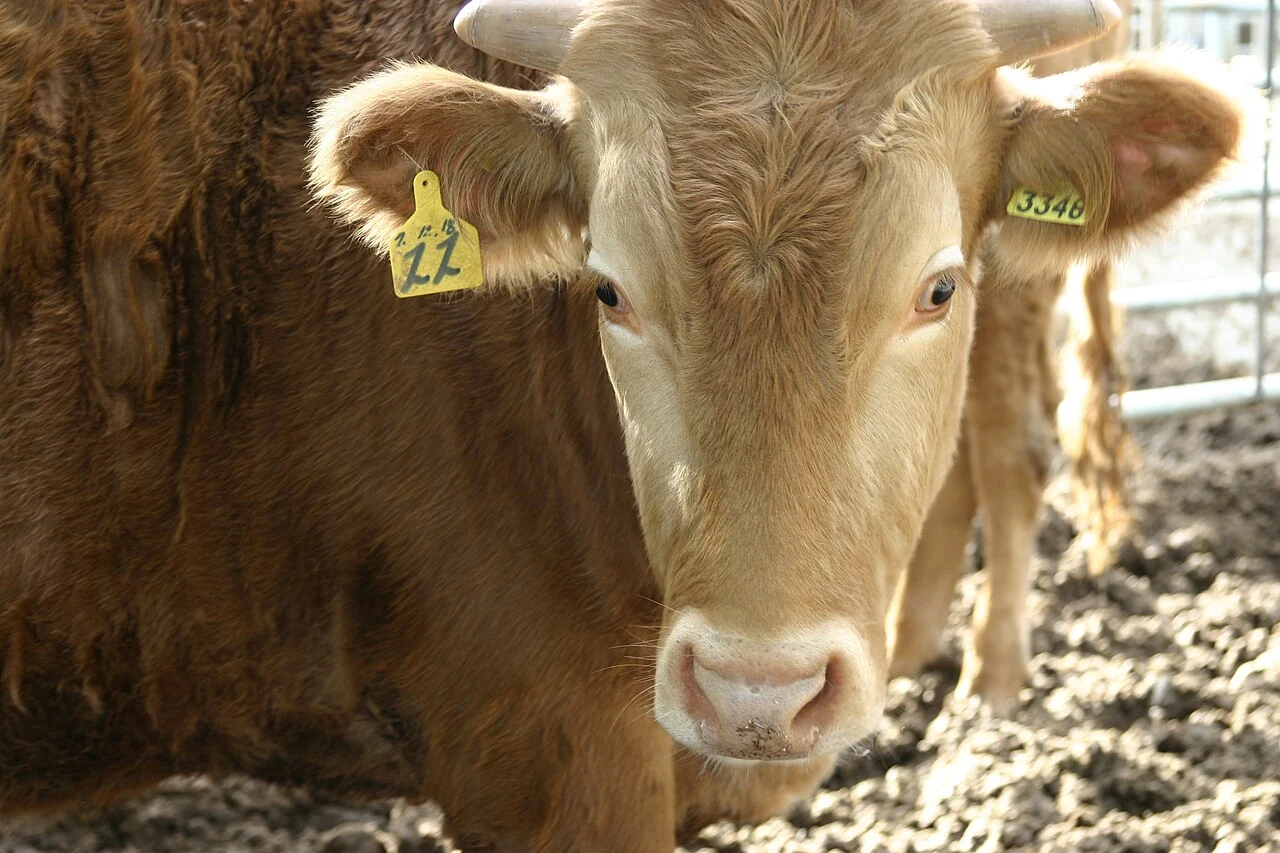
Selection continues beyond one handsome bull
The National Institute of Animal Science distinguishes performance testing from progeny testing: an animal's own results and those of its offspring are considered separately. That distinction helps explain why improvement takes longer than finding one impressive specimen. Pedigree and continuing records connect a breeding decision with what happens afterwards.
Consider a hypothetical example. Two bulls grow similarly, but their offspring do not necessarily produce identical results. Numbers obtained under different rearing conditions also require interpretation. Recording and comparison make a choice more informative than a photograph or one impression. This is an illustration of the question testing addresses, not a reported experiment or a promise about an individual farm.
Breeding selection, animal management, carcass assessment, cutting and retail all make different decisions. A breeding result cannot become a ready-made taste score for the steak in your hand. How that meat was cut and chilled, and the heat it will encounter, still matter. Several stages remain between a recorded trait and a mouthful.
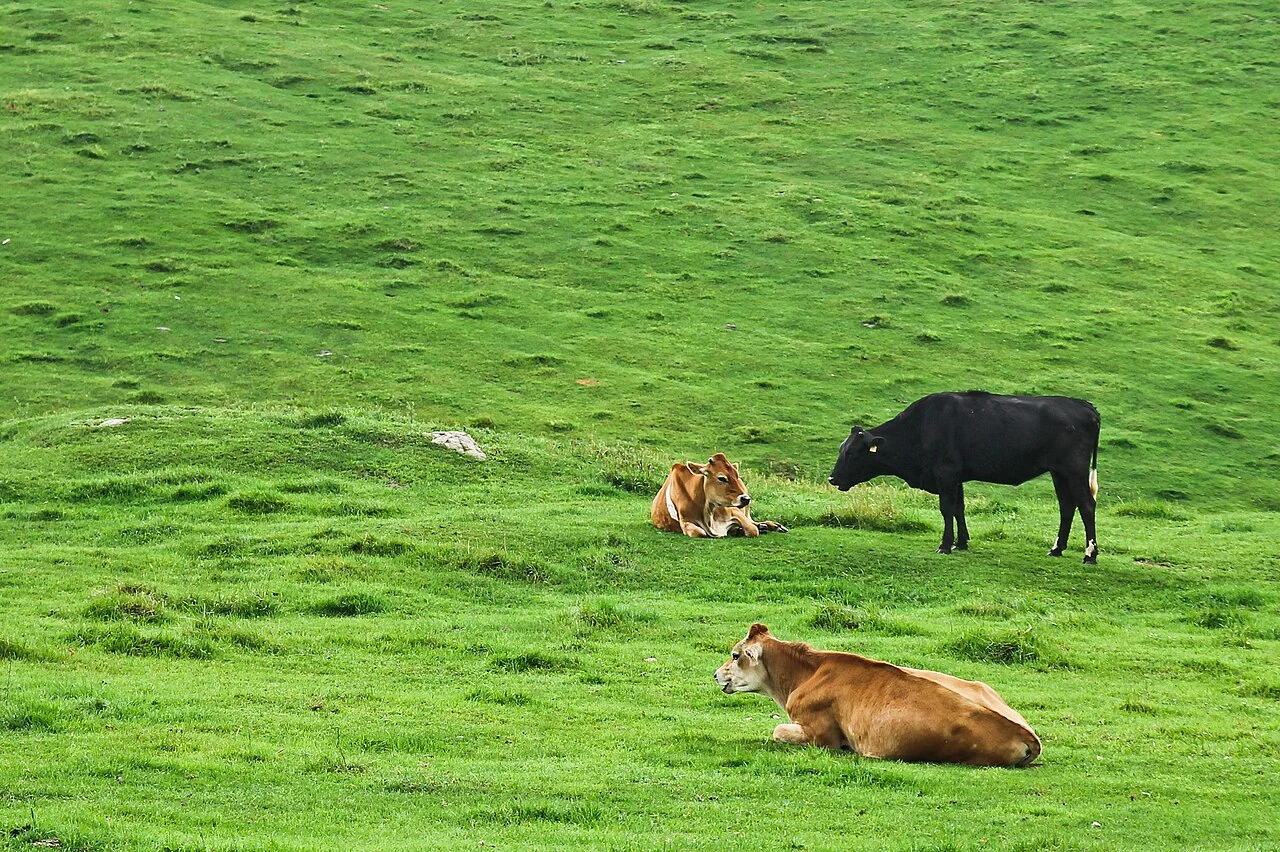
More than the familiar brown animal
Brown cattle provide the familiar picture associated with Hanwoo. An RDA account from 2022 also introduces black, white, brindled and Jeju black indigenous lines. These appearances widen the picture without requiring an old population figure to be presented as a current count. Different lines remain subjects of conservation and study.
Conserving genetic resources and increasing sales can coexist, but they are not identical goals. Selecting only characteristics that sell readily today can leave other differences less visible. In editorial terms, conservation keeps those differences available to observe. It does not establish that beef from one coat colour tastes better than another.
Encountering a less familiar cattle name can therefore prompt two separate questions: what animal is this, and how is this particular meat intended to be used? Curiosity about animal diversity need not replace attention to the cut, trimming and cooking.
Read the grade, then read the cut
Korea's carcass system assesses quality through several characteristics, not marbling alone; yield is a separate assessment. Quality marks such as 1++ and yield letters such as A answer different questions. Combining them into one scale of flavour mistakes a measure of meat production for a promise about tenderness.
A carcass receives an assessment; the shopper buys a cut from that carcass. Muscles from different places have different structures and uses. Even within the same grade, a shank and a ribeye do not respond to heat in the same way. The visible white fat cannot tell you that two pieces will finish cooking at the same moment.
For soup, the questions move towards the meat's fibres, size and time in liquid. For grilling, thickness, fat distribution and the amount placed in the pan become immediate concerns. Breed, origin, grade and weight do not substitute for one another. Korean restaurant guidance distinguishes Hanwoo, other domestic beef cattle and dairy cattle within domestic beef descriptions, another reason to read beyond a single origin word.
Two dinners from the same shopping trip
Return to the imagined pair shopping for dinner. The person grilling heats the pan and removes excess surface moisture before adding a manageable batch. Filling the pan with cold meat reduces its temperature; released water must evaporate before the surface can brown effectively. A thin slice cannot be treated as though it were a thick steak. Its edges may dry while the cook waits for a timing intended for something else.
The soup cook uses a different kind of time. Meat can be simmered in a larger piece and cut afterwards, or cut before it goes into the pot. Those choices affect the rate of cooking, what passes into the broth, and the texture eventually chewed. Longer moist cooking allows connective tissue to change. A firm piece is not automatically a mistaken purchase; the question is whether its structure matches the cooking time allowed.
Bulgogi adds another set of decisions. Thin slices need separating so folded interiors meet seasoning as evenly as their outer faces. In a wide pan, a sweetened marinade can catch as its water diminishes. Keeping the same heat and movement throughout is not always helpful. Brothy bulgogi and a relatively dry pan preparation aim to leave different amounts of liquid. Slice thickness, loosened folds and water in the pan can change dinner more directly than the cattle name.
These are explanations of ordinary cooking choices, not a universal recipe or a claim that every Hanwoo meal follows one method. Their point is to restore the work between choosing a tray and eating from it.
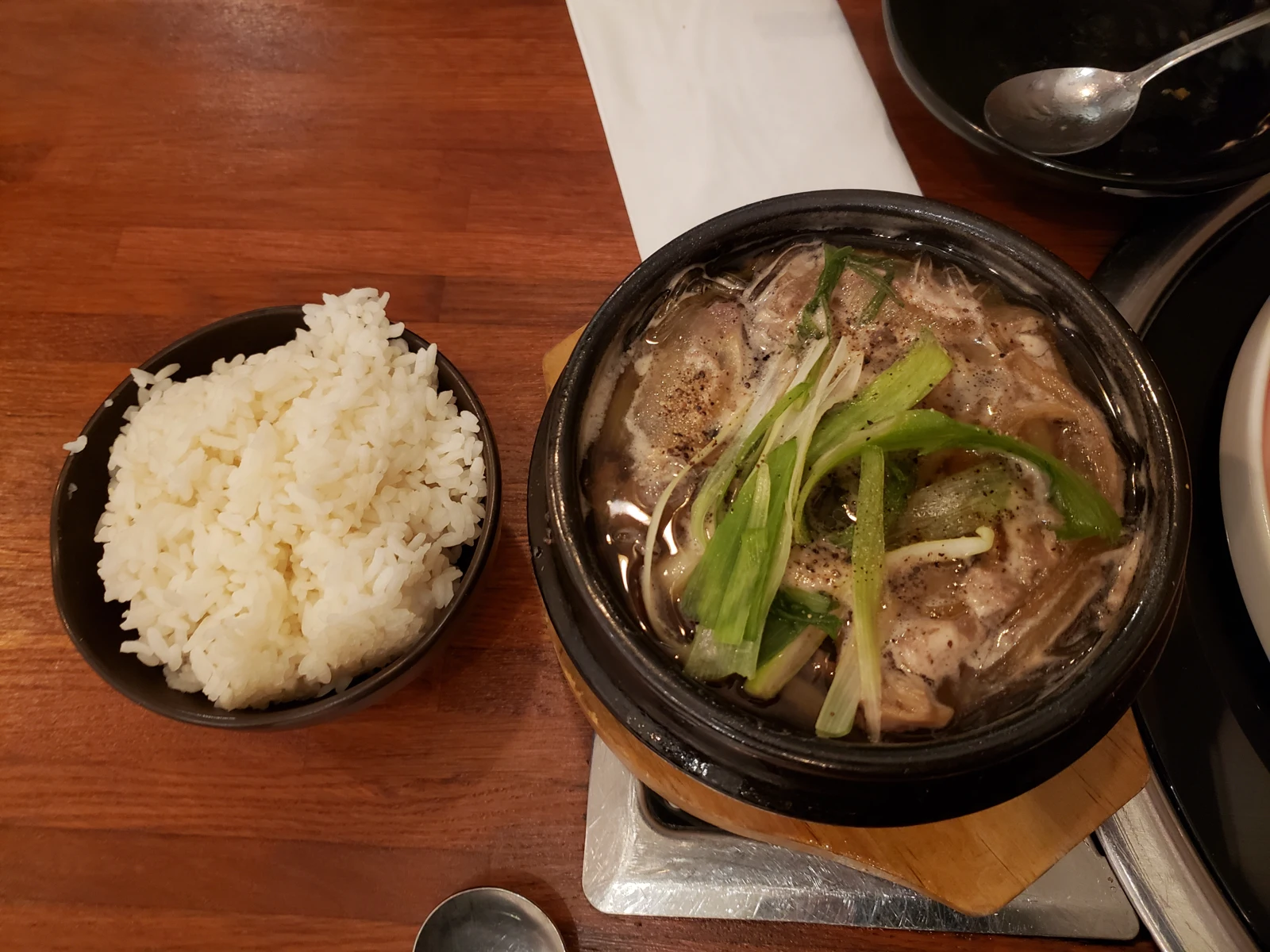
Flavour extends beyond the meat plate
Rice, salt, sauces, kimchi, vegetables and seasoned spring onions change the order of mouthfuls. Trying one piece plain and another with sauce and leaves gives the eater different ways to notice it. Continuing through rich slices differs from alternating them with rice or an acidic side. No single combination needs to be declared objectively superior for those changes to matter.
For a reader encountering Hanwoo abroad, imagining this sequence may be more useful than memorising a grade chart. Turning thin pieces with tongs, dividing them, and moving between rice and side dishes creates a particular pace. It can feel different from serving one large steak, even when both meals begin with beef. The banchan story follows how several small dishes shape one meal.
The choice ends in a kitchen
The Hanwoo name gathers a history of farm work, breeding records, assessment and butchery into a short label. After reading it, the consumer's time begins: a few minutes over a hot pan, a longer simmer, or a pot reheated for tomorrow. Good purchasing changes with those plans.
I find an account that ends only with the highest-grade grill incomplete. Brisket in soup and separated slices in a pan also show how people make several meals from an animal's body. Decide on the dish, then ask about the cut and quantity that suit it. A piece turned in a hot pan and a bowl warmed the next day are two different completions of the same name.
The records behind Hanwoo continue into decisions about cuts and cooking.
Sources & scope
Farm tools and mechanisation ↗Milestones in Hanwoo improvement and grading ↗2020-12-30Hanwoo improvement framework ↗Indigenous cattle diversity ↗2022-11-01Beef quality and yield assessment ↗Domestic beef categories in restaurants ↗Beef cuts and cooking ↗Modules independently explains the verified sources. The lead image is AI-generated for illustration; it is not a documentary photograph of an actual place, event or product.
Updates & corrections
Dates record changes to this document, separately from the reference dates of its sources.
- Content update
Rewrote the article with fuller production, history, examples and source explanations.
- First published
Created Korean and English documents using verified official sources.