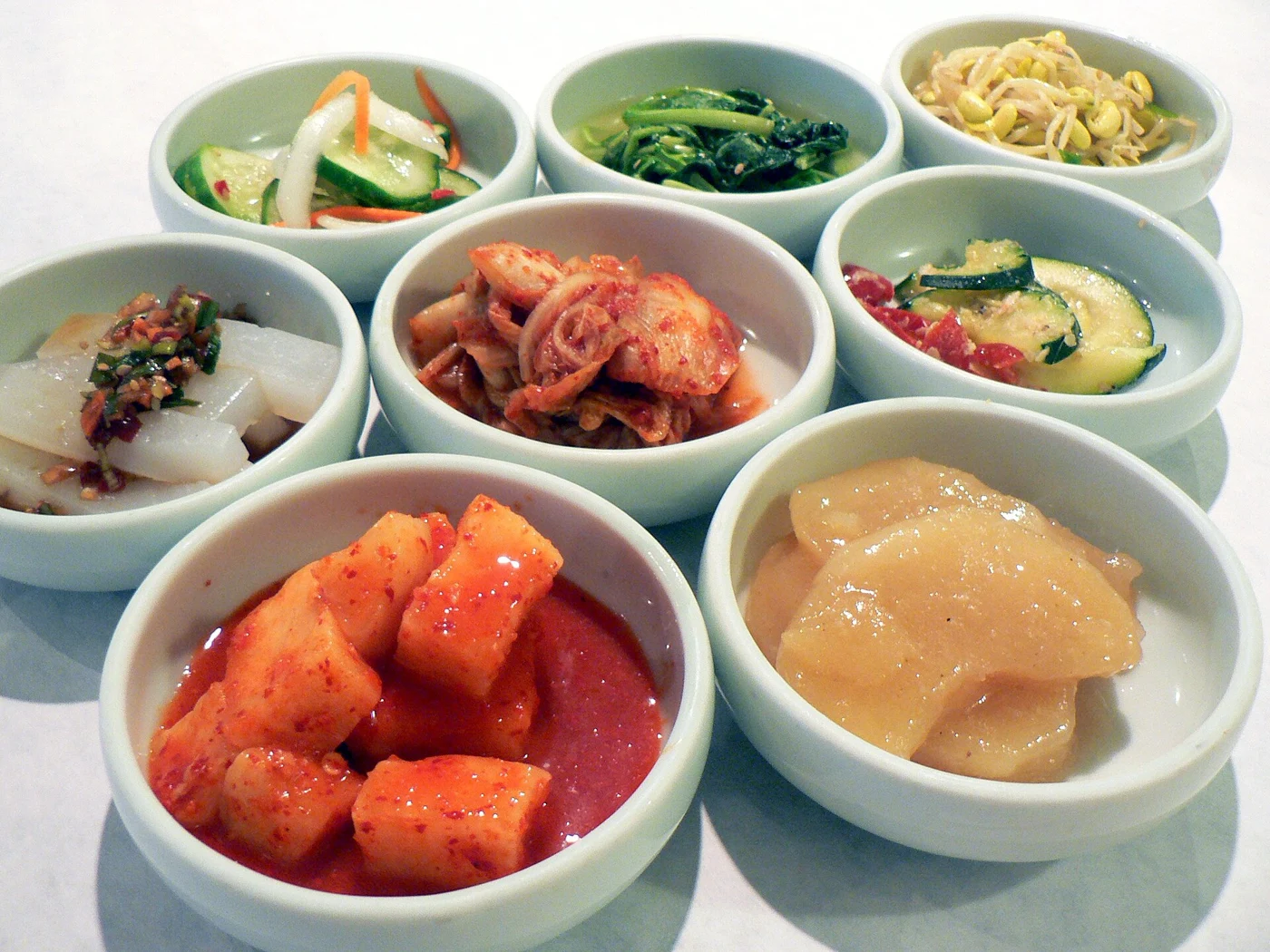
Before the little plates reach the table
At a Korean restaurant, small dishes sometimes arrive before the food you ordered. Kimchi, greens, tofu or egg occupy the table; rice and soup fill the remaining spaces. If this is your first encounter, the questions are practical. Are these starters? Should one be finished before another? Are the vegetables raw under a dressing? Understanding banchan begins with what happens between bites, rather than counting bowls.
Try rice on its own, then rice with a little seasoned spinach, then a piece of tofu. The rice receives different flavours as the meal continues. Unlike a sequence in which a starter disappears before the main arrives, these dishes remain available together. Each is a small prepared food in its own right, yet its place in dinner depends on the rice and neighbouring dishes. That combination gives you room to change direction without ordering another course.
Imagine preparing spinach namul, braised tofu and a rolled omelette for one meal. This is an illustrative kitchen, not a reported visit to a particular household. Following its work lets us see how three very different processes meet at the same table. The word banchan gathers them together, but does not make their preparation interchangeable.
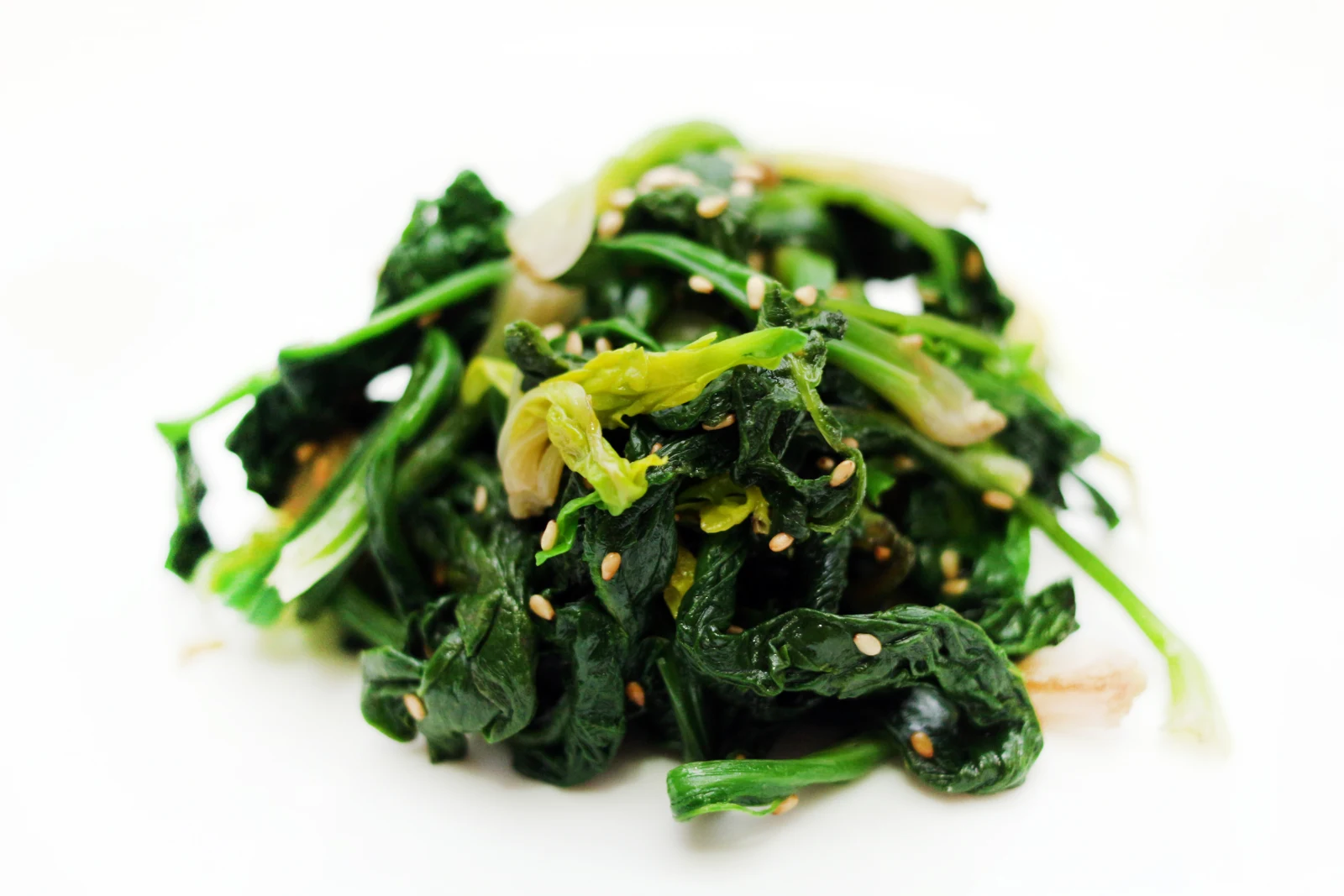
A bunch of spinach becomes a dish
Spinach is not ready for seasoning simply because it has left its bag. Soil may remain around the roots and between stems; thick bases and delicate leaves do not behave alike under heat. Opening and washing the bunch involves attention that disappears from the finished plate. A quick dip cannot be assumed to have cleaned every fold.
Once cooked, the leaves occupy much less space. Stiffness gives way, stems soften and water remains between the leaves. Add seasoning immediately and the dish may first produce a puddle. Removing excess water matters, but wringing until the leaves are crushed is different from pressing out moisture while keeping some structure. The cook is working towards greens that hold their shape and bite without flooding the bottom of the bowl.
The squeezed greens form a bundle. Loosening it and dividing long stems makes eating easier; mixing distributes seasoning beyond the outside of that bundle. Garlic, spring onion, sesame and sesame oil change both aroma and texture. More is not automatically better: one version may announce garlic first, while another leaves the spinach more noticeable. Salt and soy sauce also produce different results. This is where a familiar dish acquires a household’s particular character.
Watching the stages is more revealing than memorising a list of namul names. Washing, heating, removing water, loosening and seasoning are distinct actions. How water and heat were handled stays in the final mouthful. This small cooked vegetable dish has passed through a different sequence from raw leaves with dressing poured over them.
Tofu changes twice
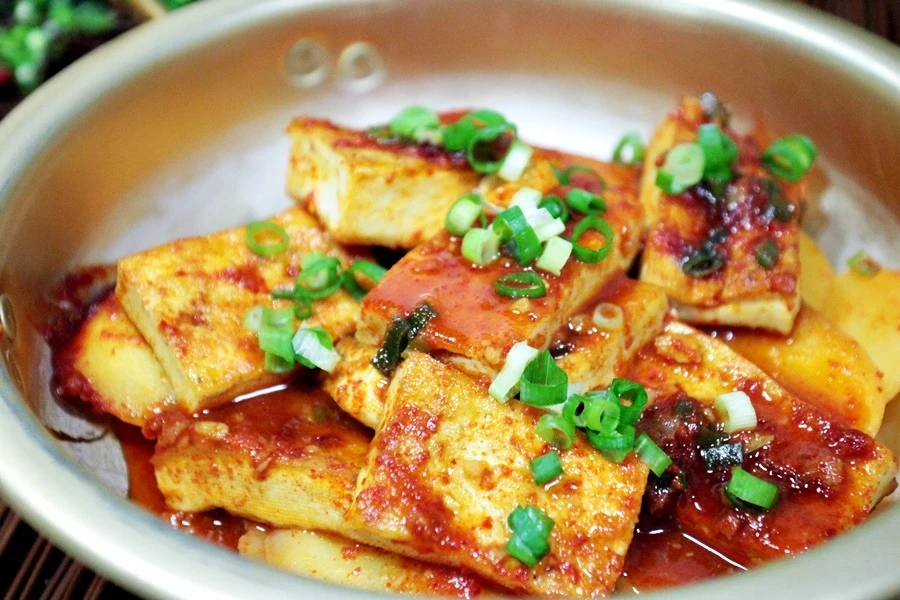
For braised tofu, thickness is an early decision. A very thin slice can break during turning; a thick one gives a different balance between its interior and the seasoned surface. Water on the outside also needs attention. Wet tofu entering oil changes the splashing and the way a surface can develop.
In versions that begin with pan-frying, the contact face gradually gains colour and firmness. It becomes a layer distinct from the soft centre. Constantly pushing or turning the tofu before that face has formed makes the task harder. Waiting is part of turning a delicate ingredient into something that can be moved without falling apart.
With liquid and seasoning added, the pan’s job changes. Frying made a surface; braising brings that surface and the sauce together as liquid decreases. A pan containing plenty of liquid behaves differently from one with a thin coating left at the bottom. Sweet or salty seasoning can catch near the end, so the cook cannot treat the last moments exactly like the first. The amount of sauce left determines whether the dish gives you a spoonful for rice or a relatively dry piece to pick up.
Not every dubu-jorim is red with chilli. Some versions centre soy sauce, and some cook tofu directly in seasoned liquid. A firmer outer layer and a soft, spoonable piece suggest different choices. Reading about jang makes it easier to see soy sauce as part of that decision, rather than merely a brown colouring added at the finish.
The movements inside an omelette
Cut gyeran-mari and you see yellow layers dotted with vegetables. Its tidy cross-section hides repeated adjustments. Fine chopping is not only decoration: large vegetable pieces can interrupt a thin egg layer and make it difficult to roll without tearing.
Egg touching the pan sets from below. Move it while too fluid and there is little shape to hold; let it dry completely and joining the next layer becomes a different task. In a layered version, a cooked portion is rolled aside, fresh mixture enters the cleared space, and the existing roll receives it at its edge. The result grows through small movements rather than one spectacular flip.
As the roll thickens, the outer face alone does not settle the cooking. Turning its sides against the pan helps shape it. Before slicing, the soft layers need a chance to hold together; rushing a knife through a hot, yielding roll can compress or tear them. The neat portion on the plate contains the work of chopping, pouring, rolling, cooking and cutting.
Its familiar appearance in Korean lunchboxes is more than a flavour preference. A roll divides into portions, fits alongside rice and remains visually distinct next to other foods. An egg dish with similar ingredients but no layers is eaten differently. The extra work changes the form in which a diner encounters it.
Three dishes share one kitchen
Preparing all three dishes exposes a problem that individual recipes rarely show: order. Washing greens, drying tofu, chopping vegetables and heating a pan compete for space. One chopping board, a limited number of burners and somewhere to cool cooked food affect the whole meal.
Spinach can be cooked and left to cool while the tofu takes its turn in the pan. Seasoning the greens can wait. But the pan used for a sweet, salty braise is not automatically ready for an omelette: what remains on its surface can change colour, flavour and sticking. Emptying, washing and preparing the pan again belong to the work behind the phrase “three side dishes.”
Serving brings another set of timings. Greens can be divided into bowls; an omelette waits before cutting; a braise with more liquid needs a different serving tool. One person is not simply making three foods in succession. They are repeatedly restoring the workspace and managing food already prepared while the next dish progresses.
A home meal may therefore combine homemade, purchased and previously prepared foods. Buying namul and making only the egg roll divides the work while retaining several textures on the table. Cooking every item from scratch need not be the sole measure of care. Choosing quantities, arranging food and making the meal workable also require decisions.
Counting bowls can miss the meal
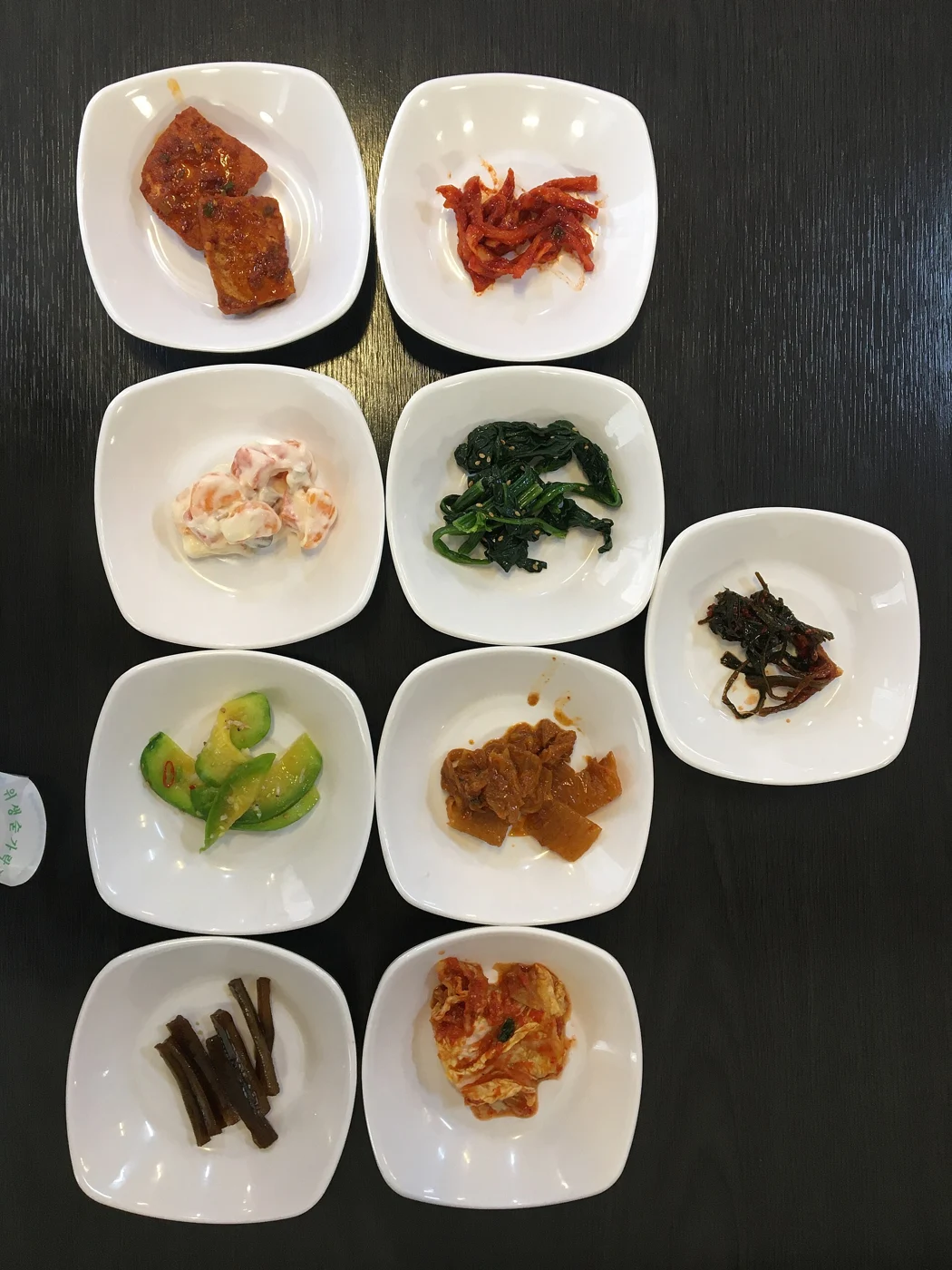
Traditional descriptions of three-, five-, seven- or nine-cheop settings can suggest a simple total of every vessel. That is misleading: cheop does not count rice, soup, kimchi and sauces as interchangeable dishes. The National Folk Museum’s banchan entry distinguishes the counted side dishes from foods placed as basic components. Applying a historical number to a present-day dinner merely by counting every bowl misses that distinction.
A modern meal also has its own circumstances. Three bowls for one person and three shared by several diners are not equal quantities. One stir-fry may occupy a large central plate while other foods come in small portions. Soup, stew or meat changes what the accompanying dishes need to do. Five plates do not mean five servings, and fewer plates do not necessarily mean a less substantial meal.
Restaurant refills are likewise a feature of a particular service. Fixed sets, charged additions and self-service stations operate differently. Reducing banchan to “endless free food” removes the kitchen where someone washed greens and cleared the same pan several times. A more useful question is what each dish is and how it contributes to the food being eaten now.
Small foods need their own explanations abroad
Outside Korea, banchan may first appear in a photograph beside a large main dish. Cooking it reveals another scale of detail. Why remove water from cooked greens? What does a browned tofu surface contribute? How do egg layers join? Learning the name becomes learning movements.
Maangchi published her English spinach namul article in 2007 and her rolled-omelette article in 2008. Both small dishes received their own explanations. A cook’s method gives a newcomer something concrete to understand without establishing one rule for every Korean household. The reader must still relate the movements to the pan, tools and ingredients available in their own kitchen.
Nor does a newcomer have to learn an entire table at once. One mouthful of spinach can reveal moisture and sesame aroma; one omelette slice can make its layers visible. Familiarity grows through these particular foods rather than an abstract promise of Korean variety. The kimchi and kimjang story carries that interest into another question: how food prepared for today differs from food made for a longer period.
The smallest-looking part of dinner
I find the enduring appeal of banchan in the ability to turn from one taste to another. Tofu is followed by greens, egg by kimchi, with rice connecting the changes. Several possibilities stay within reach throughout dinner. That rhythm is more interesting than a photograph prized for the greatest number of plates.
The image becomes richer when we also see hands pressing water from spinach, a piece of tofu turned without breaking, or a patch of pan cleared for another egg layer. The size of a dish and the amount of work inside it are not the same. A small portion does not have a small story.
Next time the side dishes arrive first, look closely at one. How did these leaves become tender? Why is this tofu different outside and inside? Which way were these egg layers rolled? Returning to the rice after understanding one dish turns a crowded table into a much more particular meal.
Banchan changes a bowl of rice through small dishes made by distinct processes.
Sources & scope
Banchan within a meal ↗2018-08-20Banchan and traditional cheop counts ↗Spinach namul in English ↗2007-09-30Rolled omelette in English ↗2008-07-18A braised tofu preparation ↗2016-02-15Bowls of kimchi and different vegetable dishes arranged together
stuart spivack (a flickr user) · CC BY-SA 2.0 · Resized and converted to WebP