A picture when opened, an object when tied
A Korean patchwork wrapping cloth can look like a painting when displayed on a wall. Broad rectangles meet narrow strips; small pieces introduce changes of direction. Tie its corners around an object, however, and that composition folds. Parts disappear, the reverse becomes visible, and the package supplies a volume the flat cloth did not have. Looking at a bojagi means attending to both states, rather than choosing between useful object and work of art.
Bojagi is the broader term for a cloth used to cover or wrap things. Jogakbo is a patchwork form assembled from pieces. Not every bojagi is patchwork: a cloth may instead use a single piece of fabric or carry embroidery. That distinction prevents a familiar image of colorful rectangles from standing in for an entire category of Korean textiles. The common action of wrapping does not erase differences in material, construction, or purpose.
The attraction lies partly in reversibility. Untie a package and its wrapping returns to a plane. This makes the cloth interesting to contemporary designers, but it does not mean historical makers were following today's environmental slogans. Understanding the mechanism is a better beginning than assigning the object an admirable modern intention.
A category larger than patchwork
LACMA's account describes uses including covering food and wrapping gifts, and places bojagi in both courtly and everyday settings. These different jobs matter. Elaborate embroidery and a lightly constructed patchwork are not simply more or less decorative versions of an identical thing. They ask for different kinds of work and may respond to different needs.
Jogakbo is associated with making use of fabric remnants. A remnant does not assemble itself, though. The maker must accommodate unequal sizes while producing a usable overall shape. Which piece joins first? Where can a strip resolve a mismatch? How much fabric must disappear into the seam? Economy requires planning as well as material. Describing the result as accidental beauty leaves that work out.
Many surviving cloths have unidentified makers. Anonymous does not mean unskilled: it means a name and working history have not survived in the available record. When domestic sewing becomes museum art, this gap deserves attention. We can value an arrangement without pretending to know its maker's circumstances or intentions.
LACMA places most surviving historical examples in the Joseon period, 1392–1910. Written evidence of use and surviving textiles are different records. Looking alongside twentieth-century objects lets us follow a form through changes of material and purpose rather than freeze it in a single period.
Assembly starts before the first stitch
Usable cloth must first be separated from worn areas. Grain, pattern direction, and thickness affect how a fragment behaves. Translucent silk lets light through; a dense textile produces a heavier fold. A cut piece also needs a seam allowance, so its final visible area will be smaller than its initial size. Selecting colors is only one part of preparing the material.
Joining two pieces creates a unit that can be joined to another unit. A narrow strip may make unequal blocks meet. Working toward a predetermined drawing differs from allowing the available fragments to shape the composition, but both methods have to account for the width taken up by every seam. A small discrepancy repeated along a row can alter the outer shape. The surface emerges through a sequence of decisions that change what remains possible.
Finally, the perimeter and corners need finishing. A cloth made to wrap things must tolerate folding and tying, not merely look straight on a wall. A lined cover and a translucent single-layer cloth ask for different treatment of the reverse. Material, seam, and intended use are therefore decisions made together.
Two ways of making a joining line
Ssamsol encloses the cut edges inside a folded seam allowance. First align the edges to be joined, leaving room beyond the stitching line for the folded fabric. After making the initial join, arrange its allowances so one can fold around the other without leaving a raw edge exposed. Securing the fold with another line of stitching keeps the joined panels together and holds the raised seam in position. Even lightweight cloth forms several layers at this narrow strip. Against light, the single-layer field and overlapping allowances transmit different amounts of illumination: construction itself makes the line.
At an intersection, several layers can accumulate. Mimi Shim’s teaching discusses trimming seam bulk. That example explains why matching the edges is not the whole problem. Cloth selected for its lightness can become stiff where seams converge; the accumulated thickness affects both the next stitches and the finished fold.
Sara Cook’s 2022 course teaches garumsol joins in a lined cloth. In a whipstitched join, the needle catches the two adjoining edges, and the thread passes over them to connect them with repeated loops. Where each stitch catches the fabric affects how the edges sit together. Here the pieced front works with a backing. Compared with an enclosed seam in a single-layer textile, it places the reverse and raw edges in a different relationship. The useful question is not simply which Korean sewing term to memorize, but where the edges go and whether another layer supports the surface.
Patchwork need not mean rectangles
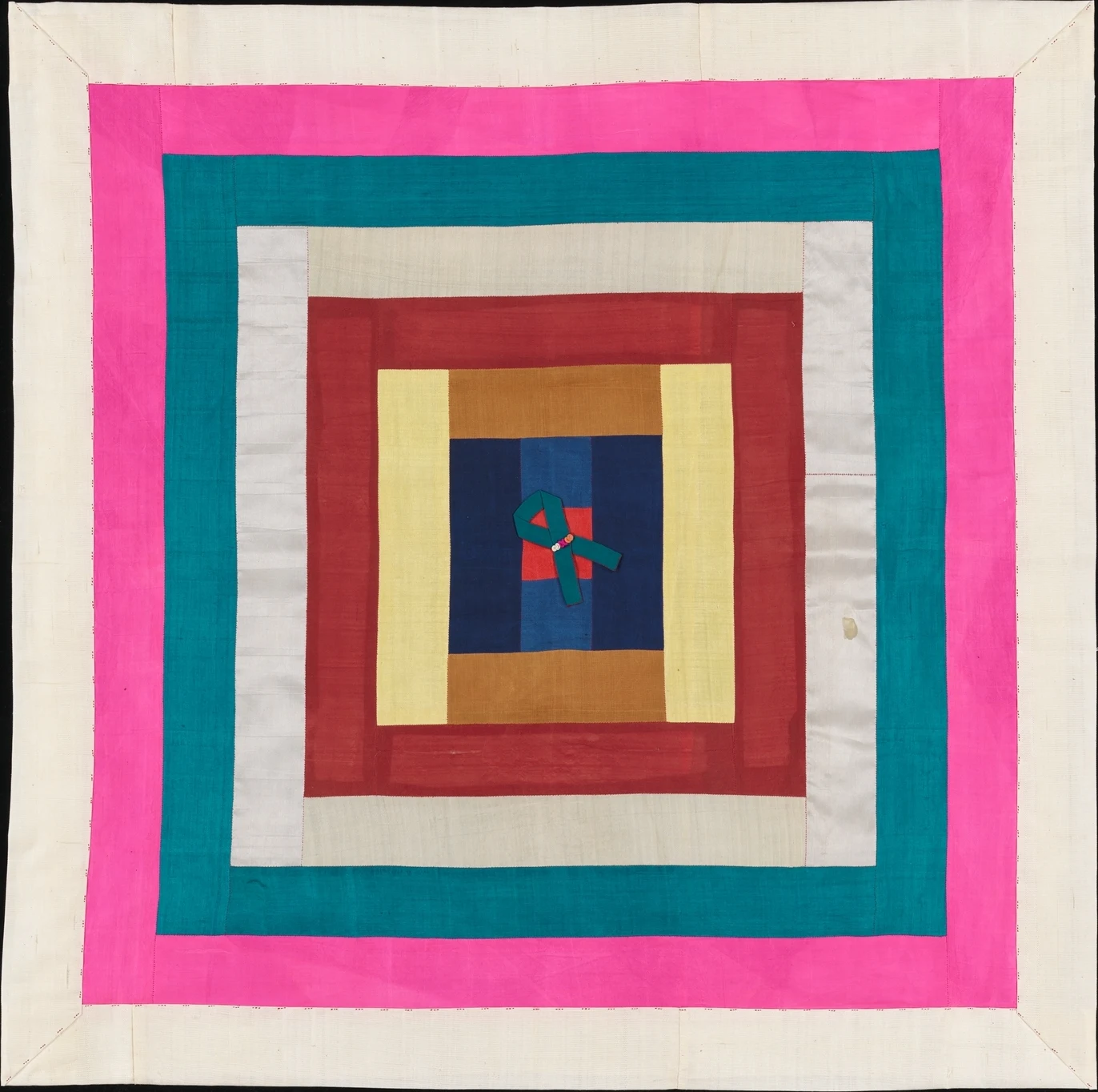
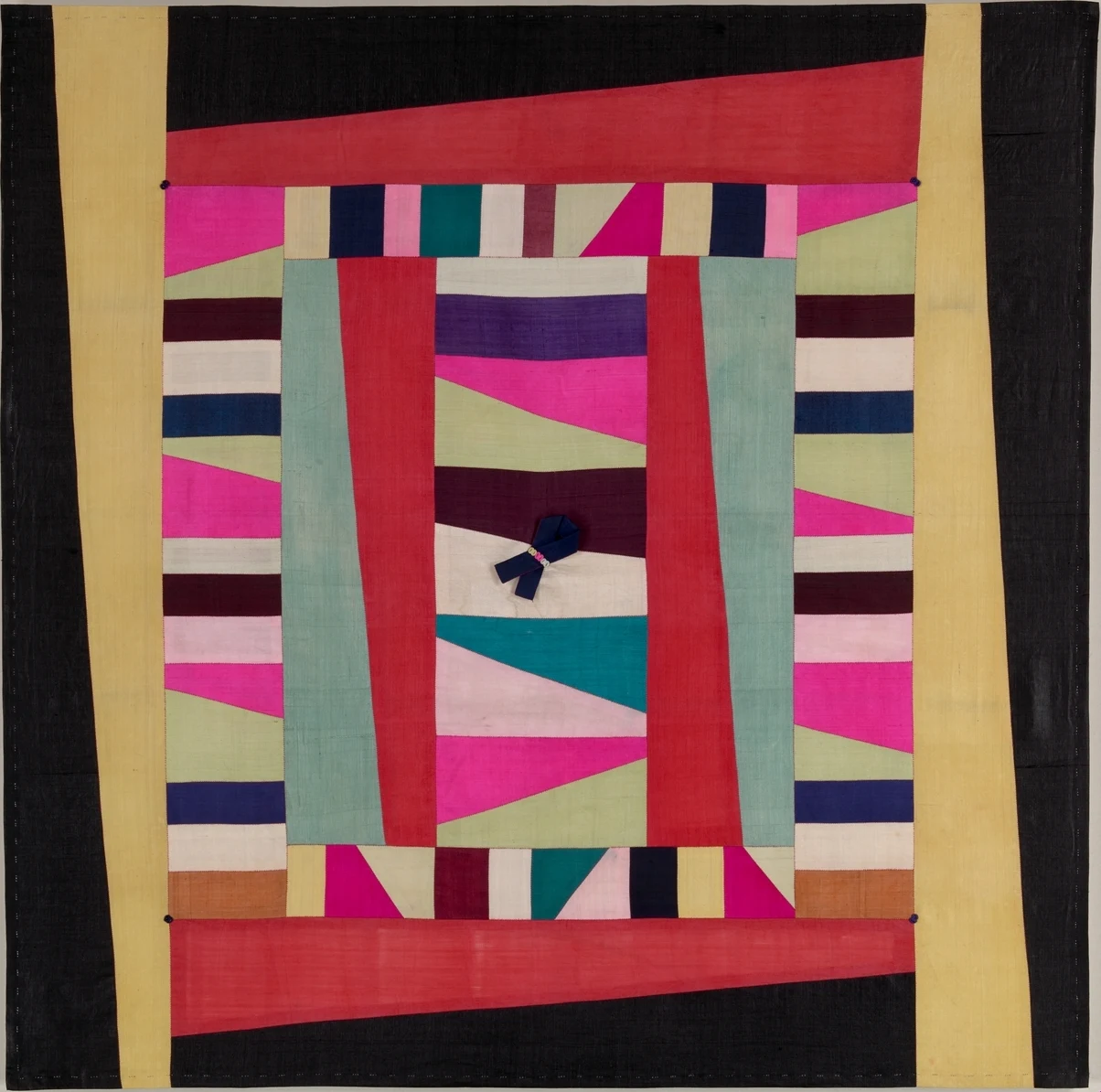
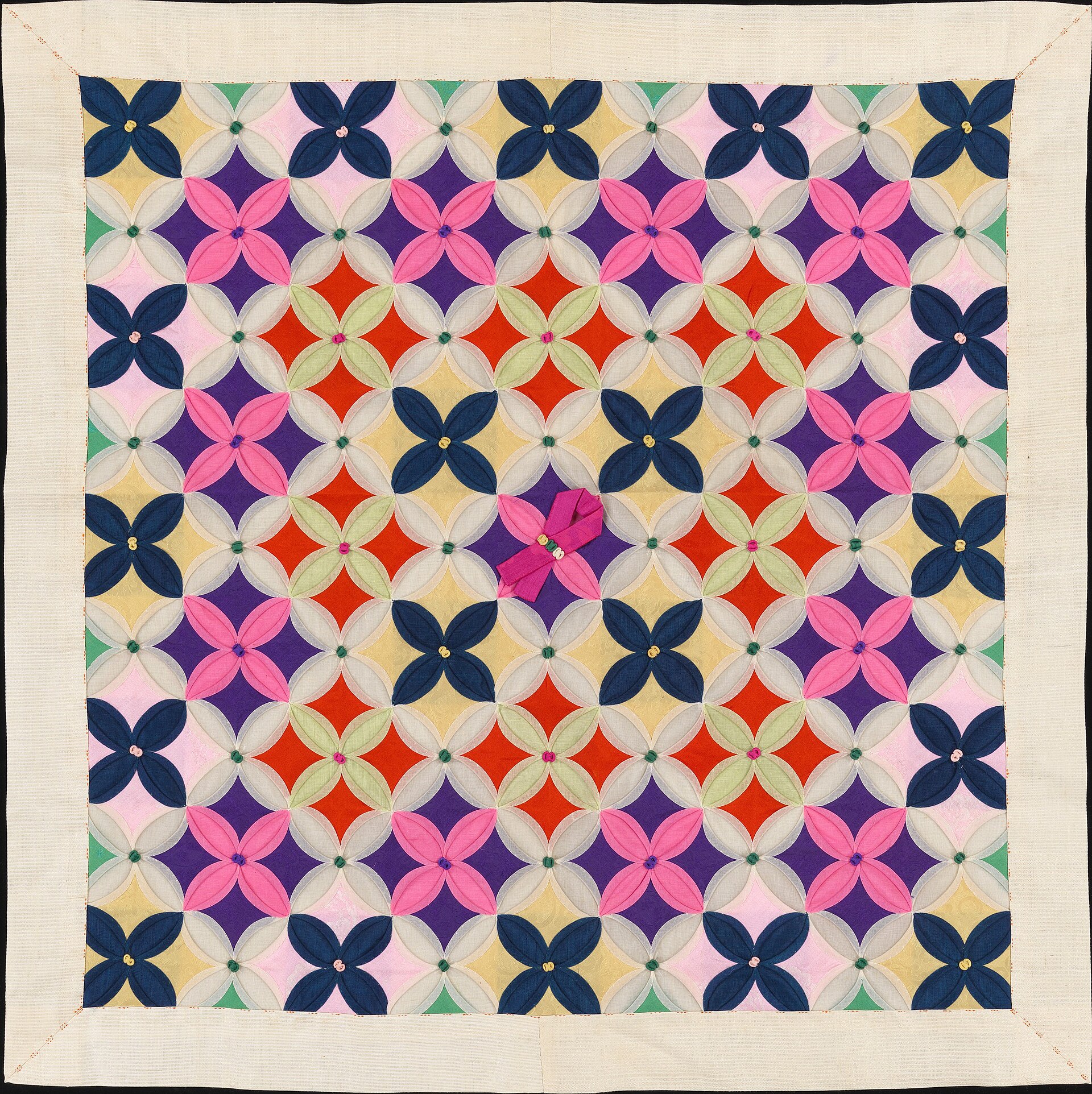
The Met dates the three silk cloths illustrated here to approximately 1950–80. Their collection numbers are 2007.151, 2007.149, and 2007.152. This is a twentieth-century continuation of the form, rather than a set of Joseon-period objects.
In 2007.151, long bands build nested rectangular frames around the center; pink, turquoise, red, and pale cloth repeat outward, with a small fabric loop at the middle. In 2007.149, triangular pieces and slanting bands change direction within the rectangular framing. A similar overall arrangement produces different rhythms: repetition in the first, angular changes in the second.
Object 2007.152 makes a particularly useful comparison with the familiar image of irregular rectangles. Curves meet in petal-like forms, and those units repeat. The eye moves between rounded joins instead of following only extended straight lines. Changing the shape of the cut pieces changes how the composition is read.
It changes the assembly problem too. Repeating curved units requires edges to meet repeatedly; it differs from extending a surface with unequal rectangular blocks. The material accumulating around the joins remains part of the problem. We cannot reconstruct the historical sewing sequence from this frontal photograph, but we can see that one popular description—freely arranged rectangles—does not encompass the entire category.
When remnants of clothing become a wall work
In her 2025 account, Lee So-ra describes turning hanbok remnants into textile wall hangings. Preparing an old fragment begins with establishing how much usable cloth remains. A small panel visible on a garment may have folded fabric and seams behind it. Opening the old join reveals the heavily pierced edge and the intact area farther in. With patterned cloth, keeping only the central motif gives a different meeting edge from retaining its surrounding background. Preserving a large fragment or dividing it into smaller units also changes the number of joins across the finished surface.
Cutting slippery thin cloth and dense cloth as one stack can produce unequal outlines when the upper layer shifts. Lay each fragment flat, check the direction of the weave, and mark both the visible panel and the allowance that will turn inside. A dark fragment beside a pale one also calls for attention to whether color might transfer. If cleaning is needed, test an appropriate method for that fiber and dye on a small area first; avoid stretching wet cloth. Arrange the prepared pieces again when dry. Where thick panels meet, accumulated allowances can lift a corner away from the plane, so alter the overlap and order of assembly. Material preparation and composition work together: slipping, folding, and thickness can change an attractive arrangement when it becomes an actual sewn surface.
The important detail is how a previous material becomes a working condition. A textile once associated with a body's movement now meets the conditions of light and viewing distance. Up close, a line is overlapping cloth; from across a room, it divides areas of color. Turning a domestic textile into art involves choosing which of its physical properties will become prominent, rather than simply discarding its earlier function.
A cloth outside its package
Wonju Seo's exhibition Through the Light opened at Stony Brook University's Charles B. Wang Center on September 8, 2025, and its extended run ended January 31, 2026. With thin cloth held against light, a single layer and an overlapping seam transmit different amounts of it. Pieces of the same color can therefore form lighter and darker areas as their thickness changes. Joining fabric does more than attach one surface to another: the stitches and overlapping allowances also alter the light passing through.
Contents once gave the cloth volume; in this kind of installation, placement and illumination change its appearance. Thin fabric and thick seams may share a color but transmit different amounts of light. Hanging near a wall or away from it changes the background and shadows. Choosing where the cloth goes becomes another stage in determining what the viewer sees.
Returning a cloth to everyday wrapping changes the demands again. It needs a useful size, sound corners, and somewhere to remain between uses. Reusability does not maintain a textile by itself. Display and wrapping have different requirements, yet both can move the material beyond the fixed image it presents when laid flat.
Opening the cloth again
The discussion continues with hanbok, form and practice, where fabric and sewing encounter the requirements of clothing, and with Korean homes, where objects are used and stored. A jogakbo is a surface worth looking at, and a surface whose meaning changes between hands, contents, and space.
I would not finish by saying it is beautiful because it is irregular. Its apparent irregularity is the outcome of selection, assembly, joining, and finishing. Bringing unlike pieces into one usable cloth is more than eliminating leftovers: it makes their different conditions work together. The seams retain those choices when the knots are undone. The possibility of moving repeatedly between picture and package is what makes the cloth worth another look.
A seam both joins fabric and makes a visible line. The decisions that turn remnants into a working surface continue in contemporary wall works and installations with light.
Sources & scope
Bojagi: The Korean Wrapping Cloth ↗2014-01-02Patchwork Bojagi (Wrapping Cloth), 2007.151 ↗Patchwork wrapping cloth (jogakbo), 2007.149 ↗Patchwork wrapping cloth (jogakbo), 2007.152 ↗More Korean Patchwork – Jogakbo, In-person workshop coming soon! ↗Covering cloth ↗2022-10-29Art Words: Lee So-ra, textile artist ↗2025-05-19Through the Light: Contemporary Jogakbo by Wonju Seo ↗Silk patchwork cloth, approximately 1950–80. The Metropolitan Museum of Art, 2007.151.
The Metropolitan Museum of Art · CC0 · Converted to WebP; image content unchanged