Before the spoon moves
A bowl arrives with rice underneath and distinct patches of vegetables above. The diner adds sauce and folds them together. Bibimbap means mixed rice, yet the mixing comes near the end of a surprisingly divided job. Rice cooks in one vessel, vegetables are cut on a board, leaves are cooked and drained, and meat or mushrooms may pass through a pan. Bringing everything into one bowl does not remove those separate tasks.
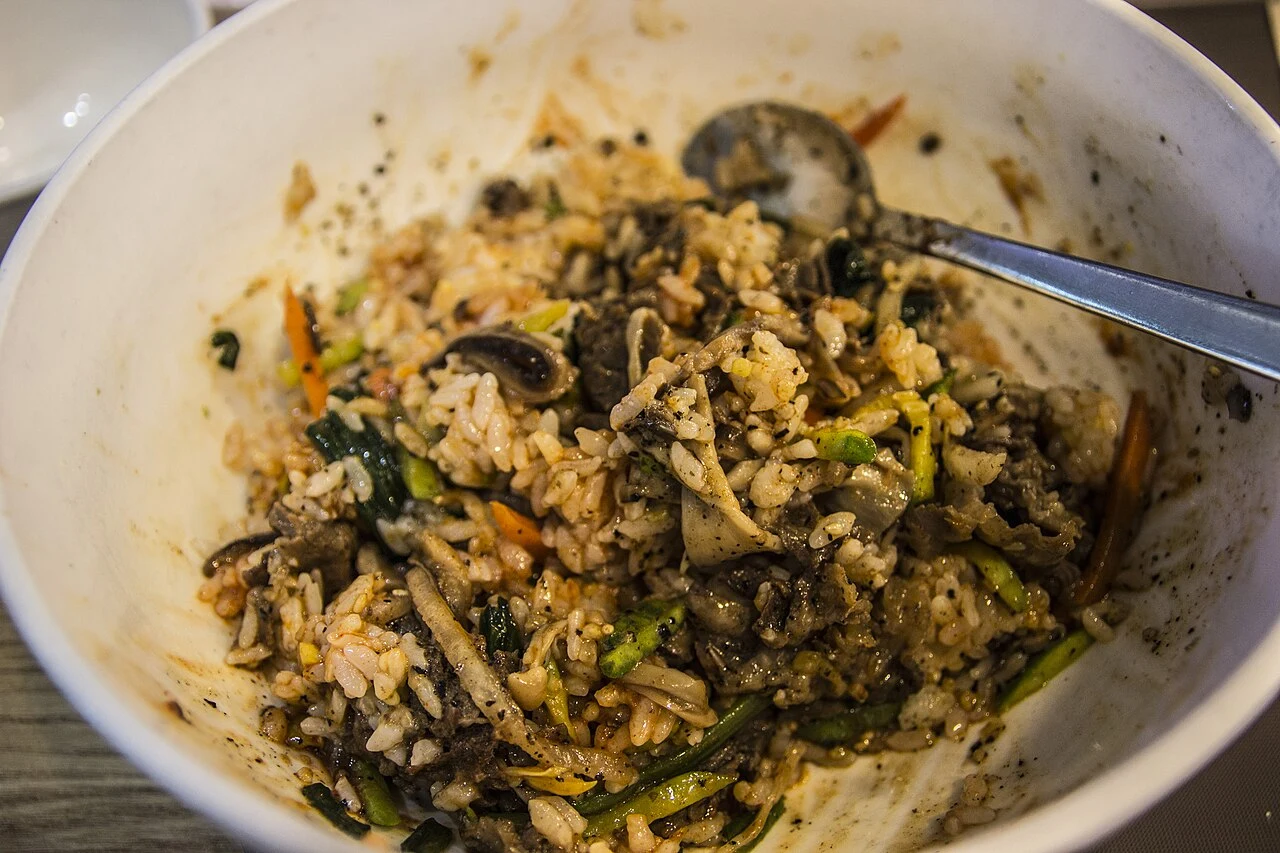
The arrangement lets a diner see what will be eaten. A long vegetable stem, cooked beef or raw beef, and a sauce served separately all change the coming mouthful. Our opening photograph shows rice already mixed with vegetables and mushrooms. Individual pieces remain visible. Stirring changes their distribution; it does not turn their textures into one identical substance.
What happens to the vegetables
A leaf collapses as it cooks. A thin carrot strip remains more resistant, while a mushroom releases moisture and develops a different bite. Cooking them together for the same duration can leave one ingredient past its useful texture before another is ready. Separate treatment gives the cook control over those differences.
Korean Bapsang's preparation uses different methods for different vegetables. The larger practical issue is what reaches the rice. Excess liquid from a wet topping travels through the bowl, loosens the sauce and enters spaces between grains. A dry, tough piece can remain awkwardly separate in the mouth. Some of the bowl's final moisture is therefore decided before any gochujang is added.
Cutting is part of that decision. Long strands wind around a spoon; smaller pieces distribute across more mouthfuls. A thick carrot slice can occupy most of one bite, while several thin strands share it with rice. Grinding everything finely would make mixing easy but erase much of the reason to include different vegetables. Preparation softens an ingredient while leaving enough of its structure to recognise.
Home cooks can use suitable, properly stored prepared side dishes from an earlier meal. That changes the order of work: some cooking has already happened. A restaurant making a regular menu must organise repeated preparation instead. Neither situation amounts to putting every old container from a refrigerator into one bowl.
Rice, meat and seasoning meet
Rice receives both the toppings and their moisture. Very clumped rice needs loosening; wet rice combined with wet vegetables may become heavy and indistinct. Separate grains make it easier to distribute seasoning without crushing the whole bowl. The water used to cook rice is only the beginning: vegetable juices and sauce join it later.
Cooked beef contributes its seasoned surface and small pieces that fit on a spoon. Some restaurant versions use raw beef, which has a different preparation and texture; a menu should make that distinction clear. The ingredient discussed in our Hanwoo article takes another form here, cut for mouthfuls shared with rice rather than served as a large piece of barbecue.
Gochujang supplies salt, sweetness and heat together. Add a great deal to already seasoned toppings and the paste can dominate them. A separate portion allows the diner to build the concentration gradually. Sesame oil contributes aroma and lubrication. The ingredients in our jang story now perform a final connecting job. An egg, where included, changes the mixture again according to the condition of its white and yolk.
Effective mixing lifts rice from underneath rather than merely pushing vegetables around the surface. Sauce is spread through the rice, clumps are loosened and long strands are redistributed. Repeated pressing can break the grains. The goal is a shared mouthful in which soft leaves, a firmer stem and a springy mushroom still provide different sensations.
An older record preserves the work
The Academy of Korean Studies discusses bibimbap in the late nineteenth-century cookbook Siuijeonseo. Its account includes preparing components before combining them. The useful continuity is the sequence: mixing follows cooking rather than replacing it.
An old written preparation and a present-day restaurant bowl also remind us that toppings need not have one permanent arrangement. A household uses what it has prepared; a restaurant builds routines that can deliver a recognisable menu repeatedly. Different settings produce different demands on the cook.
The cookbook is evidence of a recorded dish, not a secure date for one original inventor. The cooking actions are more revealing than a grand slogan about Koreans mixing everything. Someone has to cut, cook and organise the food that later meets the spoon.
Two cities, concrete ingredients
Jeonju's official food presentation highlights soybean sprouts and yellow mung-bean jelly. The soft, smooth jelly and the firmer sprout stems behave differently alongside rice. A city name becomes useful when it leads us to these actual things inside a bowl.
Jinju’s official food guide describes finely cut beef round seasoned with sesame, garlic and sesame oil, placed on the rice as yukhoe. Small pieces disperse between rice and vegetables differently from long, large slices. Before the final arrangement comes a separate job of cutting and seasoning the meat. The size and preparation of that topping change what the spoon brings together and what the mouth encounters first.
There are differences within a city as well. Jeonju's restaurant listings describe Hangukjip using a brass bowl and Jongno Hoegwan using a hot stone bowl. Vessel choice affects what happens during the meal, even when both restaurants serve food under the same regional name.
The bowl that keeps cooking
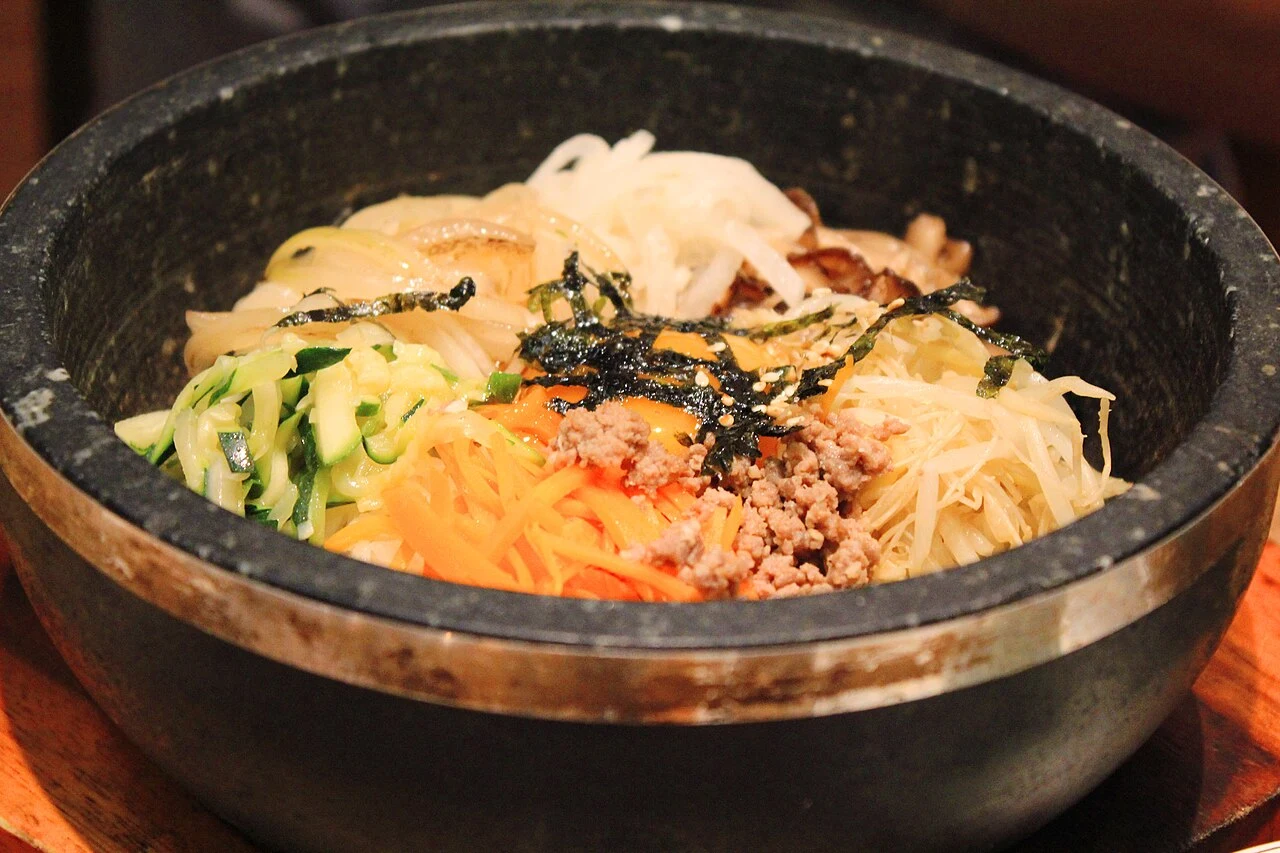
Dolsot bibimbap arrives in a hot stone vessel. Heat continues to enter the rice after the toppings are assembled. The bottom has more direct contact with that heat than the upper grains. As moisture leaves an oiled contact surface, a crisp layer can form. The sizzling is evidence of continuing heat transfer, not just restaurant theatre.
Timing changes the bottom. Lift it promptly and more of the rice remains soft as it joins the vegetables. Leave part against the hot surface and that portion has longer to become crusty. Diners who enjoy crisp rice and those who prefer a softer texture can get different results from the same kind of vessel.
Handling changes too. The bowl is a hot cooking tool, approached through its support and a spoon rather than lifted barehanded. Sauce in prolonged contact with the hot bottom can scorch. This is a final heating stage brought close to the diner, with its own practical consequences.
A simple order, many preparations
A restaurant can assemble bibimbap quickly because much of the work precedes the order. Different toppings have been cut, cooked and organised. Maintaining them in a useful condition requires repeated attention, along with the utensils and washing that separate preparations create. Speed at the serving counter is not evidence that the cooking was effortless.
At home, fewer suitable toppings can make a satisfying bowl without recreating every colour in a restaurant photograph. Adding ingredients also adds work. Preparing what one has well and eating it to the end fits an ordinary kitchen better than treating an elaborate display as a daily obligation.
That is why I find “just mix everything” an incomplete introduction to bibimbap. It describes the diner's final motion but omits the cook's decisions. The attraction is not destruction of order; it is eating differently prepared foods together while their distinct textures remain.
By the last spoonful, the original coloured sections may be gone. A leaf is still soft, a stem still has resistance and a crisp fragment from the bottom still breaks differently from a grain of rice. Bibimbap combines the time spent on separate preparations, rather than making that time disappear.
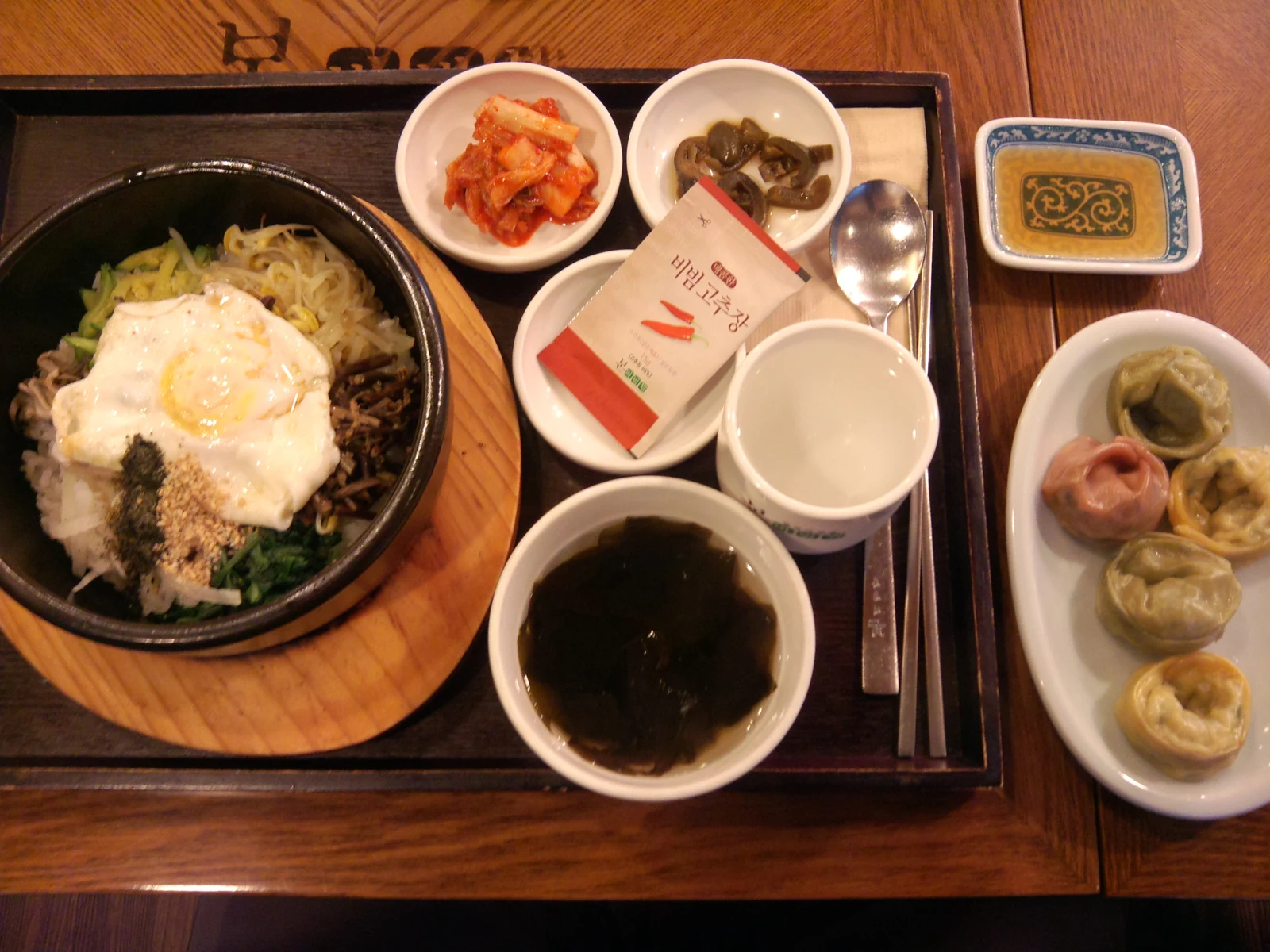
Mixing is the final stage; distinct vegetable textures, rice moisture, seasoning and vessel heat are prepared beforehand.
Sources & scope
An older written preparation of bibimbap ↗2023-02-07Jeonju ingredients and restaurant vessels ↗Preparing the yukhoe topping for Jinju bibimbap ↗Ingredient preparation and hot stone bowls ↗2022-02-08Bibimbap photographed by Shene81 on 11 May 2013: rice and vegetables have been mixed in a white bowl.
Shene81 · CC BY 3.0 · Wikimedia’s 1280-pixel thumbnail converted to WebP