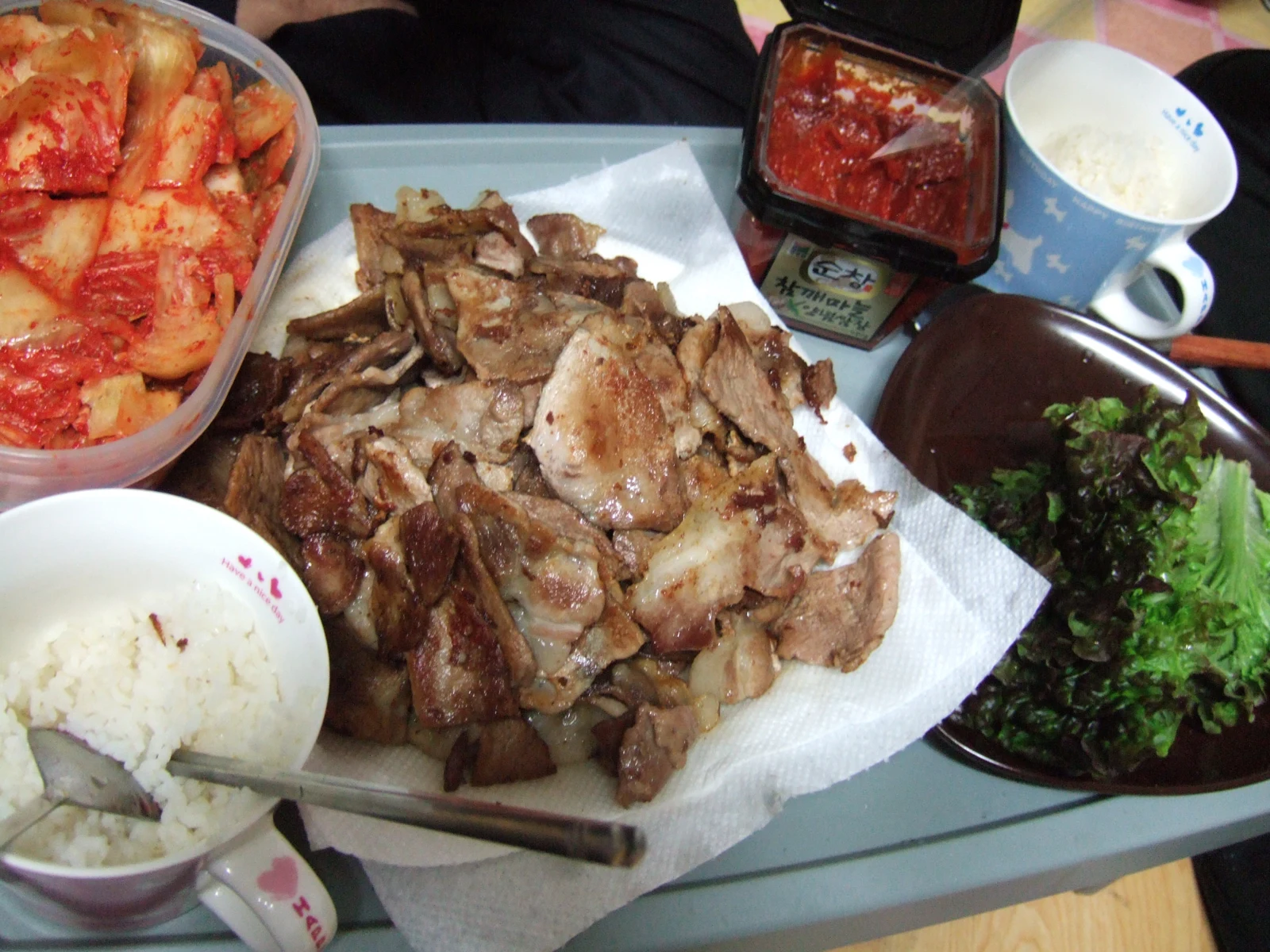
A dining table becomes a cooking station
At a table grill, the meal arrives in stages. Raw meat appears before the main dish is ready to eat. A thin slice can be transferred to a plate while a thicker piece beside it still needs attention. The table is therefore more than a place to receive food: it becomes a working surface where cooking and eating overlap.
The Korea Tourism Organization also describes restaurants where staff grill the meat. That distinction matters. At one table a diner must keep track of the pieces while talking; at another, a server handles the cooking and diners can watch. Neither arrangement defines every Korean restaurant. They distribute the work differently, and the experience changes even when the menu name remains the same.
A finished steak cools on one person's plate. A shared grill releases small portions at different moments. Filling the whole surface or adding meat gradually produces a different rhythm. The grill's limited space determines who waits, which pieces move first and whether someone spends most of the meal looking after everybody else's food.
A cut, a dish and a cattle identity
Samgyeopsal names pork belly. Its alternating lean and fatty sections make the transformation under heat visible: fat renders, moisture leaves the surface, and the slice changes shape. Thickness matters as much as the familiar name. A thin piece and a thick strip cannot be expected to cook at the same pace merely because both are belly.
Seoul's municipal magazine describes a broth-rimmed Seoul style and thin marinated beef grilled over charcoal in Gwangyang. Their difference becomes tangible at the table. On the domed Seoul pan, meat occupies the centre while noodles and vegetables sit in the surrounding liquid. Noodles take up broth as the meal progresses; moisture from vegetables joins it, so the last mouthful differs from the first beef slice. A charcoal grate instead asks the cook to spread thin pieces and catch them before their edges dry. Overlapping slices must be opened so the lower one does not cook while the upper one waits.
Preparation begins before either pan is hot. Separate slices that have stuck together, exposing surfaces to the seasoning. A bulgogi mixture of soy sauce, sugar, minced garlic and scallion supplies salt, sweetness and aroma; its liquid also travels into the pan. A deep pile of wet meat receives steam from below, whereas a broad single layer makes more direct contact. Slicing, distributing the marinade and dividing the meat into batches suited to the cooking surface therefore belong to the same chain of decisions. They determine whether the diner receives distinct grilled pieces or a softer, broth-rich mouthful.
Hanwoo answers another question. Our reference on Hanwoo separates cattle identity, cuts and grading. A label naming Hanwoo does not tell you whether the plate holds ribs or sirloin, or how it should be cooked. An expensive grade cannot replace the practical information a grill requires. Understanding the menu means putting its different kinds of information together.
One bulgogi adaptation changes the unit of cooking
A 2017 Korea.net feature presented modern bulgogi as marinated ground-beef patties served on bread.
Forming minced meat changes the unit the cook handles. Separate thin slices and a shaped portion differ in their thickness, exposed surfaces and tendency to scatter. Turning a prepared shape is a different operation from opening out overlapping slices. Describing these differences broadens bulgogi beyond the memory of a sweet sauce: the preparation of the meat matters before the seasoning ever reaches the diner.
When cooked meat is placed on bread, the kitchen determines much of the ratio between support and topping. When leaves and rice arrive separately, that last ratio remains with the person eating. An assembled portion and a meal assembled bite by bite put the final choice in different places. A familiar name can therefore accompany a substantial change in how food is handled and served.
The outside and centre do not change together
Heat first acts on the surface touching the grill. In a substantial piece, the centre changes more slowly. A marinade adds another complication: its sugars and sauce can darken quickly, so a browned outside does not by itself establish what has happened inside. Turning and moving meat redistributes its exposure to hotter and cooler parts of the surface.
Tongs and kitchen scissors serve this work. If a thick strip is partly cooked and then cut, the new cut surfaces can meet the heat. If it begins in small pieces, there are more individual pieces to handle. Scissors may look unusual beside a dining plate, but their role becomes clear when food is being divided and moved on a hot, crowded table.
Utensils that touch raw meat should be separated from those used for ready-to-eat food. Appropriate cooking depends on the meat and the restaurant's guidance; smoke and colour are insufficient measures by themselves. Moving cooking out of the kitchen also moves part of its responsibility. Clear service instructions make the meal easier to enjoy than simply assuming that everybody knows how to grill.
A leaf does more than carry the meat
Place only meat on a lettuce leaf, then consider a second bite with rice, paste and a small accompaniment. The same cooked piece now enters a different combination. The leaf contributes texture and a surface that can be held; perilla brings an aroma unlike lettuce. Rice receives some of the strong seasoning, while a pickle or kimchi can add acidity and salt.
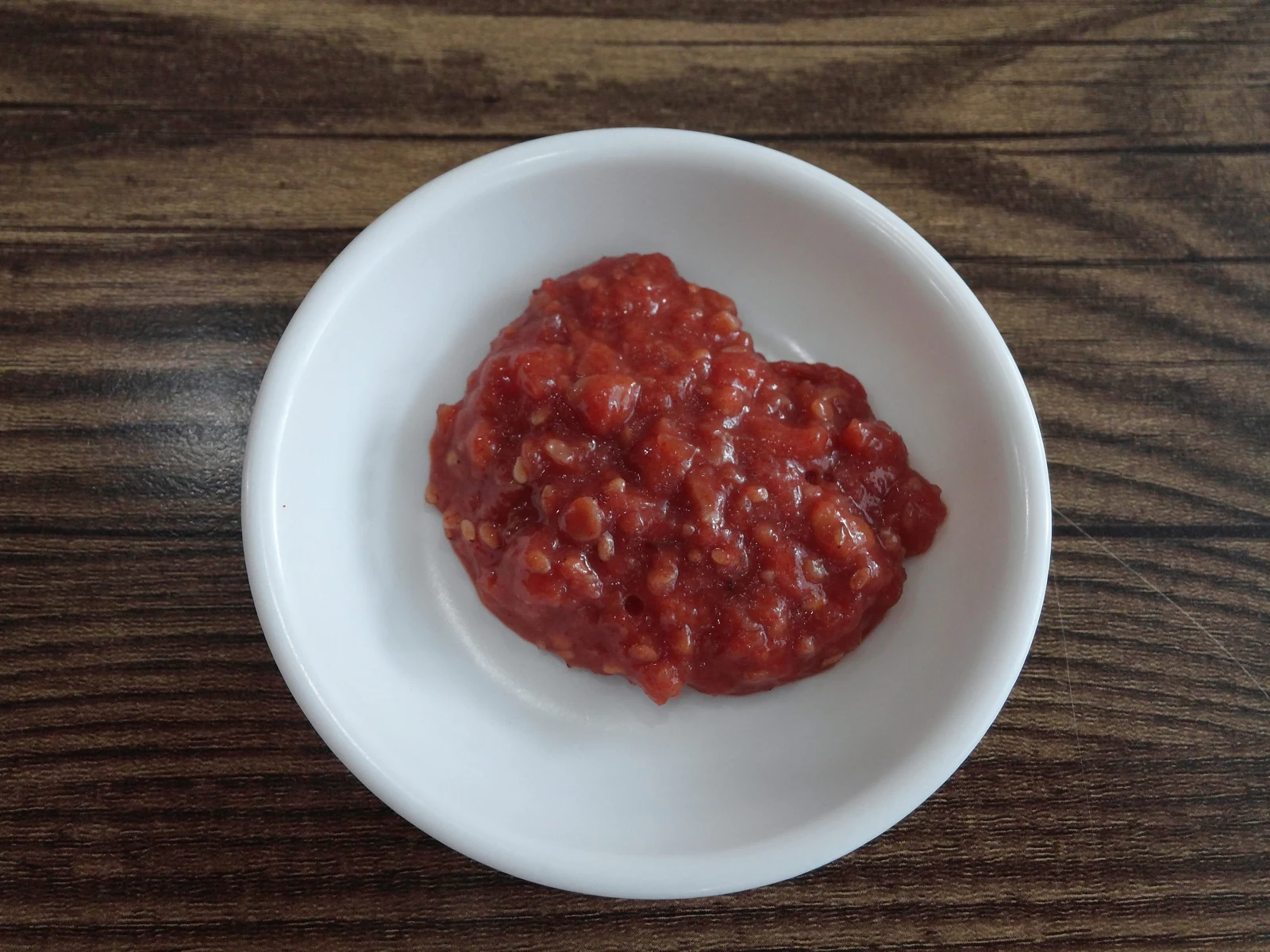
A KBS ssambap example mixes three spoonfuls of doenjang with one of gochujang. That is one recipe, rather than a compulsory product formula. Stirring the pastes together distributes salt and chilli through the mixture. Minced garlic leaves small aromatic pieces; sesame oil loosens the texture and brings a toasted fragrance. Our reference on jang follows the fermented seasonings that become this last-minute mixture at a barbecue table. A small dab leaves space for the leaf and meat; a spoonful can dominate them.
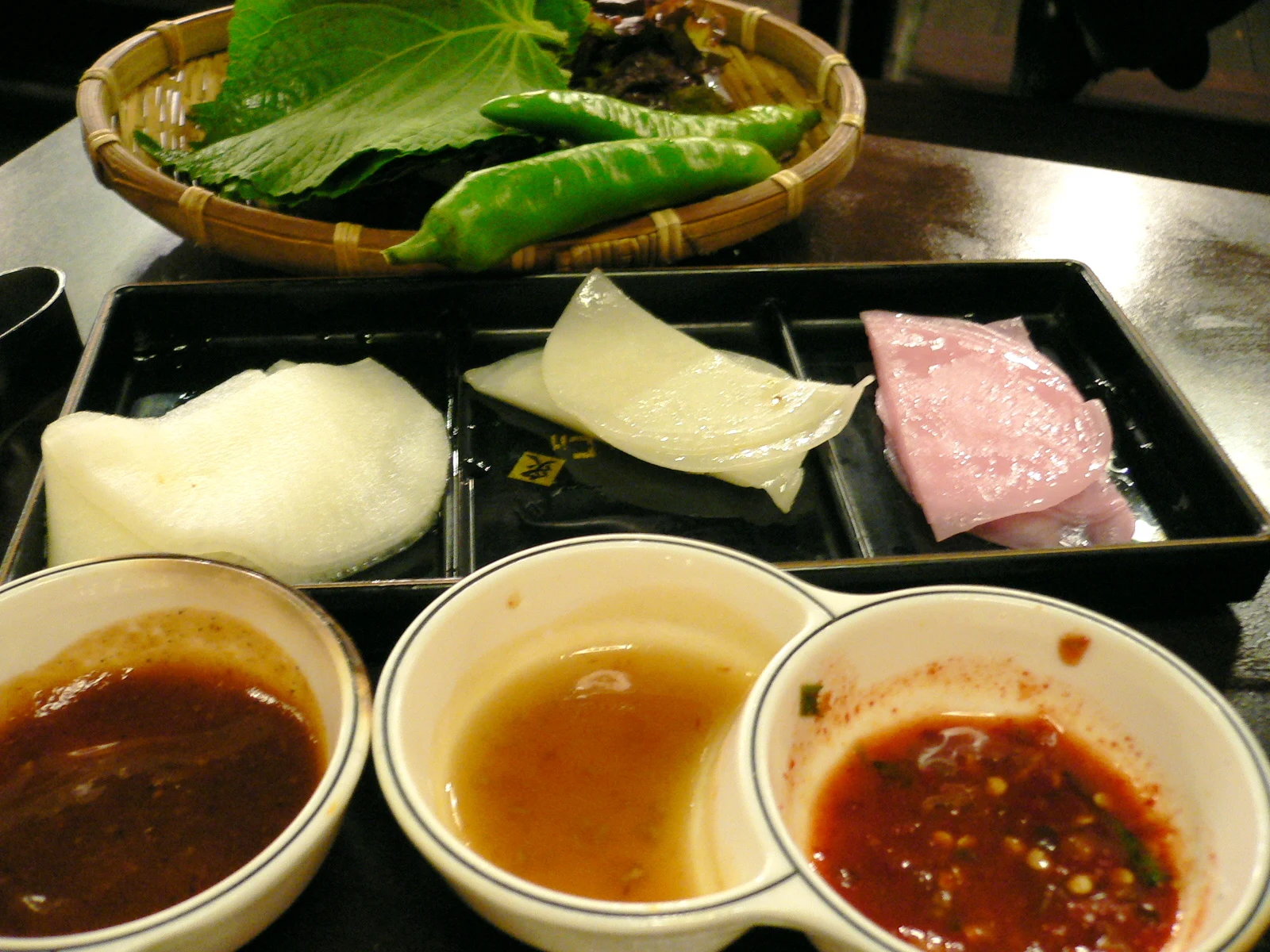
Scallion salad does a different job. Korean Bapsang advises dressing salted scallion strands just before serving. Salt draws out moisture, and a bowl prepared too early loses the crisp texture wanted alongside hot meat. Thin pickled radish supplies tart moisture and a flexible layer; grilled garlic puts a softer piece into the wrap than raw garlic would. These accompaniments need not all be piled high together. A little scallion in one bite and radish in the next make the interruption of richness and the continuation of aroma immediately noticeable. The composition changes through quantities, not through a mysterious rule about the perfect wrap.
A small wrap leaves room to change the next bite. Tasting a piece on its own before wrapping it also separates what the cooking has achieved from what the accompaniments add. Ssam is interesting because ingredients served apart meet a choice just before eating. It gives the diner a little compositional space without requiring one supposedly authentic combination every time.
The work beyond the grill
The visible cooking can distract from less visible preparation. Leaves must be selected, washed and drained; sauces portioned; accompaniments prepared; used grills handled and grease cleared. A customer-operated grill does not make the restaurant's labour disappear. It moves one part of the work into view while leaving many others behind the scenes.
Ventilation and layout also shape the meal. The location of an exhaust hood, room for plates around the hot surface, and access for staff are less photogenic than glossy meat. Yet they make the dining arrangement workable. The distance between grill and plate is both a flavour question and a question of movement through a crowded space.
Service terms vary. Several small plates arriving at the beginning do not establish that every extra item or refill is free. The appearance of a Korean table setting and a particular business's conditions should be read separately. A menu explains things a generous-looking photograph cannot.
When the table travels
COTE Flatiron in New York is a concrete encounter between Korean barbecue and an American steakhouse. Its own history dates the opening to 2017. The menu checked in October 2026 pairs four American beef cuts with lettuce, ssamjang, stews and rice. The supply and cutting of the meat follow a local steakhouse vocabulary, while leaves and fermented paste preserve another way of assembling the bite. It shows how a meal can retain that structure without depending on Hanwoo cattle.
What travels here is more than a plate of meat. Sampling cuts, adding accompaniments and continuing with rice and broth distributes the meal across several small combinations rather than one finished steak. This is an editorial reading of the published menu, not a claim that one restaurant represents every overseas Korean table. For a diner avoiding pork or a sauce ingredient, an explanation of ingredients and shared cooking equipment remains part of making that particular meal understandable.
The compelling part of Korean barbecue is the concrete journey from cooking surface to a composed bite. Shared enjoyment is strongest when tending the grill does not fall silently to one diner and everybody can understand what is being offered. The meal begins over heat, passes through a small arrangement in the hand, and becomes complete when the separate elements are finally eaten together.
Grilling and leaf wrapping are connected stages. Reading the cut, seasoning and service separately makes the whole meal more understandable.
Sources & scope
Table grills and leaf wraps ↗Pork belly and its accompaniments ↗2023-10-19Separate beef quality and yield grades ↗Modern bulgogi as shaped meat on bread ↗2017-11-01Seoul and Gwangyang bulgogi cooking styles ↗2016-04A ssamjang mixture for ssambap ↗2018-02-09When to dress scallion salad ↗COTE Flatiron in New York: history ↗COTE Flatiron menu structure ↗Grilled pork belly with rice, kimchi and leaves, photographed on 5 April 2008.
정희 강 · CC BY 2.0 · Resized to a maximum long edge of 1600 pixels and converted to WebP