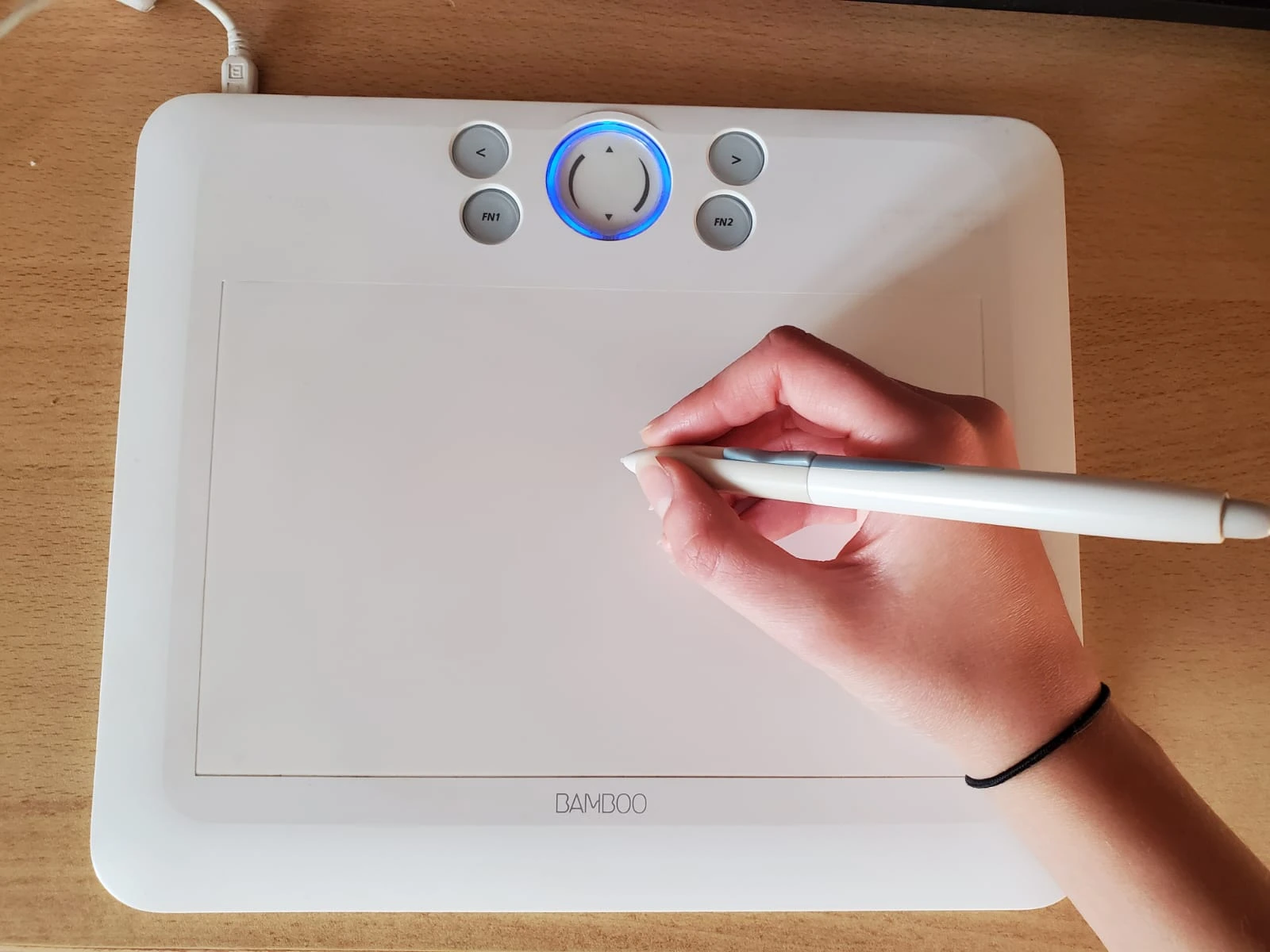
The hand opens the next picture
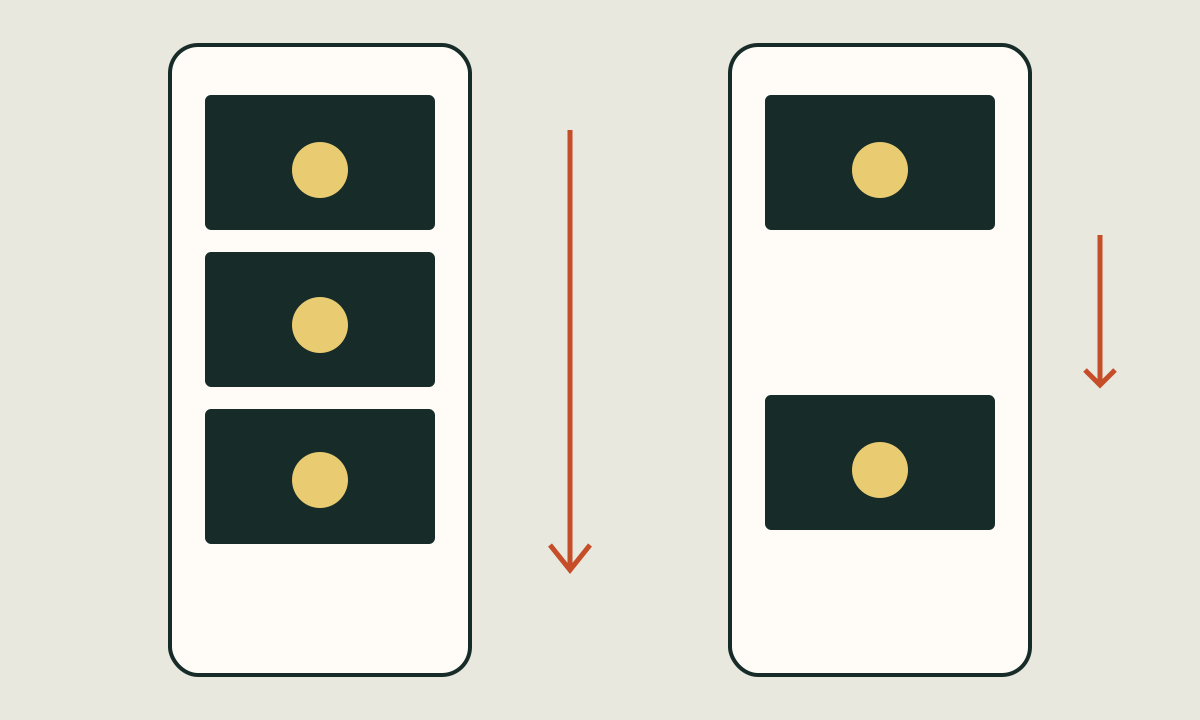
Reading a webtoon means reading and moving the screen at the same time. On a printed comics page, several panels lie within reach of a glance. On a phone, the next image may still be below the viewport. A line arrives before a face; a hand movement reveals the expression that changes its meaning. Much of the medium’s pleasure comes from arranging that arrival.
Consider an invented scene: someone comes home on a rainy night and places a wet umbrella beside the door. The next panel shows drops on the floor. Below it, a small panel reveals a shoe, without yet showing its owner. Only another scroll reveals a second person standing inside. This is a composition example, not a scene attributed to an existing comic. Spread across a page, the final figure might catch the eye early. A vertical arrangement can separate umbrella, drops, shoe and person into discoveries.
Spacing still needs judgment. Too much blank space can create impatience rather than suspense; a tiny final image may hide the decisive expression. The reader also controls the speed. Webtoons arrange a route through information, rather than prescribing the same number of seconds for everyone. The word broadly describes comics delivered on the web, particularly associated today with vertical digital serialization. WEBTOON, in capital letters, is also one service brand. Its tools offer useful examples without defining every work in the medium.
Before the polished drawing comes a decision
Writing that a character is startled does not determine the picture. A creator can show a face, an umbrella falling from a hand, or a foot stopping in the doorway. Choosing what the reader sees is already storytelling. A passage can be explained in dialogue or carried by a gesture, with quite different results.
WEBTOON’s creator handbook names stages including thumbnails, sketches, inking, coloring and finalizing.Official handbook A production thumbnail is a rough miniature plan of panels, distinct from the cover thumbnail a reader sees in a catalogue. One helps choose a story; the other helps choose how its scene will unfold.
Imagine planning the umbrella scene in six rough panels: doorway, hand and umbrella, drops, shoe, arriving character’s face, then the waiting person. Clothing patterns are not yet the priority. Information is. Showing the waiting person in panel four weakens the last reveal. Removing the reaction panel makes the arrival harder to interpret. Changing small rough drawings is easier than rebuilding finished art.
Dialogue can be tested here too. Loading the umbrella action with explanations about the weather, journey and relationship makes text dominate the gesture. The picture already supplies rain; words might instead supply an appointment time the picture cannot show. Writing and drawing are not simply explanation and decoration. They divide the work of telling us what happened.
Finished lines are not the end of reading work
Sketching makes posture and place concrete. Which way does the door open? Which hand holds the umbrella? Where can the person pass? A handsome background must still allow the action. If a handle changes sides between panels, separate drawings may look plausible while the sequence becomes confusing.
Inking clarifies chosen lines: face, fingers, umbrella ribs and doorframe. Color can separate a figure from a setting and guide attention. Making an entire dark hallway the same black may bury the important hand movement. Contrasting cold outdoor light with a warmer room can make the transition legible. These are independently constructed drawing examples, not a claim about one named artist’s private method.
Lettering and balloons add another layer of direction. A balloon shows who speaks and helps lead the eye onward. Placing a left-hand character’s speech at the far right can make attribution laborious; covering a face loses the expression the drawing was meant to deliver. Enlarging a sound effect does not always make an event more powerful.
Finally, artwork enlarged on a production monitor must survive the reader’s small screen. Can the face still be recognized? Which balloon comes first? Does background signage compete with dialogue? The handbook includes PC and mobile previews. That check joins the maker’s view to the reader’s view. Completing an episode should mean completing its reading conditions as well as its drawings.
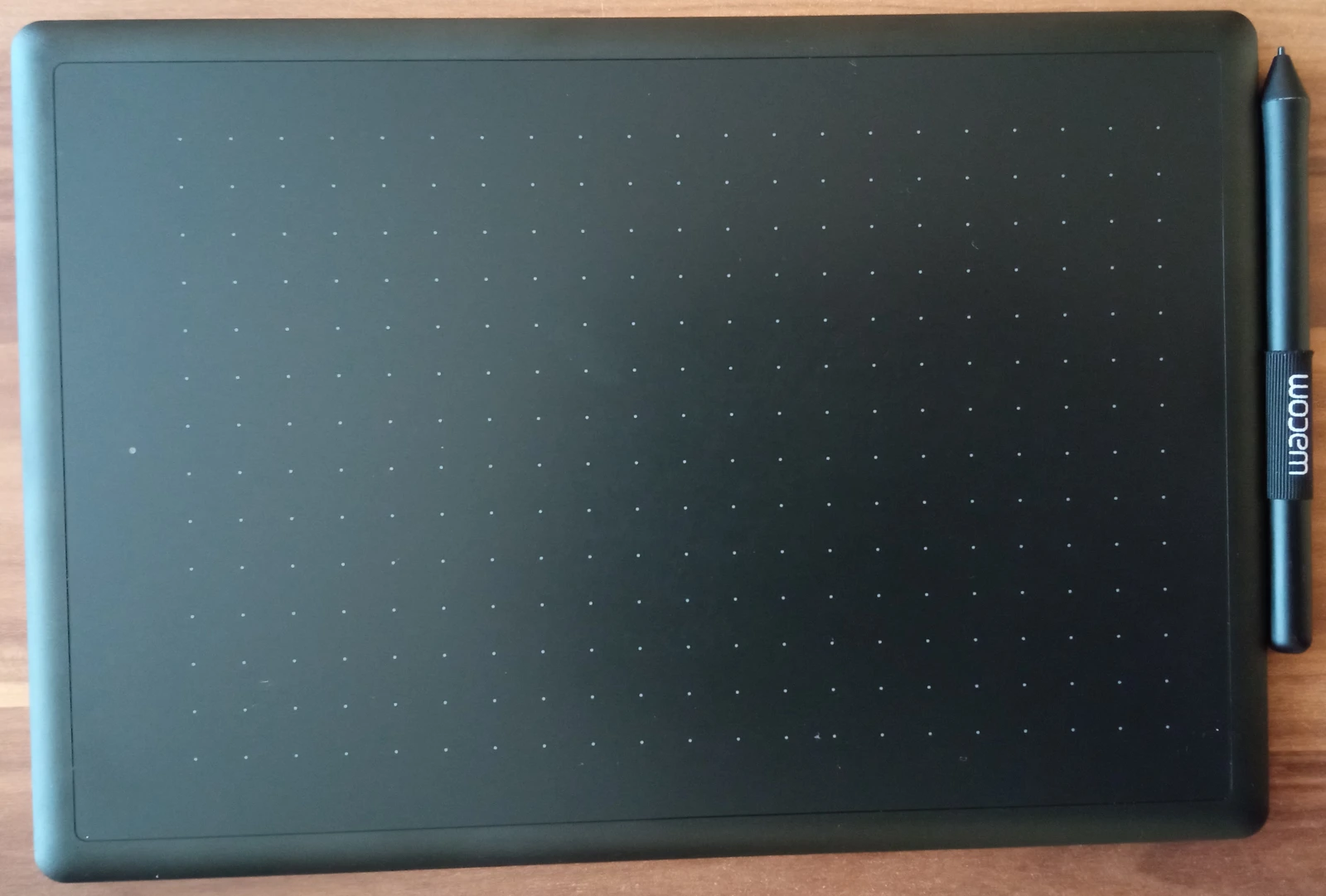
Files divide delivery, episodes divide stories
An episode is a narrative publication unit. A file is a delivery unit. Several files can carry one continuous episode. On May 18, 2021, WEBTOON announced automatic optimization and slicing of long images.Dated announcement It documents that service’s technical development, rather than a timeless rule for every platform.
Suppose the umbrella and drops occupy the first file, and the shoe begins the second. If they join seamlessly, readers need not know their filenames. A changed background color or doubled gap at the join can introduce a pause the story never intended. Dividing an image should not accidentally divide its dramatic momentum.
Publication also separates series information—title, description and cover—from an episode’s title and pictures. Catalogue material tells readers what they are choosing; the episode delivers that promise in scenes. A memorable title cannot compensate for an unreadable first episode. An absorbing episode still needs a recognizable route back to its series. Production and publishing are different jobs that meet inside one reading experience.
A vertical screen can hold a working life
Scrolling does not choose a genre. A short comedy might resolve one misunderstanding per installment. A thriller can answer one question while leaving another open. Romance can dwell on a face after a remark, while action needs to make movement and collision understandable. The same finger gesture encounters different arrangements of information.
Yoon Tae-ho’s Misaeng offers a concrete workplace example. Japan’s Media Arts Festival records the author alongside Japanese translators Ayako Furukawa and Kim Seung-bok.Official award record Its starting premise brings a would-be professional baduk player into a company. A familiar language of winning and losing meets unfamiliar organizational demands. Employment status, responsibility and a superior’s expectations become matters through which a character must act. That is a different narrative territory from treating webtoons as nothing but fantasy or brief phone entertainment.
In another language, words and pictures must still work together. A Korean address term may become a name, a job title or a longer explanation. A translated balloon can occupy more space; accurate meaning can become cumbersome if its lettering obscures the image. Translation is linguistic work and lettering is visual work, but the reader encounters both at once.
When actors arrive, time changes hands
The same award record documents a Korean television adaptation in 2014 and Japan’s HOPE in 2016. Reading a translated comic and watching a newly produced drama are distinct ways a work travels.
A comic reader can stop on a face. A drama creates that moment through performance, sound and shot duration. Filming our invented umbrella scene might begin with water hitting the floor, then move the camera toward the shoe. A long illustrated gap does not convert mechanically into a fixed number of seconds. Lighting, sound, eyelines and editing need new choices. Adaptation is closer to redesigning an event for another medium than photographing every panel in sequence.
Print brings another set of decisions. Shrinking a long background onto a page reduces lettering; spreading it across two introduces a gutter. Placing the final figure after a page turn instead of at the bottom changes the reveal. The title can remain while the reader’s hand moves differently.
A reason to reveal one more image
An award or adaptation announcement can bring a reader to a work. The immediate reason to scroll again lies in its pictures and words: why did that person stop, whose shoe is that, how will the new employee handle the next task? Large cultural reputations eventually depend on small readable moments.
We value webtoons for that original reading experience, rather than only for their usefulness as adaptation material. A line seen first and a face revealed later already contain direction. From rough panel plans to mobile preview, production choices let the reader’s hand participate in the story. Our longer history follows the form’s changing platforms and editions. When it joins the wider routes of today’s K culture, its particular pleasure of reading should remain visible.
We value webtoons for that original reading experience, rather than only for their usefulness as adaptation material. A line seen first and a face revealed later already contain direction. From rough panel plans to mobile preview, production choices let the reader’s hand participate in the story.
Sources & scope
WEBTOON Creator Resource Handbook ↗Automatic long-image slicing announcement ↗2021-05-18Misaeng official award record ↗A hand using a graphics tablet. Piknuz, May 14, 2021.
Piknuz · CC BY-SA4.0 · Resized and converted to WebP; no croppingUpdates & corrections
Dates record changes to this document, separately from the reference dates of its sources.
- Content update
Rewrote the article with fuller production, history, examples and source explanations.
- First published
Created Korean and English documents from verified sources.