EXPLORE / FOOD
Food
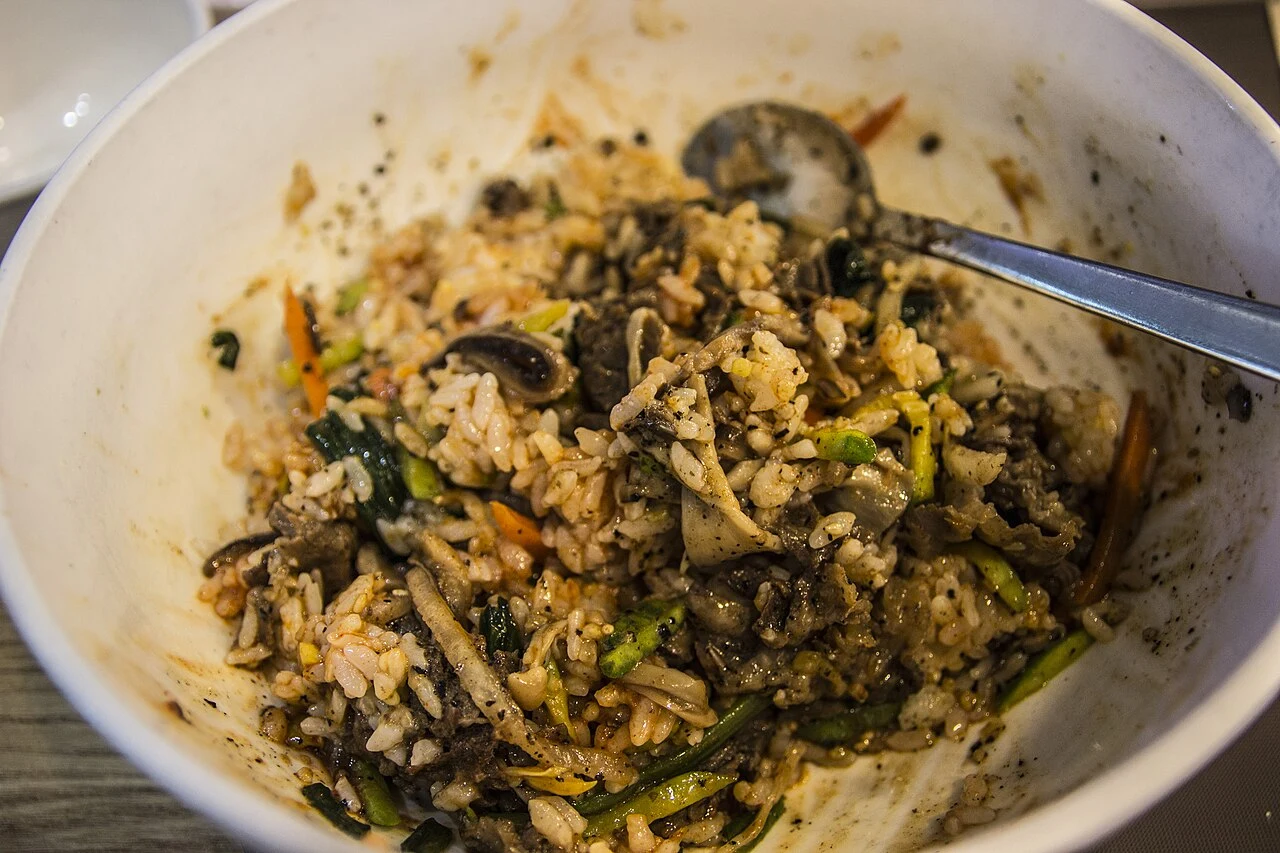
Why prepare everything separately for a meal you will mix?
Bibimbap begins long before a spoon rearranges its colours. Vegetables, rice, sauce and the heat of a stone bowl each need their own preparation.
↗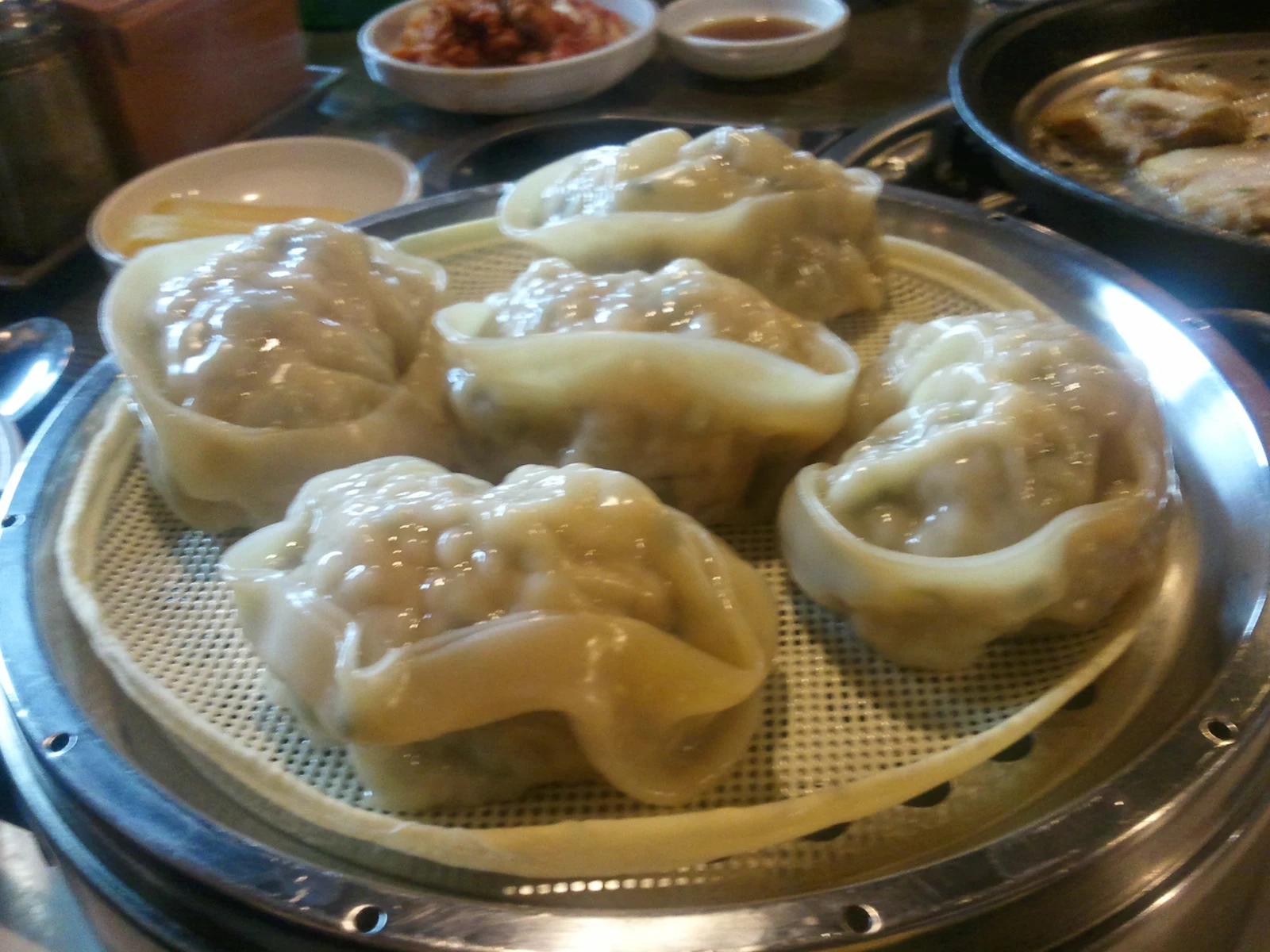
Why does the same dumpling change between steamer and frying pan?
Wrapper thickness, filling moisture, a sealed edge and the final heat connect the making of one mandu to steaming, frying and soup.
↗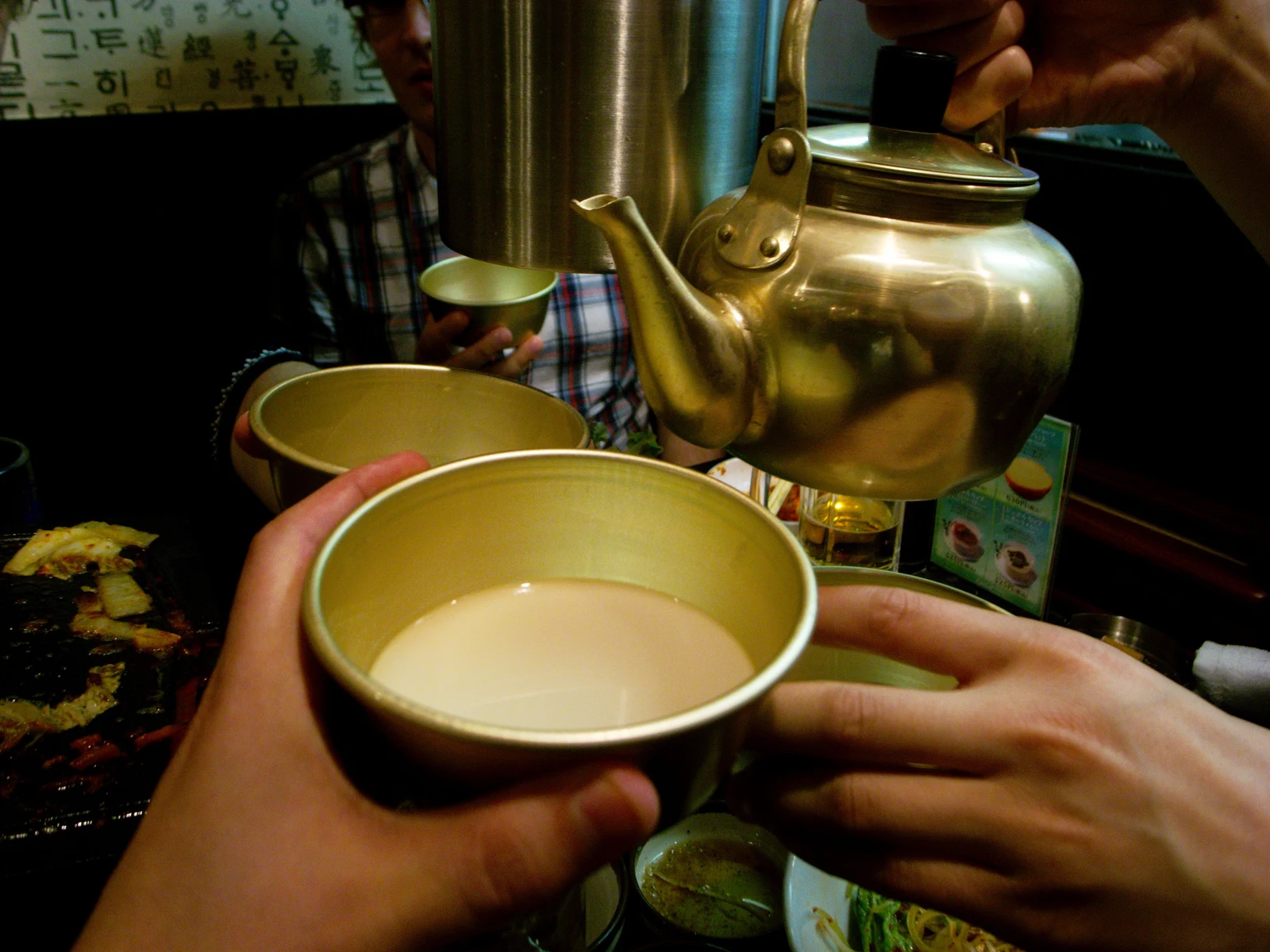
How does white rice become a cloudy drink?
Makgeolli begins with more than rice and water. Starter enzymes, yeast, the preparation of grain and the handling of a finished bottle all shape the drink.
↗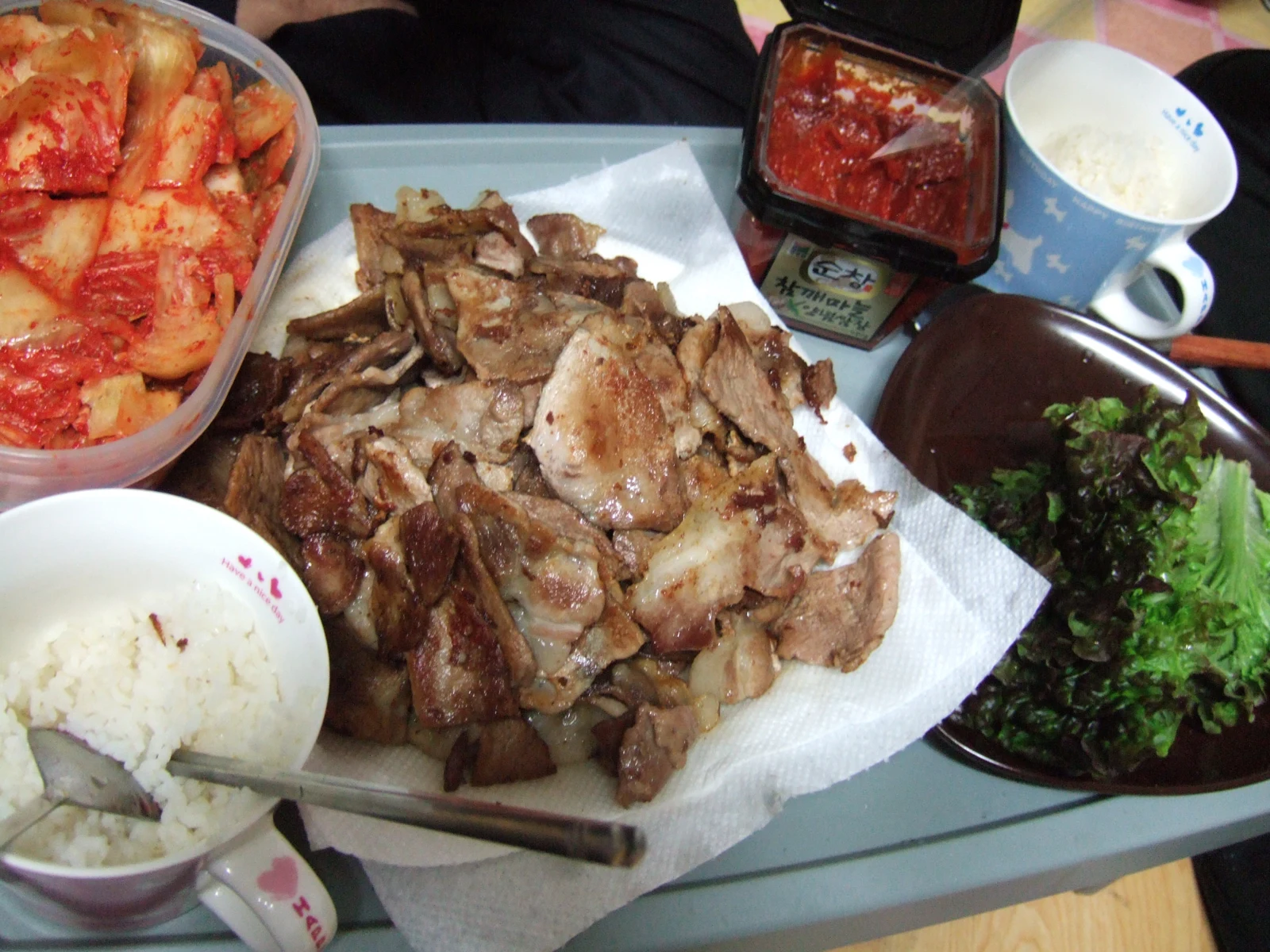
The meat cooks on the grill. Where does the meal become complete?
Korean barbecue moves from heat to a leaf, a spoonful of rice and a little paste. Following that journey reveals more than a plate of meat.
↗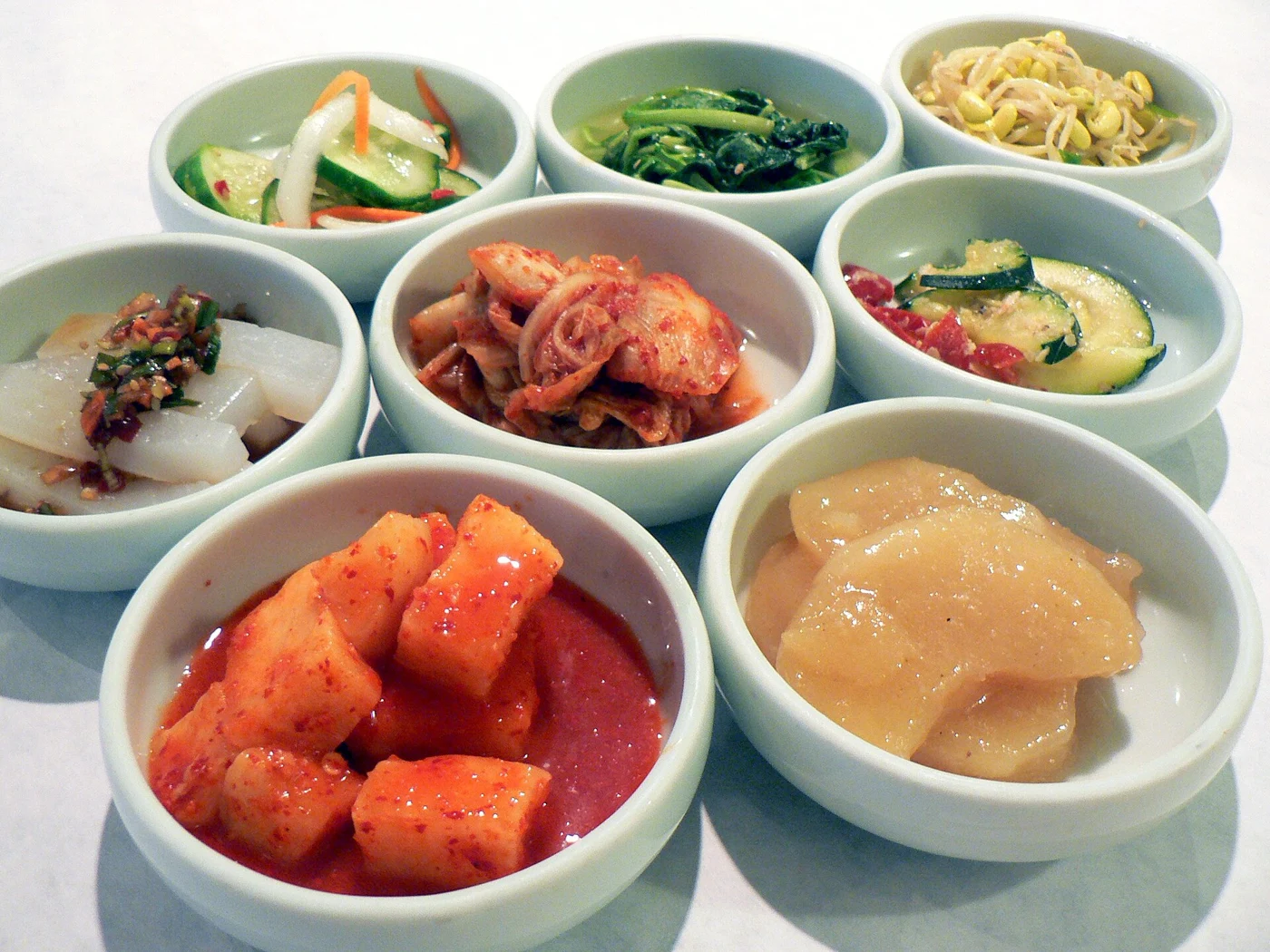
Why does one Korean meal arrive with so many plates?
Washing and pressing greens, browning and braising tofu, building an egg roll: follow the distinct work behind small dishes and a shared dinner.
↗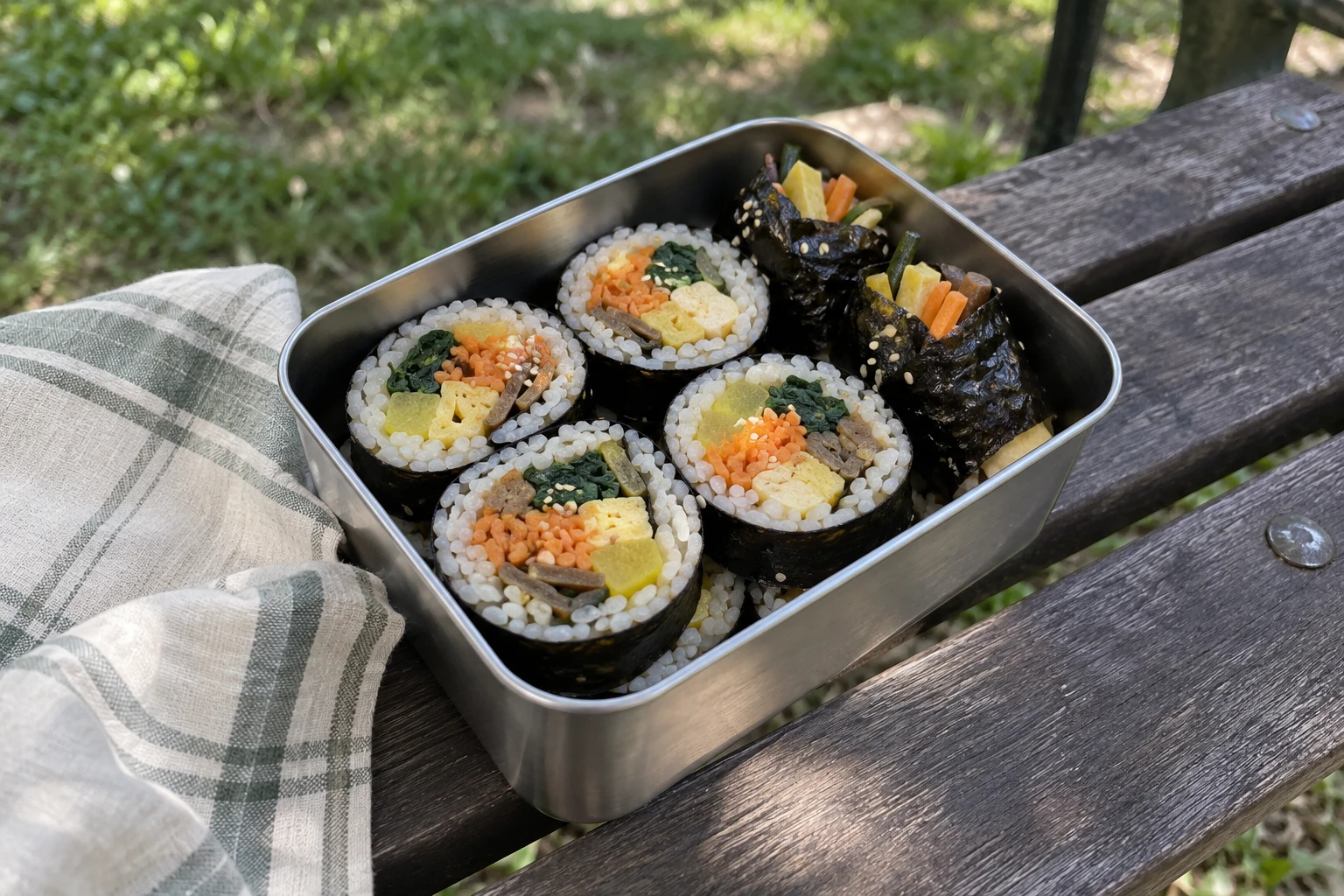
How a roll of gimbap became a meal
Cookbooks from 1966 and 1976, specialist-shop preparation, frozen manufacturing and overseas customer votes trace the work inside a portable meal.
↗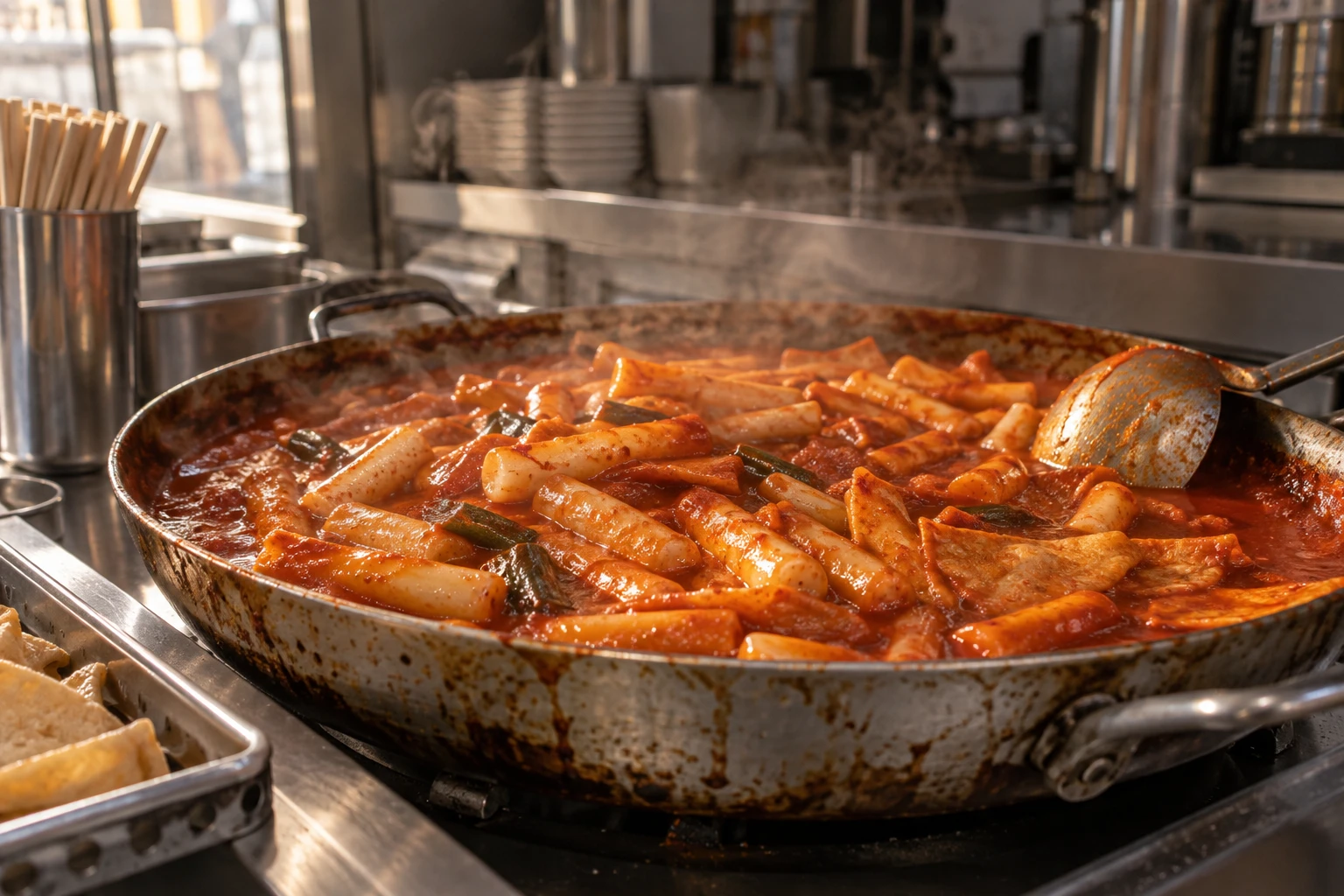
Tteokbokki lives through different times under one name
From soy-seasoned beef and rice cakes to Sindang-dong pots, a vendor’s tray, rosé sauce and microwave cups: the work behind changing meals.
↗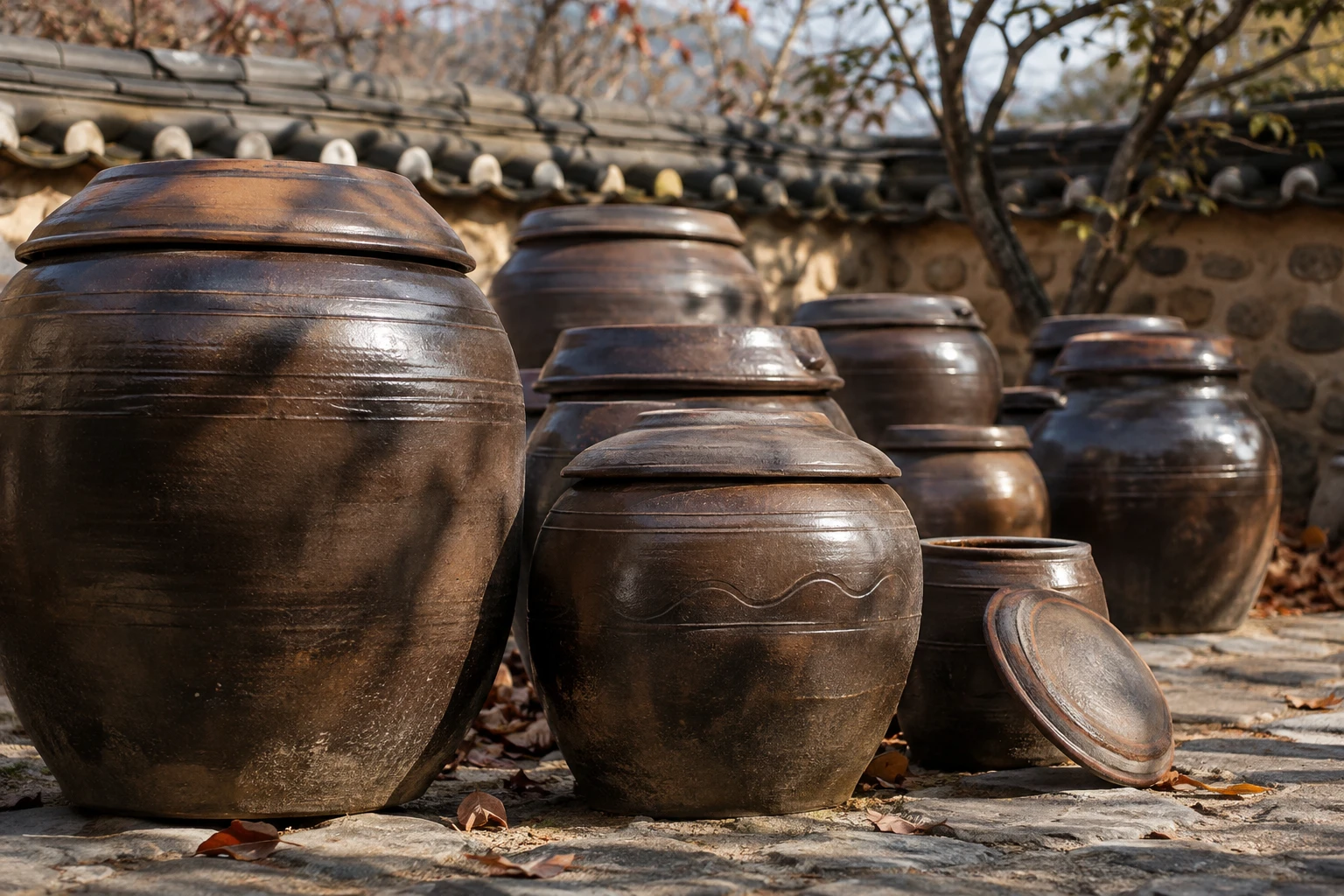
Korean flavour begins before the meal, in a jar
From cooked beans and meju to separating brine, choosing a soup texture and the grain route of gochujang: the earlier work behind tonight’s seasoning.
↗
Soju is older than the green bottle
Follow the still, Andong’s factory and inherited skills, grain restrictions, modern distillation and overseas product lists.
↗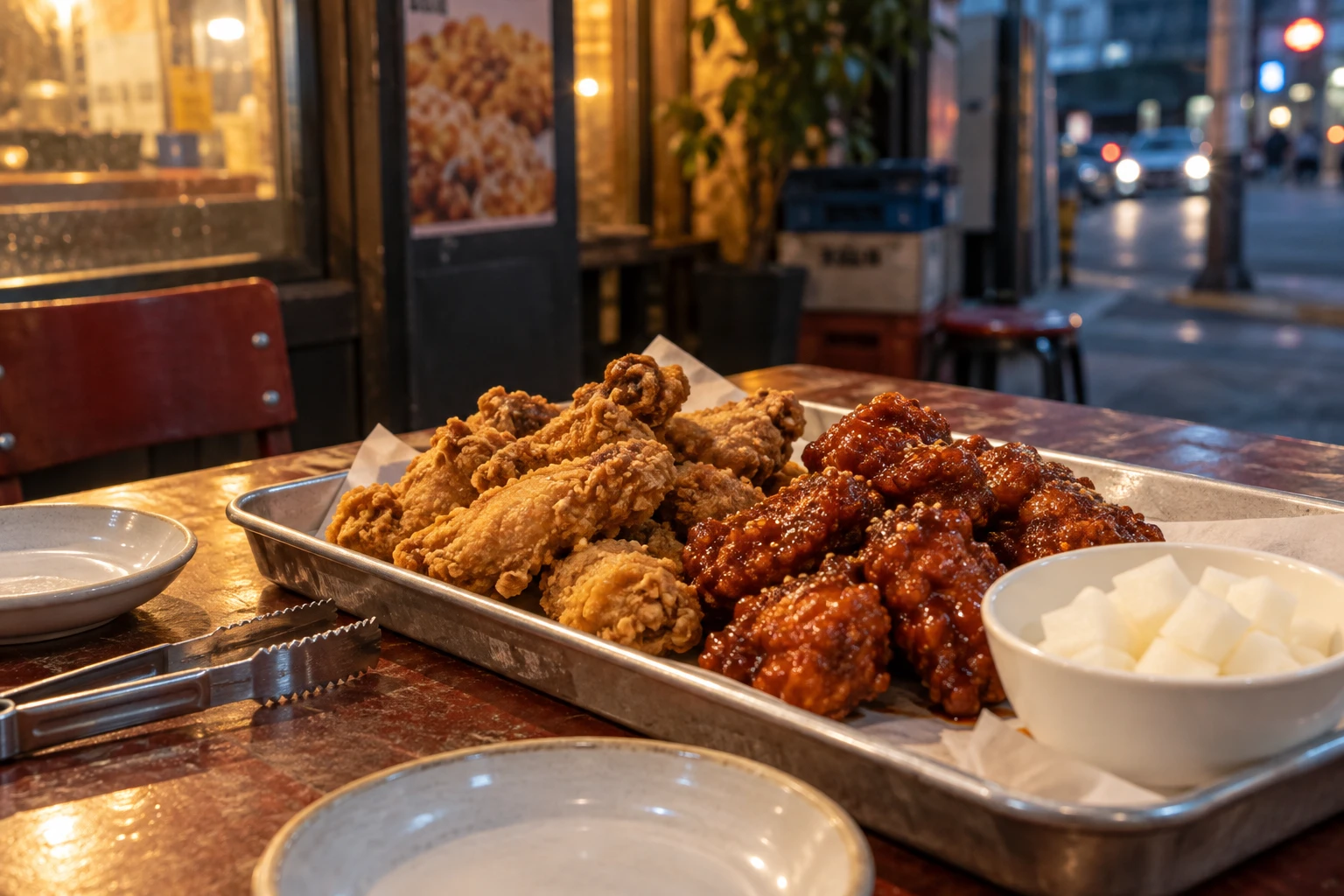
How a box of Korean chicken becomes a shared evening
Whole roasting, orders by part, coatings, sauce and half-and-half packaging follow the work of dividing, cooking and moving a bird.
↗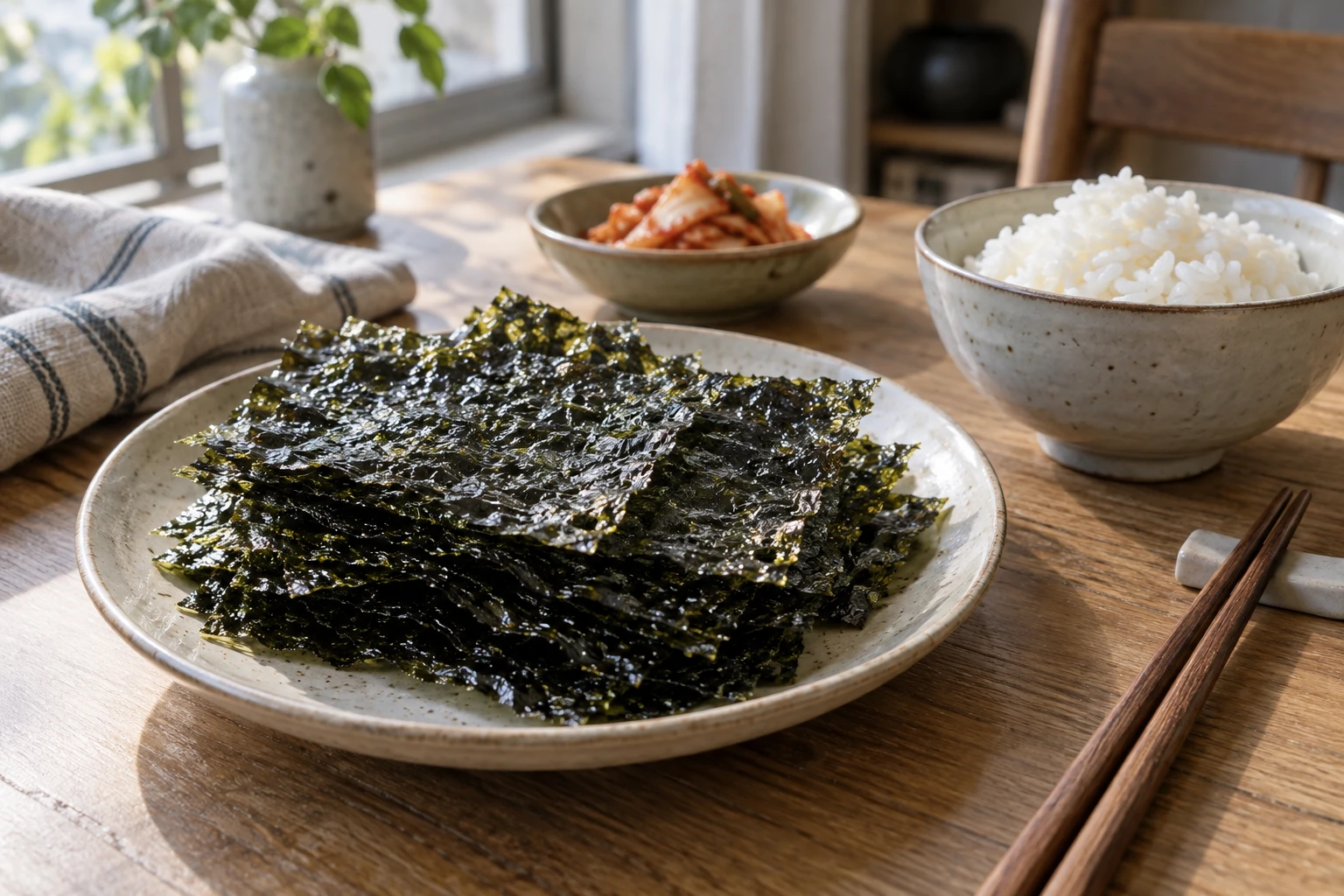
How a sheet of gim moved from the rice table to a snack packet
From cultivation nets to sheet forming and a second roast: the work behind Korean seaweed changes its shape, packaging and the way a hand reaches for it.
↗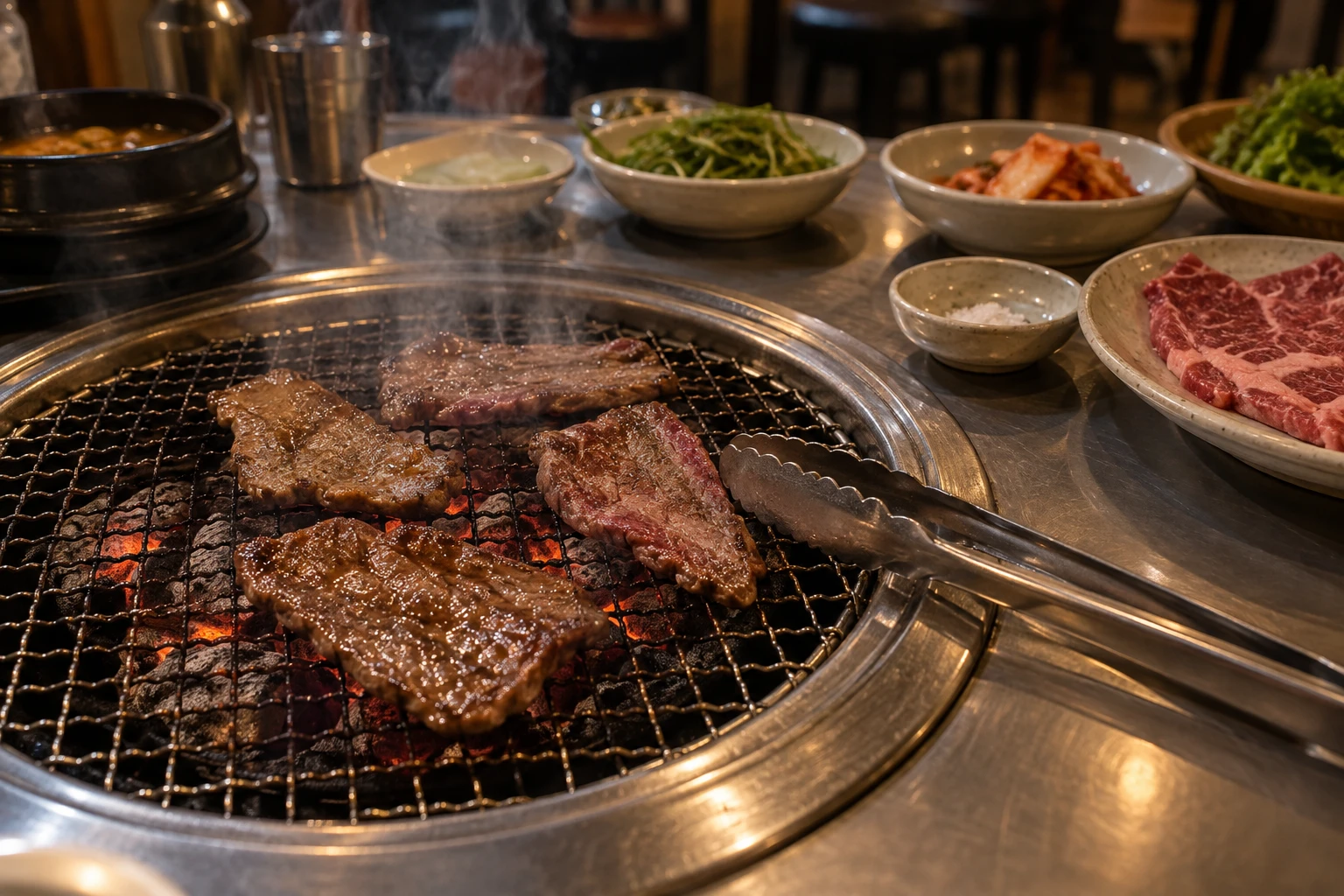
Hanwoo names the cattle. Why do we think of the taste?
From working cattle to the meat counter: breeding records, grades and the different decisions behind grilling, soup and bulgogi.
↗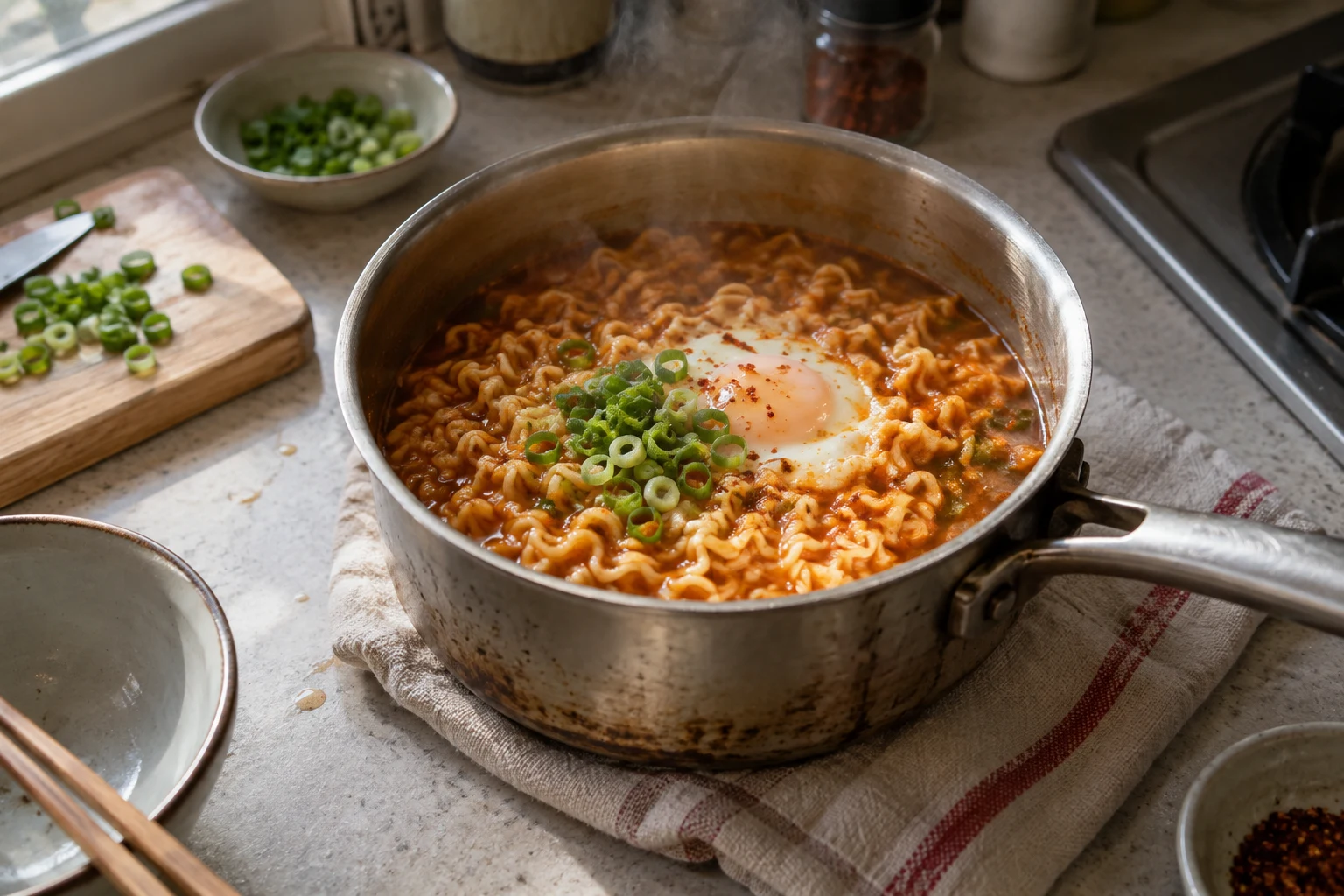
How a packet of ramyeon reached the world’s tables
From the 1958 invention and Korea’s first production in 1963 to broth, sauce, cups, overseas factories and 2025 exports.
↗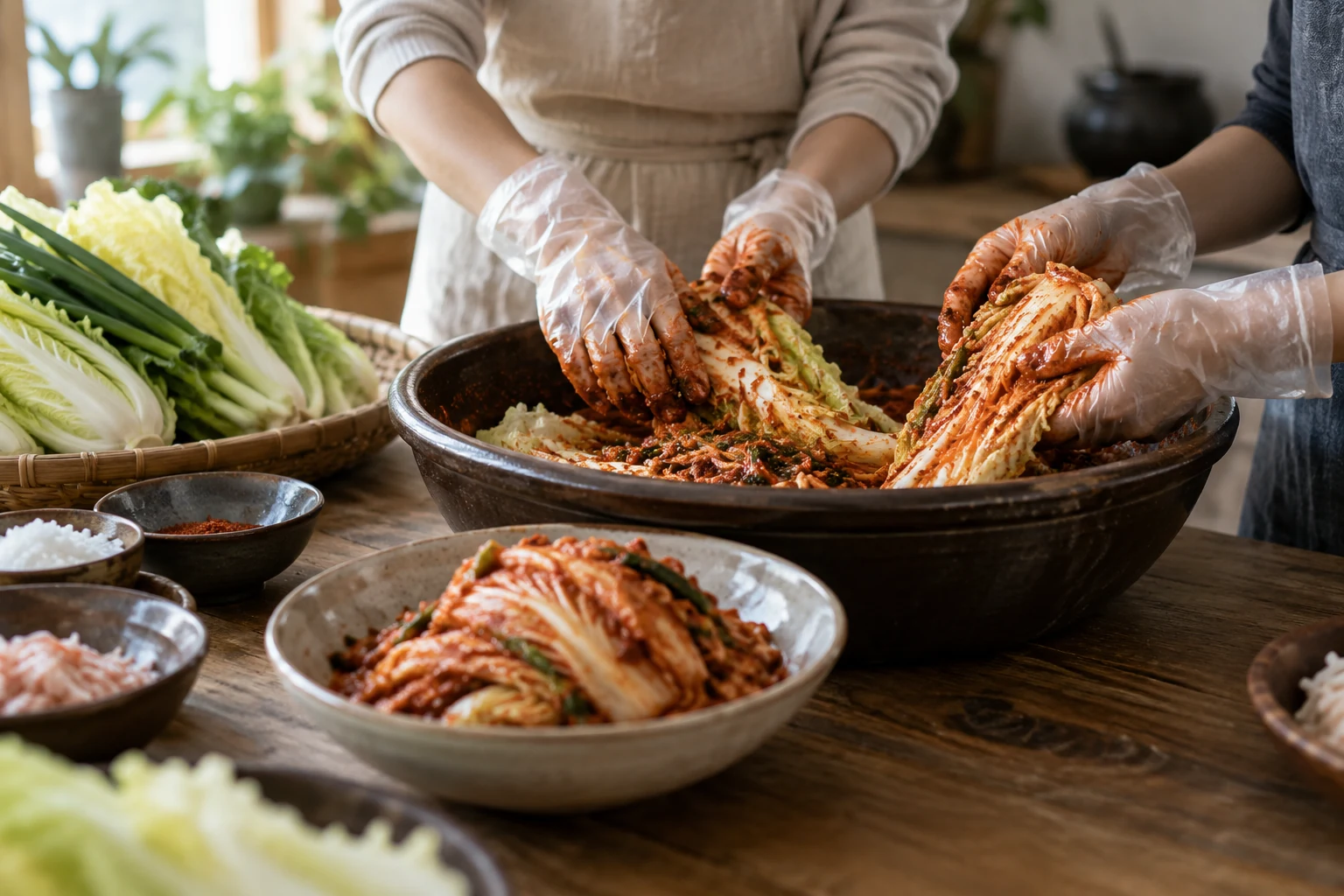
Kimchi is a food. Kimjang is a shared practice.
Follow salting, rinsing and filling into buried jars, smaller containers and shared meals: the concrete work behind a kimjang day.
↗